
By Burt Dicht
NSS Space Coast Correspondent
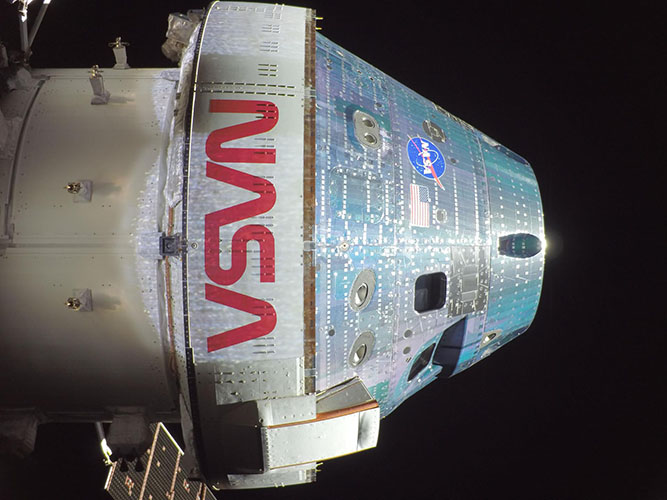
Image: Orion snapped this high-resolution selfie in space with a camera mounted on one of its solar array wings during a routine external inspection of the spacecraft. Credit: NASA

A Flawless Trajectory — First Correction Burn Cancelled
Flight Day 3 delivered an unexpected vote of confidence in Orion’s navigation systems. The planned outbound trajectory correction burn, the first of three scheduled fine-tuning maneuvers was cancelled outright by flight controllers, because the spacecraft was already on a perfect path to the Moon.
“I think it’s really good to see that we don’t need these minor correction burns. It shows that our navigation performance and our ability to get ranging has been outstanding.” — Howard Hu, Orion program manager
The crew was woken at 1:00 p.m. EDT to the strains of In a Daydream by the Freddy Jones Band. With the burn off the schedule, the day shifted toward deep-space housekeeping and lunar flyby preparation. Commander Reid Wiseman also shared stunning window photography of Earth, prompting NASA to post the images to Instagram with the caption: “That’s us, together, looking back at the astronauts journeying to the Moon, for all of humanity.”
Key Events — Flight Day 3
- Trajectory burn cancelled: Flight controllers scrubbed the first outbound correction burn after confirming Orion’s path is already precise. Any adjustment needed will be absorbed by a later burn.
- Medical & CPR checks: The crew demonstrated CPR procedures in microgravity and tested Orion’s medical kit — thermometer, blood pressure monitor, stethoscope, and otoscope.
- Deep Space Network comms test: Mission Specialist Christina Koch tested Orion’s emergency communications on the Deep Space Network — the same infrastructure used for robotic Mars missions, now supporting crewed flight for the first time in decades.
- Cabin configured for lunar flyby: The crew began rearranging the Orion cabin to set up the optimal camera and observation positions ahead of Monday’s six-hour Moon encounter.
- Earth photography shared: Commander Wiseman’s window photos released publicly — Earth appears crescent-shaped and impossibly small. The crew reported being “glued to the window.”
- Sleep period began at 3:00 am CDT: Crew signed off for the night. Mission Control scheduled a wake-up call for 11:35 a.m. CDT Saturday to begin Flight Day 4.
“Knowing that we’re about to have similar views of the Moon… I knew that’s what we would see. But there’s nothing that prepares you for the breathtaking aspect of seeing your home planet.” — Mission Specialist Christina Koch, speaking from Orion.

Looking Ahead · Flight Day 4 — April 4
Spacecraft Selfie, Thruster Tests & Lunar Target Review
Today is a continuation of the outbound cruise to the Moon — a lighter operations day structured around system demonstrations, lunar observation preparation, and crew wellness. A second trajectory correction burn remains possible but, given Day 3’s results, may not be needed.
- Orion “selfie” photography: The crew will photograph the exterior of Orion from its windows — producing the mission’s first close-range portrait of the spacecraft in deep space.
- Thruster flight mode tests: Pilot Victor Glover will demonstrate Orion’s two attitude control modes: six-degree-of-freedom (which auto-corrects drift) and the more fuel-efficient three-degree-of-freedom mode. Data gathered here will inform future Artemis missions.
- Celestial photography window: NASA has set aside 20 dedicated minutes for the crew to photograph stars, planets, and other deep-space objects through Orion’s windows — a first for crewed human spaceflight at this distance.
- Lunar target review: Each crew member will spend approximately one hour reviewing the geology targets selected by NASA’s lunar science team — craters, ancient lava flows, and ridge features they will document during Monday’s flyby.
- Second correction burn (if needed): A second outbound trajectory correction burn is on standby. Given the cancelled Day 3 burn, controllers will assess whether any fine-tuning is required before the Moon encounter.
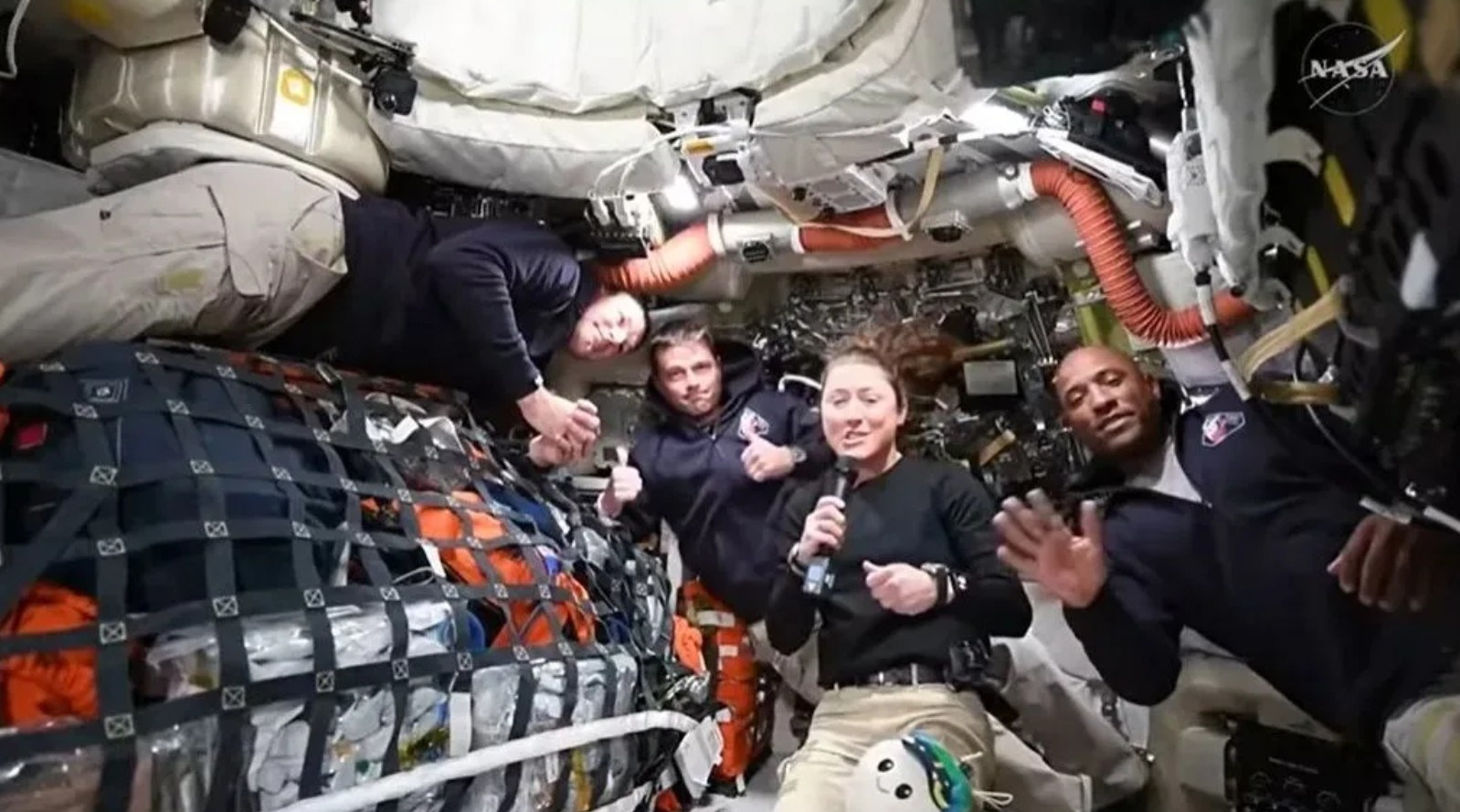
- Family calls & downlinks: The crew is expected to speak with their families today and participate in another public video downlink — the first opportunity for families since launch.
Looking Ahead: On Sunday, April 5, the Artemis II crew will enter the lunar sphere of influence — the point at which the Moon’s gravitational pull becomes stronger than Earth’s. Yahoo! That sets the stage for the mission’s biggest moment: the lunar flyby on Monday, April 6, during which the crew will fly up to 6,000 miles above the surface, lose communication with Earth for 30–50 minutes, and spend approximately six hours photographing and observing the Moon’s far side.










1 thought on “Artemis II Mission Day 3 Recap April 3”
So far, so good. Artemis II accomplishing mission objectives. Good luck with the rest of the mission.