National Space Society

The National Space Society Welcomes the Crew of Artemis 2 Home

Arrtemis II Splashdown

Share:

Facebook
X
Pinterest
LinkedIn

Now we must focus on continued forward-looking goals

In the evening of April 10, the Artemis 2 mission concluded with a flawless reentry and splashdown off the coast of Southern California. From its launch on April 1 to the crew recovery on Friday, the flight was one for the history books, with every major system working as planned.

“Congratulations to the crew and the teams who made this possible,” said Karlton Johnson, NSS CEO. “Four heroic crew members carried the flag into deep space, going further than anyone before them, and have taken a bold step forward in extending human presence beyond Earth.”

Johnson added, “Today’s splashdown brings the mission full circle. America has  shown that we can operate in cislunar space, as we did so long ago, and with confidence and permanence. This is how sustained human activity beyond Earth begins to take shape.”

The flight lasted just over nine days and hit its objectives one after another. From a successful launch, to raising to high Earth orbit, to the trans-lunar injection (TLI) burn, a successful lunar flyby, and their return home, Artemis 2 was “by the numbers,” as Apollo Flight Director Gerry Griffin put it. “I’ve seen the early flights of every U.S. launch system, and the launch of Artemis 2 was about the smoothest. What a mission!”

Next comes the flight of Artemis 3 in 2027, an Earth-orbital test flight of rendezvous and docking between the Orion capsule and lunar landing hardware. This will be followed by Artemis 4, now scheduled to land astronauts on the Moon in 2028. But these missions, spectacular as they are, are just the beginning, and there’s work to be done to ensure smooth continuity.

“As we welcome the Artemis crew back to Earth from their hugely successful lunar voyage, it is time to redouble our efforts to support a strong and economically sustainable space program,” said Dale Skran, NSS COO and Senior Vice President. “The exciting lunar base plan presented by NASA Administrator Isaacman has been followed by a new budget from the White House that, for a second year in a row, dramatically cuts NASA science programs, and attempts to derail the Commercial LEO Destinations (CLD) program to support privately operated space stations. The NSS is urgently needed as a citizen’s advocacy group, fighting for continuity in space progress and humanity’s spacefaring future.”

Share:

Facebook
X
Pinterest
LinkedIn
Picture of By National Space Society

By National Space Society

1 thought on “The National Space Society Welcomes the Crew of Artemis 2 Home”

  1. I’m certain others noticed this flight was bracketed by the 100th anniversary of Goddard’s first liquid fueled flight, the 65th of Gagarin’s, and the 45th anniversary of STS-1/ Columbia.

    Reply

Leave a Comment

Don't Miss a Beat!

Be the first to know when new articles are posted!

Search
Categories

Follow Us On Social Media

JOIN THE
GREATEST ADVENTURE

Give The Gift Of Space: Membership For Friends and Family

Book Review

HOTOLSkylon

Book Review: HOTOL & Skylon: The Story of Britain’s Spaceplanes

In HOTOL & Skylon: The Story of Britain’s Spaceplanes, Rob Coppinger covers the story of both in great detail, with the reminiscences of many who played integral roles in these ambitious programs. The book shines when it captures the enthusiasm and excitement of those involved, and there are extensive quotes from many who devoted years of work on these projects.

Read More »
Out of This World

Book Review: Out of This World

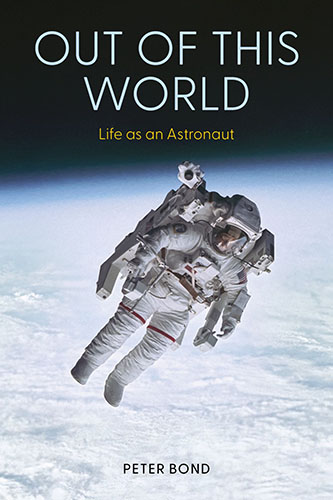
Anyone seeking a short but comprehensive introduction to human spaceflight would do well to start with this book. It reviews its history, highlights the accomplishments and tragedies, and describes the equipment used. It also looks at living in space, what space travelers experience, and how they work.

Read More »
desigining farms in space

Book Review: Designing Farms in Space

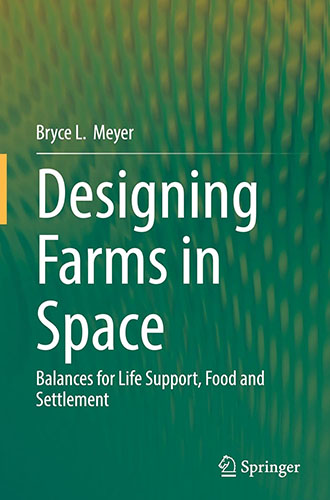
Meyer’s academic textbook is loaded with numerous photographs, diagrams, charts, and graphs. There are chapters on subjects such as farm machines, animal and fungi production, plant and algae production, and space menus. The farming techniques outlined in the book can be applied to lunar, Martian, or rotating space settlements.

Read More »
Archives


Hilton McLean Tysons Corner, McLean, Virginia
June 4 - 7, 2026

Recent Blog Posts

In HOTOL & Skylon: The Story of Britain's Spaceplanes, Rob Coppinger covers the story of both in great detail, with the reminiscences of many who...

The National Space Society (NSS) welcomes the U.S. Administration’s proposal to establish a United States Space Academy, a NASA-led institution meant to prepare the next...

By Burt Dicht NSS Space Coast Correspondent Today’s successful launch of the Nancy Grace Roman Space Telescope will help answer two key questions: How does...

By Robin Scott National Space Society of North Texas (NSS-NT) President Ken Ruffin, shown above holding the 2026 NSS Chapter of the Year Award, acknowledged...

The National Space Society (NSS) welcomes the release of the National Space Transportation Policy, a comprehensive directive establishing the United States’ strategic framework for launch,...

In this NSS Space Forum, astronaut and former U.S. Navy test pilot Susan Kilrain joins us to discuss her new book, Slaying Snakes in the...
Anyone seeking a short but comprehensive introduction to human spaceflight would do well to start with this book. It reviews its history, highlights the accomplishments...
The Space Coast has extraordinary assets and an opportunity to continue its preeminence as a spaceport while becoming a destination for a new generation of...
adastra magazine

Your Doorway to New Worlds