
Category: Nonfiction
Reviewed by: Dale Skran
Title: Reality Check
Authors: Brad Wieners and David Pescovitz
Format: Paperback
Pages: 161
Publisher: Hardwired
Date: January, 1996
ISBN: 978-1888869033
Find this book
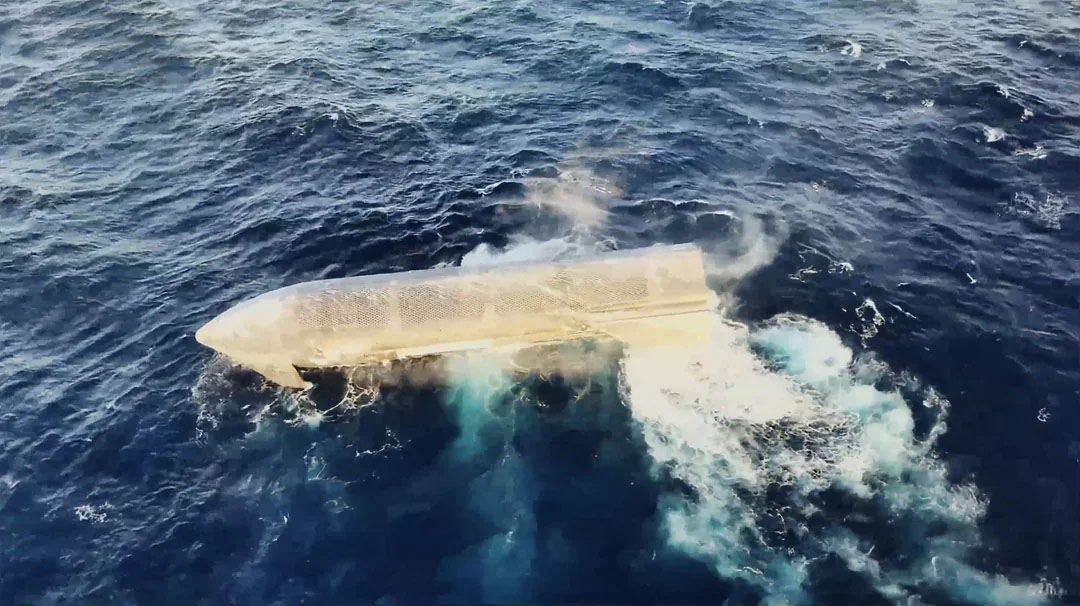
The Delphi method of predicting the future requires recruiting a group of real experts, asking them a specific question, then averaging their answers. The result is often surprisingly close to the truth. This method has been used to find sunken submarines, among other things. In Reality Check the authors apply this approach to over 50 questions about the future, and present the dates suggested by each expert, the average date predicted, and some explanatory text.
The result is one of the better futurist books I have read, especially in terms of making reasonably accurate specific predictions. It is well worth your time to read, even in 2026. However, I thought it would be fun to take a deeper look at the four space related predictions. It is a bit surprising that there are only four space related predictions, but to a large degree I attribute this to the datacom/telecom bias of WIRED magazine.
One of the predictions, “Contact with Extraterrestrial Intelligence,” claimed to occur in 2025 (last year) is a bit bogus. Two of the four experts said it was unlikely, and other two picked 2025 and 2026, but as the text says, it “… is nearly impossible to predict.” This should have been listed at the end of the book with the other “unlikely” events or not included at all since it is basically a dart throw.
This leaves three space related predictions. The first, an “Operational Space Station,” was predicted for 2004. Surprisingly, this turned out to be overly conservative, as the ISS become operational November 2, 2000, with the arrival of the first long-duration crew and has been crewed continuously ever since.
The second, “Humans on Mars,” was predicted for 2020, with the most distant predication 2030. These dates, like pretty much all previous dates for humans on Mars, now seem far too optimistic. We may – just barely – make it back to the Moon by 2030. Why might these dates be so far off? Part of the reason surely lies in that fact that traveling to Mars is vastly harder than a journey to the Moon, but more significantly, humans probably won’t embark to Mars until either (1) cislunar space has been significantly developed, (2) some major political force decides it is time to go to Mars, or (3) Mars holds the attention of a billionaire long enough for the trip to happen.
Perhaps the most interesting is the third space prediction, “Orbiting Solar Power Plant.” This receives a rating of “Unlikely” with only one expert predicting 2030. In this case, the Delphi method crashes. The text mentions that most experts believe that a cost of $100,000 to put a kilogram into orbit will forever make SSP impossible. The actual 2026 cost to put a kilogram into LEO is about $3,250 using a “full” Falcon 9. This is less than 4% of the 1996 number and is currently expected to drop another 90% over the next ten years as new fully reusable launch vehicles now in test become operational. The experts also seemed to believe that only one SPS would beam power to one rectenna, creating a “single point of failure.” This reasoning in retrospect lacks foundation, as no one has ever proposed building only a single giant SPS.
With a significant number of Space Solar Power (SSP) startups raising money in 2026, it seems possible that something will be in orbit in 2030, although most current serious plans involve a non-classical SPS. Perhaps of greater interest, we are in the grip of a craze to build large numbers of data centers in space, and such a device is just a solar power satellite attached to a big computer that beams results rather than power to the ground. If successful, such space systems promise to reduce the need for power on the Earth and represent the first step toward moving the industries of the Earth off planet.
So – four predictions: one too dubious to even include, one conservative, one optimistic, and one misinformed and on a path to being wrong. Not the best showing for the Delphi method, but the track record of the book is much better for non-space related predictions. Reality Check is well worth your time to read, even a generation after it was written.
© 2026 Dale Skran