
By Al Globus, National Space Society Board of Directors
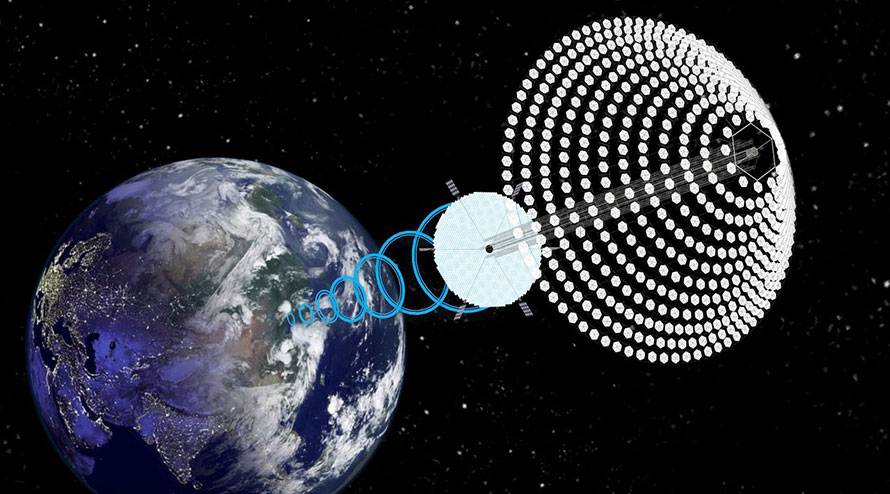
Space solar power (SSP) usually involves gathering energy in space, converting it into a microwave beam, and directing that beam at Earth to be converted into electricity. The National Space Society has promoted SSP for decades. A year or so ago the Alliance for Space Development made SSP one of its four legislative objectives, and in the last month the Beyond Earth Institute and the Progressive Policy Institute have made major moves promoting SSP, including a draft Presidential Policy Directive by Beyond Earth. Why this much interest now?
Because for many moons studies have found SSP to be technically sound, but too expensive to take off. That may be changing. In particular, two of the largest costs, launch and manufacturing, are dropping like a stone.
Launch
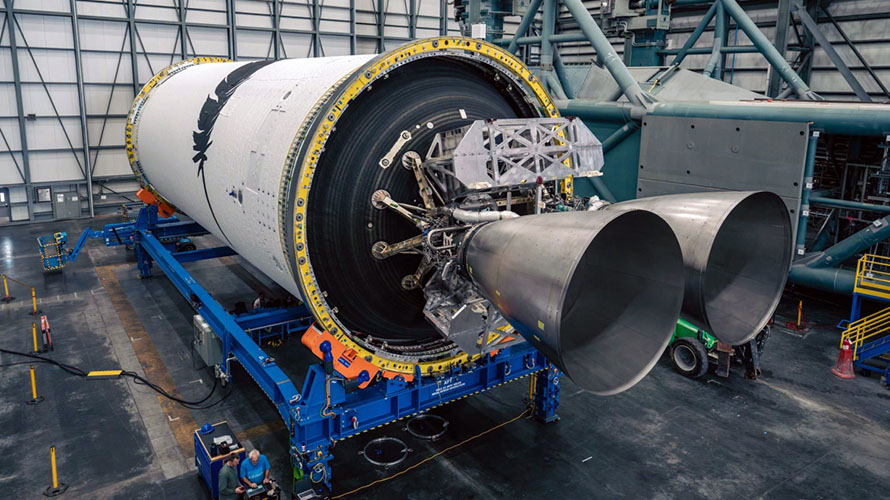
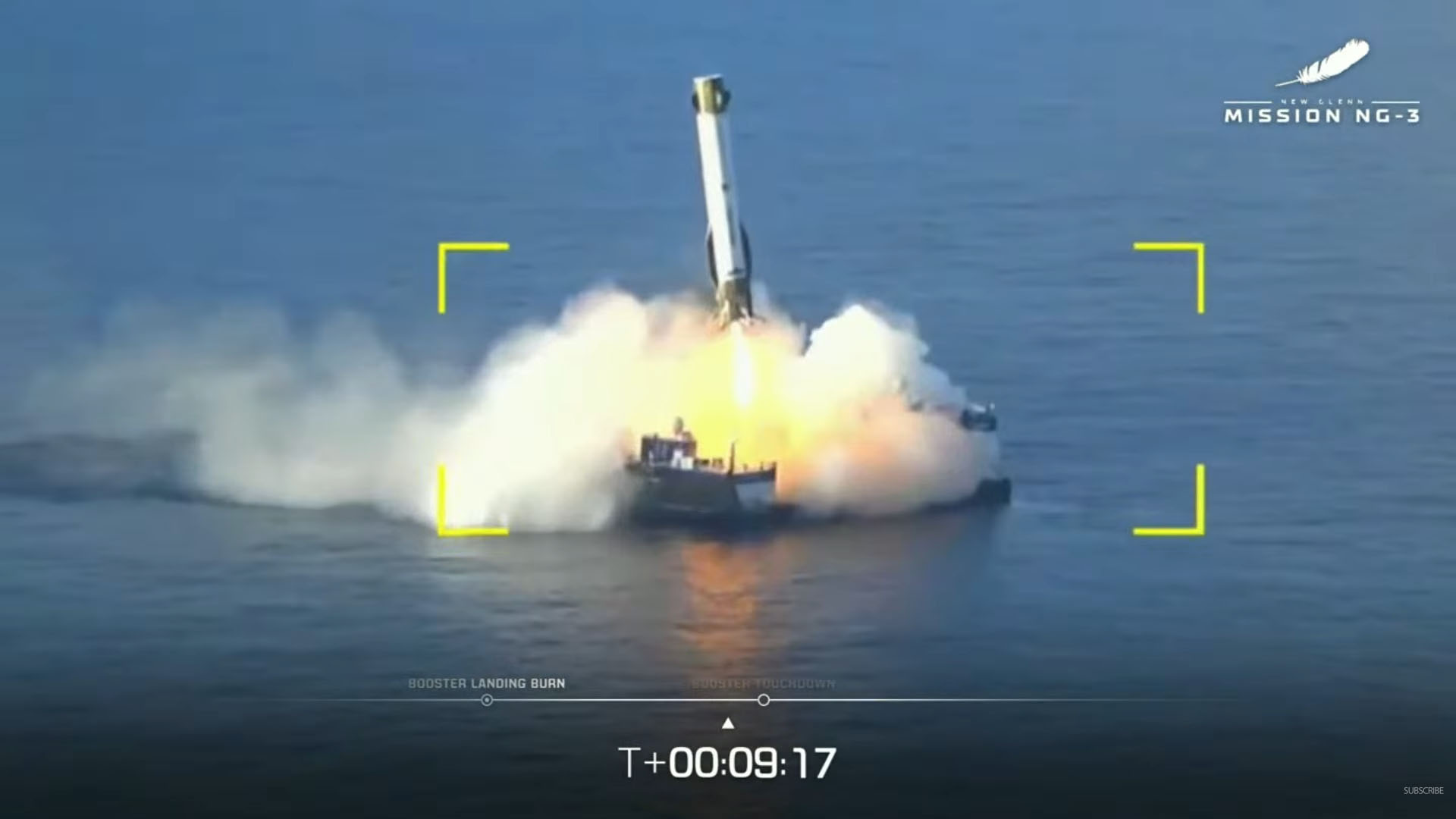
In 2011 the space shuttle flew its last flight in the midst of a long era of $20,000 per kg launch costs on mostly expendable boosters. Today (2021), the cheapest launch vehicle is the partially reusable SpaceX Falcon Heavy with an advertised launch price of around $1,400 per kg, a reduction of well over an order of magnitude. But there’s more.
SpaceX has been developing the fully reusable launch vehicle, Starship, with an estimated launch cost of somewhere around a few hundred dollars per kg, another order of magnitude reduction in cost if all goes well. While SpaceX frequently misses deadlines they have consistently achieved their performance goals. They build and operate the most successful launch vehicle of our day, the partially reusable Falcon 9.
This suggests it is reasonable to expect a reduction in launch cost of around two orders of magnitude when compared to the shuttle era. But there is more.
Manufacturing
While launch costs are a major fraction of the economic problem faced by SSP, they are not the largest. Satellites are generally significantly more expensive than launch. Typical cost of a payload can range from a few thousand dollars per kg to 200 thousand per kg or more. Such high prices reflect that space payloads traditionally are handcrafted one of a kind systems. To significantly reduce costs requires manufacturing large numbers of identical components to amortize automation and achieve other manufacturing economies of scale. The problem for SSP, a new source of power, is to get economies of scale when building the first operational powersat.
The communication satellite constellations are leading the way to the first step. They consist of thousands of identical, or nearly identical, spacecraft that conform to certain communication protocols. These spacecraft can be, and are, mass produced. For even a single constellation the number of satellites is large enough that one can get economies of scale. For the SpaceX’s Starlink constellation this difference in cost is about 100 to one. Again, two orders of magnitude cost reduction. As you may have guessed, there is more.
The SPS-ALPHA (Solar Power Satellite by means of Arbitrarily Large Phased Array) design takes the next step, generating economies of scale in the manufacture of a single, albeit extremely large (km scale), satellite. SPS-ALPHA consists of more than a million modules of only 16 types, ~60,000 modules per type. The list of types changes as the design matures, but for illustrative purposes, a few of these types might be:
- An adjustable mirror module type that reflects sunlight onto an array of beam generation modules that take sunlight from one side, and emit microwaves via phased array from the other
- A beam generator module type that converts sunlight to microwaves
- A simple robot arm type that can work in groups to construct and repair the powersat by adding and removing modules
- A module type with electric propulsion for station keeping and transferring the finished powersat from a construction site in Low Earth Orbit to operations in Geosynchronous.
In addition, there are a number of trusses. Using the trusses for structure, much like bones in our bodies, modules self-assemble in space in an environment designed for robotic construction and repair. The closest analogy is a robotic warehouse where robotic forklifts move pallets around, a much easier task than navigating on the surface of Mars, which is not designed for robotic exploration!
Conclusion
Mass production of modules combined with the cost reduction for launch that Starship promises may at long last close the SSP business case with a two orders of magnitude cost reduction in the most expensive parts of a spacecraft: launch and manufacture. This is why there is so much interest. Even if the business case does not completely close it will certainly take a giant step in the right direction and develop valuable technology in the process.
Acknowledgements
Special thanks to John Mankins for most of the ideas and data in this piece.







9 thoughts on “Why Space Solar Power Now?”
The recent AI presentation by Tesla may have relevance here. Specifically, the ability they are developing for a computerized recognition and understanding a “robot” can have of its surroundings based on visual input, and the consequent instructions for that robot to perform some function. While much of the buzz of that presentation was on a humanoid robot, the possibilities go much further. A robotic assembly device could incorporate these capabilities, and perhaps thus greatly facilitate the construction of large scale space structures, such as the SSP units.
Phil Chapman would have LOVED to have lived to see this.
Peter Glaser, I wish you know that your Solar Power Satellite idea has FINALLY FINALLY FINALLY become real.
Very exciting topic. Perhaps one more piece of the puzzle working towards a fossil free future
The Artemis program can ultimately contribute to sunsat cost reduction. A mid-1980s study by Gerard K. O’Neill’s Space Studies Institute showed that 99% of the mass of a sunsat can come from lunar materials with a projected 97% cost savings. Artemis missions can spawn a private lunar operation to mine the Moon, launch packets of raw regolith into space electrically, and process the materials into structures in a space-based processing facility. A public/private Sunsat Corporation, patterned after Comsat, can be chartered by the US government to run the SSP industry, as proposed by the Space Solar Power Institute.
I have a jack Olson painting depicting “solar satellite” it’s labeled 3 of 13 if anybody is interested.
Search Criswell LSP find searchanddiscovery link. See ppg 12-13 for Earth to Earth power beaming. Add in the excess solar and wind being collected on Earth systems, due to intermittency. Take advantage of the intermittency. Then, add in the Space Solar collectors. This simple plan will cause no further thermal electricity plants to be needed. It will provide the power to scrub CO2 from the air. Interested?
Why now? It’s already too late to stop global warming. It should have been started long ago at any cost to save the planet.
Readers should also keep in mind two factors. First, climate change can be stopped best by putting a price on carbon. As the price on carbon increases, options to fossil fuel become more economical, and space solar could be one of them. Second, one problem with space solar has always been the large size of systems operating from geosynchronous orbit. A system in low orbit could be much easier to build.