By Robin Scott
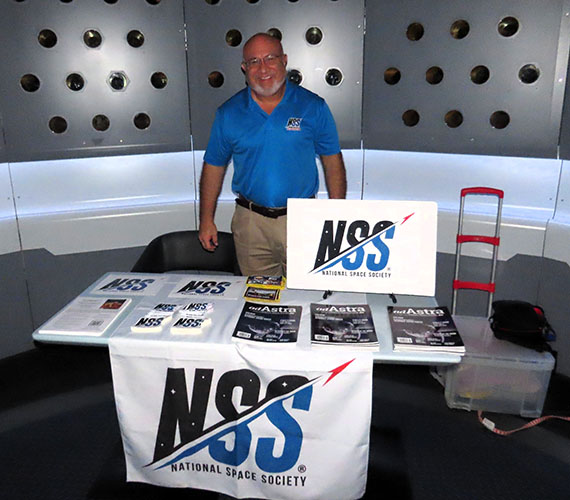
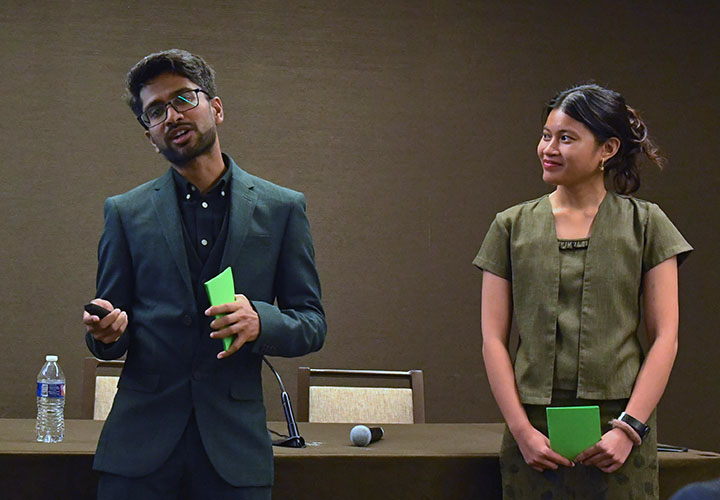
For the NSS Iowa August 22 Chapter meeting, Daniel Hoy, NSS Iowa Chapter Treasurer and NASA JPL Solar System Ambassador volunteer, led a discussion on the “Science of the James Webb Telescope.” The presentation is provided from YouTube below.
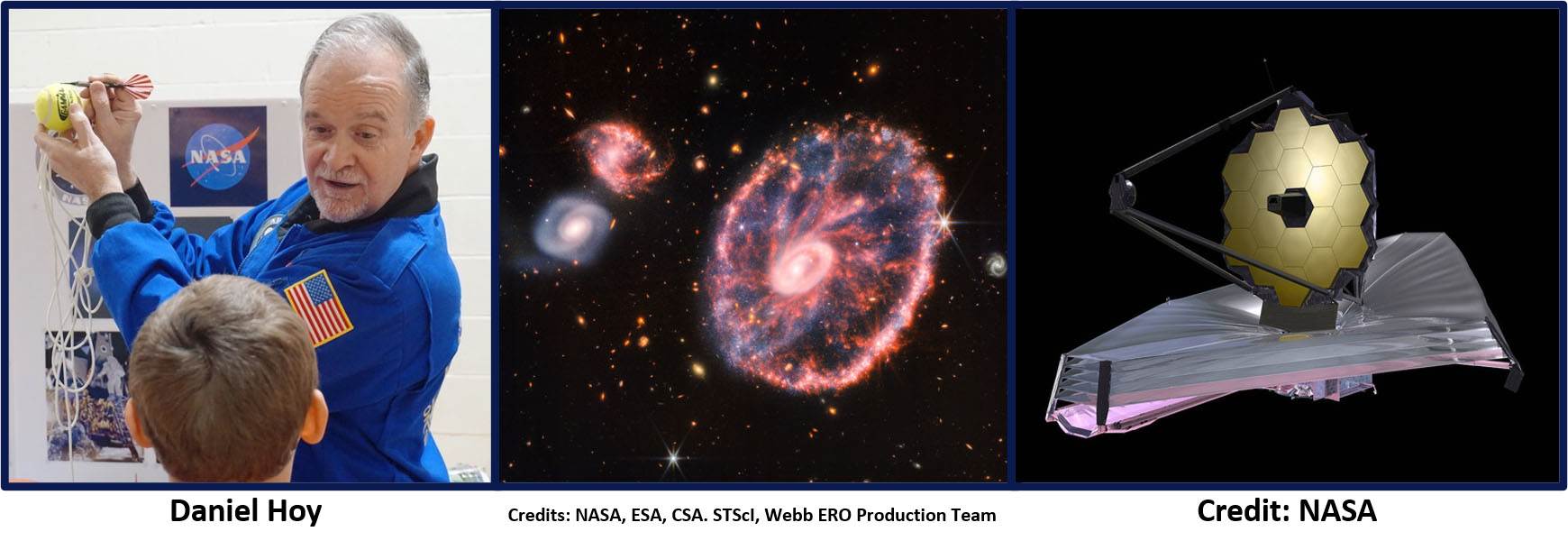
Hoy strategically outlined information to facilitate understanding. He described the material, dimensions, and detection capabilities of the James Webb Space Telescope (JWST) including its advantages as an infrared telescope in capturing images that cut through space dust and revealing the history of the universe by accounting for redshift resulting from the expansion of the universe.
The JWST has three near-infrared imagers: the Near Infrared Camera (NIRCAM)—the primary imager; the Near Infrared Spectrograph (NIRSPEC)—a spectrometer, which includes a micro-shutter array capable of capturing spectra from 100 objects simultaneously; and the Near Infrared Imager Slitless Spectrograph (NIRISS) plus one Mid-Infrared Imager (MIRI).
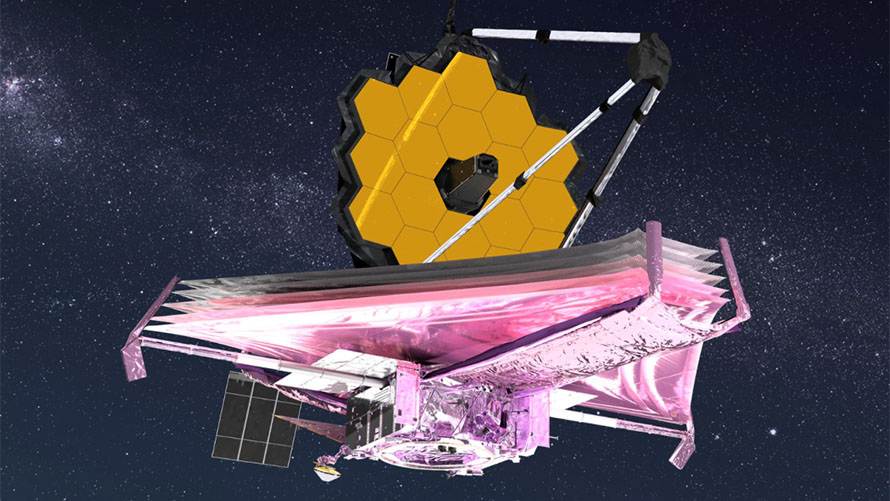
The JWST mirror is 6 times larger and 100 times more powerful than the Hubble telescope and has better resolution than the now-retired Spitzer infrared telescope. Side-by-side comparisons of JWST and Hubble images were shown. Hoy showed the location of the JWST mirrors: primary, secondary, tertiary, and fine steering, and explained how the hexagonal shape of the 18-primary mirrors optimized space. Each primary mirror segment has these accessory devices used to properly aim the mirror and provide correct curvature: an electronics box (signals the actuators to steer, position, and control the mirrors), a hexapod (a frame to which the actuators are mounted), actuators (tiny electrical motors to effect proper aim and curvature of each segment), and struts (running from the center to each mirror corner to alter the curvature of the segment).
The location of the second Earth-Sun Lagrange point (L2) offers the JWST a meta-stable orbital location and a view unaffected by proximity to the Sun and the inner planets. The tennis court-sized sunshield has multiple layers of lightweight, strong, and reflective aluminized Kapton film capable of withstanding the wide range of temperatures encountered by JWST, offering an approximate 1-million equivalent Sun Protection Factor, and significant protection from micrometeoroid impacts. The presentation ended with a question and answer and discussion period for those attending in-person and via Zoom.