By Burt Dicht, NSS Managing Director of Membership
with Dale Skran, NSS COO
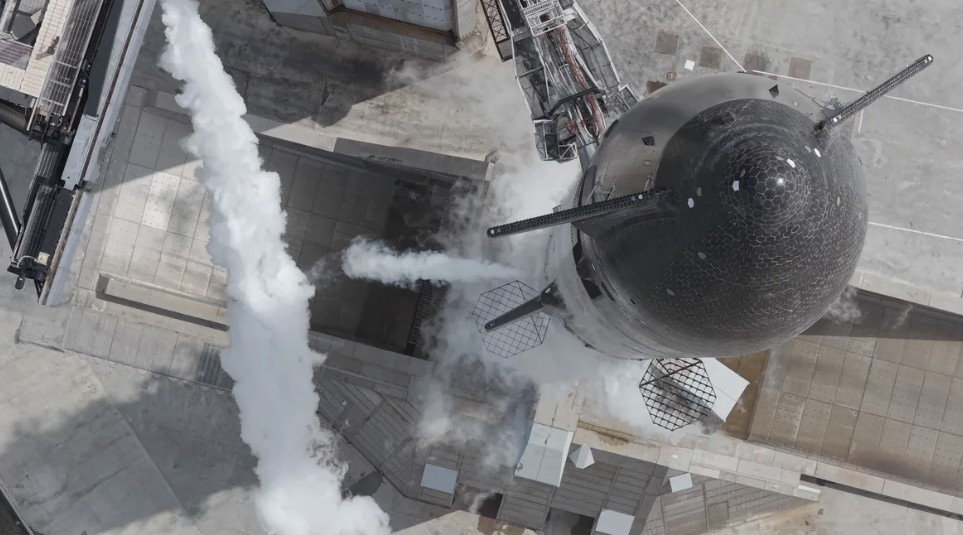
Image: Aerial view of Starship launch rehearsal (courtesy SpaceX)
For the past several years, SpaceX Starship test flights have often been viewed through the lens of dramatic launches, explosive failures, and critical engineering milestones. But Starship Flight 12 may represent something fundamentally different: the moment the program begins transitioning from experimental prototypes to a reusable heavy-lift launch system intended for operational missions.
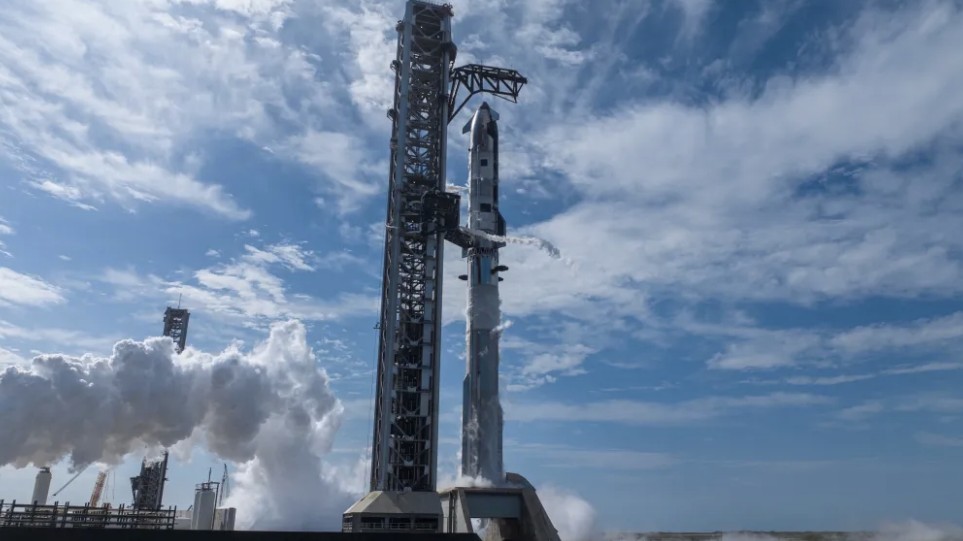
Currently targeting no earlier than May 19, 2026, with a 90-minute window that opens at 6:30 p.m. EDT, Starship Flight 12 will mark the debut of Starship Version 3 (V3), the most significant redesign in the history of the program. The mission will also be the first launch from SpaceX’s new Orbital Launch Pad 2 at Starbase, Texas.
More importantly, this is the version of Starship that SpaceX ultimately intends to use for lunar missions, orbital refueling operations, and large-scale cargo delivery.
In many ways, Flight 12 is not simply another Starship test. It is the first test of the architecture SpaceX hopes will open the door to routine deep-space operations.
More Than an Upgrade
While previous Starship flights introduced incremental improvements, V3 represents a major generational leap. The new vehicle stands slightly taller than earlier versions (408.1 ft) and incorporates upgraded structures, refined systems, and the new Raptor 3 engine. SpaceX says the design dramatically improves payload capability while also reducing manufacturing complexity and vehicle mass.
Perhaps the most eye-catching figure is the projected payload increase. Earlier Starship versions were estimated to deliver roughly 35 metric tons to low Earth orbit. V3 is expected to exceed 100 metric tons under fully reusable operations.
To put that into perspective, the Saturn V could place about 118 metric tons into low Earth orbit. Starship V3 is designed to operate in that same class while also being fully reusable. That combination is what makes the program so ambitious.
The Importance of Raptor 3
At the heart of V3 is the new Raptor 3 engine. Each engine produces substantially more thrust than previous versions while also being lighter and less expensive to manufacture. SpaceX has emphasized that the engine is designed not only for performance, but for production scalability. That distinction matters.
Historically, large rocket engines were treated almost like handcrafted aerospace hardware: highly specialized systems built in relatively small numbers. SpaceX is attempting to do something different by building engines and vehicles at a cadence closer to industrial manufacturing. If successful, this could fundamentally change the economics of access to space.
The company has already conducted major static fire tests of both the Super Heavy booster and the upper-stage vehicle in preparation for Flight 12. Those tests included full-duration firings of the upgraded engines and marked critical milestones for the V3 program.
| Metric | V2 (Flights 7–11) | V3 (Flight 12+) |
| Stacked Height |
~403.9 ft (123.1 m) |
408.1 ft (124.4 m) |
| LEO Payload Capacity | ~35 metric tons | >100 metric tons |
| Engines | Raptor 2 | Raptor 3 |
| Thrust per Engine | ~230 tf* | 280 tf |
| Total Liftoff Thrust | ~7,590 tf | ~9,240 tf |
| Launch Pad | Pad 1 | Pad 2 (new) |
*Note: tf=tonne-force, defined as the force exerted by the Earth’s gravity on a mass of one metric tonne (1,000 kilograms) under standard gravity.
Why Orbital Refueling Matters
One of the most important, and least understood, aspects of the Starship program is orbital refueling. Unlike Apollo-era missions, which launched toward the Moon in a single flight, SpaceX’s lunar architecture depends on multiple launches. A Starship Human Landing System (HLS) vehicle would first reach orbit and then be refueled by a series of tanker Starships before departing for the Moon.
This approach is operationally complex, but it offers enormous advantages in payload capability and mission flexibility. It also represents a major philosophical shift in spaceflight.
During Apollo, lunar missions were rare national events involving immense infrastructure and years of preparation. SpaceX is pursuing a model based on frequent launches, rapid reuse, and operational tempo that is more akin to transportation infrastructure than traditional government exploration programs.
In many ways, Starship’s success depends less on a single spectacular launch and more on proving that spaceflight can become increasingly routine.
Flight 12 is expected to include demonstrations tied to this future architecture, including upgraded propellant transfer plumbing and hardware designed to support eventual in-space fuel transfer operations.
Starlink Deployment and On-Orbit Inspection Tests
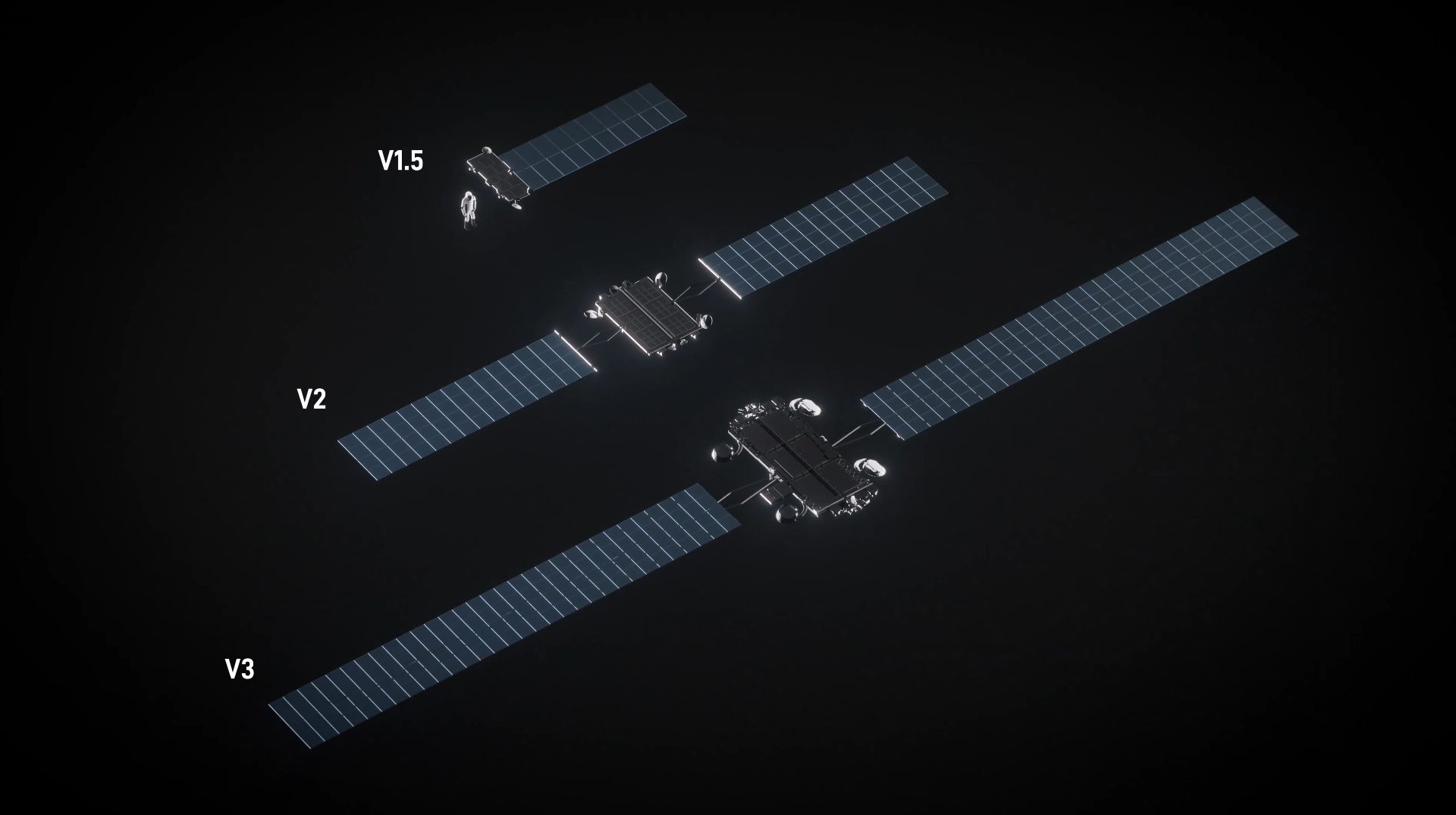
Another major objective of Flight 12 involves demonstrating Starship’s future role as a high-capacity deployment platform for the next generation of the Starlink constellation. Ship 39 is carrying 20 Starlink mass simulators similar in size to next-generation Starlink V3 satellites, and two specially modified Starlink satellites. That represents a substantial increase over earlier test flights, which carried only 8 to 10 simulators. The deployment sequence is scheduled to begin approximately 17 minutes after launch and continue for about ten minutes, providing SpaceX with an opportunity to validate payload door operations, release mechanisms, and handling procedures under realistic flight conditions. The simulators collectively represent tens of metric tons of payload mass, helping SpaceX evaluate how Starship performs while carrying loads comparable to future operational missions.
Perhaps even more intriguing are the final two modified satellites, which are equipped with cameras to inspect Starship’s heat shield during flight. During flight, these satellites will image Starship’s heat shield from outside the vehicle and transmit the imagery back to SpaceX engineers. The company has intentionally painted several tiles white to simulate damaged or missing thermal protection tiles and provide clear imaging targets for the inspection system. In another deliberate test, one heat shield tile has been removed entirely so engineers can study how aerodynamic forces affect surrounding tiles during reentry. Together, these experiments are designed to provide valuable real-world data on heat shield performance and damage detection, a critical capability if Starship is eventually to support rapid reuse and routine return-to-launch-site operations. The test also highlights Starship’s long-term importance to the Starlink program itself, as SpaceX has repeatedly stated that the full next-generation constellation will require Starship’s enormous payload capacity because Falcon 9 cannot accommodate the largest future satellites.
The Artemis Connection
The success of Starship V3 has implications far beyond SpaceX itself. NASA is depending on Starship as the Human Landing System for Artemis IV, the mission intended to return astronauts to the lunar surface later this decade. Before that can happen, SpaceX must demonstrate not only reliable launches and reentry, but also the complex orbital refueling architecture required to send a lunar lander beyond Earth orbit.
That makes every major Starship milestone relevant to the future of Artemis.
Flight 12 will not complete all of those objectives, but it may provide the clearest indication yet of whether the underlying system is beginning to mature into a truly operational platform.
A Different Vision of Spaceflight
Since the early days of the space advocacy movement, NSS has promoted the idea that humanity’s future in space depends on lowering the cost of access to orbit and creating reusable systems capable of supporting large-scale activity beyond Earth. Starship is perhaps the most aggressive attempt yet to make that vision a reality.
I have not yet had the opportunity to witness a Starship launch in person, although many friends and colleagues who have traveled to Starbase have told me the experience is unforgettable. One detail they consistently mention is how surprisingly close spectators can get to the launch site compared to many traditional launches. They describe not only the immense sound and power of the vehicle, but the feeling of physically experiencing the scale of the launch in a way that few rockets have ever allowed.
As someone inspired by the Apollo era, I see Flight 12 as another step toward a future many space advocates have worked toward for decades: expanding humanity’s presence beyond Earth through reusable heavy-lift launch systems.
The road ahead remains challenging. Spaceflight is unforgiving, and many critical capabilities, including orbital propellant transfer and rapid full reusability, remain unproven at this scale. But if Starship V3 performs as intended, Flight 12 may ultimately be remembered as one of the key turning points in the evolution of modern space transportation.