
By Burt Dicht
NSS Space Coast Correspondent
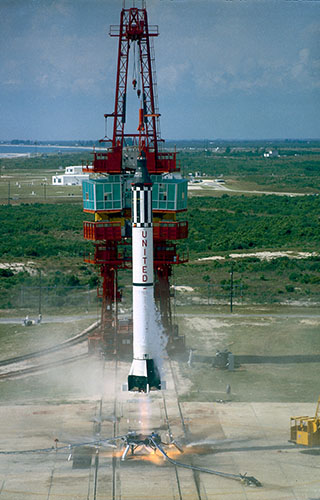
America’s human spaceflight program began 65 years ago today. On May 5, 1961, Alan Shepard made history as the first American—and the second human—to reach space. Shepard flew Mercury-Redstone 3 in a spacecraft he named Freedom 7 (launch photo above).
Shepard’s flight was not an orbital journey, but a ballistic suborbital hop, traveling about 300 miles downrange, reaching an altitude of roughly 116 miles, and lasting 15 minutes and 22 seconds from liftoff to splashdown.
At 9:34 a.m., the Mercury-Redstone rocket rose from Launch Complex 5 (LC-5) at Cape Canaveral. In 2 minutes and 22 seconds, the Redstone engine completed its burn, pushing Shepard through ascent forces of more than six times the force of gravity. It was a brief but intense ride, a test not just of the vehicle, but of the human body’s ability to endure spaceflight.
After engine cutoff, the Freedom 7 capsule separated and continued along its ballistic arc. For a few precious minutes—about five—Shepard experienced weightlessness, becoming the first American to float freely in space. Though short in duration, that moment represented something profound: confirmation that a human could function in the space environment.
Reentry followed, with the capsule descending under parachutes before splashing down in the Atlantic Ocean, where it was recovered by the USS Lake Champlain. The entire mission was tightly choreographed, and every phase from launch to recovery was critical.
The flight was modest in its goals, but for NASA, less than three years old at the time, it was a resounding success that would profoundly shape the direction of the U.S. space program. The success of Freedom 7 helped create the political conditions and public confidence for President Kennedy’s May 25, 1961 “Urgent National Needs” address before Congress, where he set the goal of landing a man on the Moon and returning him safely to Earth before the decade was out.
A lot has happened in the past 65 years, not only in human spaceflight, but in our exploration of the solar system and our study of the universe in which we live. Today, we had a chance to celebrate and remember the moment Alan Shepard made history.
A Personal Connection at Cape Canaveral
I had the privilege of joining a special Alan Shepard Day celebration hosted by the Cape Canaveral Space Force Museum at historic Hangar C at the Cape Canaveral Space Force Station. This was not just a commemoration. It was an experience that brought the past into sharp, personal focus. As part of that experience, we were served a steak and eggs breakfast, the same high-protein meal Shepard ate before his flight. It was a small but thoughtful detail, one that made the connection to that morning in 1961 feel just a bit more real.
Inside Hangar C, surrounded by artifacts and the atmosphere of early spaceflight, including a Redstone ballistic missile that evolved into the Mercury-Redstone, we heard from an outstanding group of speakers.
Colonel Brian L. Chatman, commander of Space Launch Delta 45, reflected on the enduring importance of Cape Canaveral as America’s gateway to space and its continuing role as the world’s most active spaceport. Jamie Draper, director of the Cape Canaveral Space Force Museum, shared historical insights on the critical role the military played in supporting the Freedom 7 mission.
As Draper noted, NASA at the time had very little infrastructure, and the military’s contribution was essential. More than 18,000 military personnel supported Project Mercury, and approximately 15,000 U.S. Navy personnel assisted with recovery operations. He also pointed out that some 800 modifications were made to the Redstone rocket to human-rate it and ensure astronaut safety.
But perhaps the most meaningful perspective came from Laura Shepard-Churchley, Alan Shepard’s daughter. Hearing her speak about growing up during the earliest days of human spaceflight added a deeply personal dimension to the story.
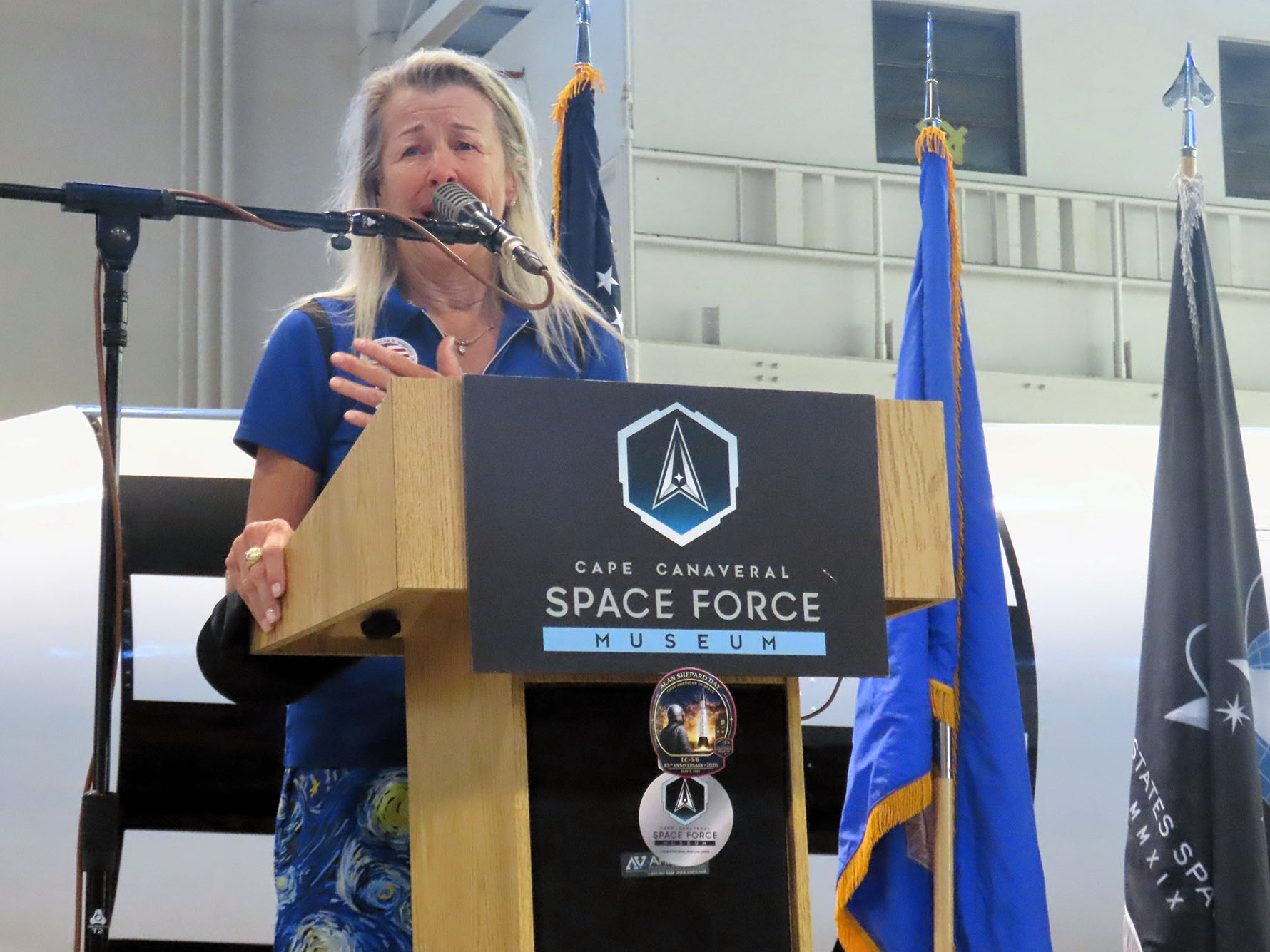
She shared a story from 1959, when Shepard was selected as one of the original astronauts. Gathering the family at their home in Virginia Beach, he told his daughters he was going to be an astronaut. At the time, the word was so new that it wasn’t even in the dictionary. She confirmed that by looking it up herself and said she still has that dictionary today.
In a remarkable continuation of that legacy, Shepard-Churchley followed in her father’s footsteps. She flew on Blue Origin’s NS-19 suborbital mission on December 11, 2021, aboard a New Shepard spacecraft named in his honor.
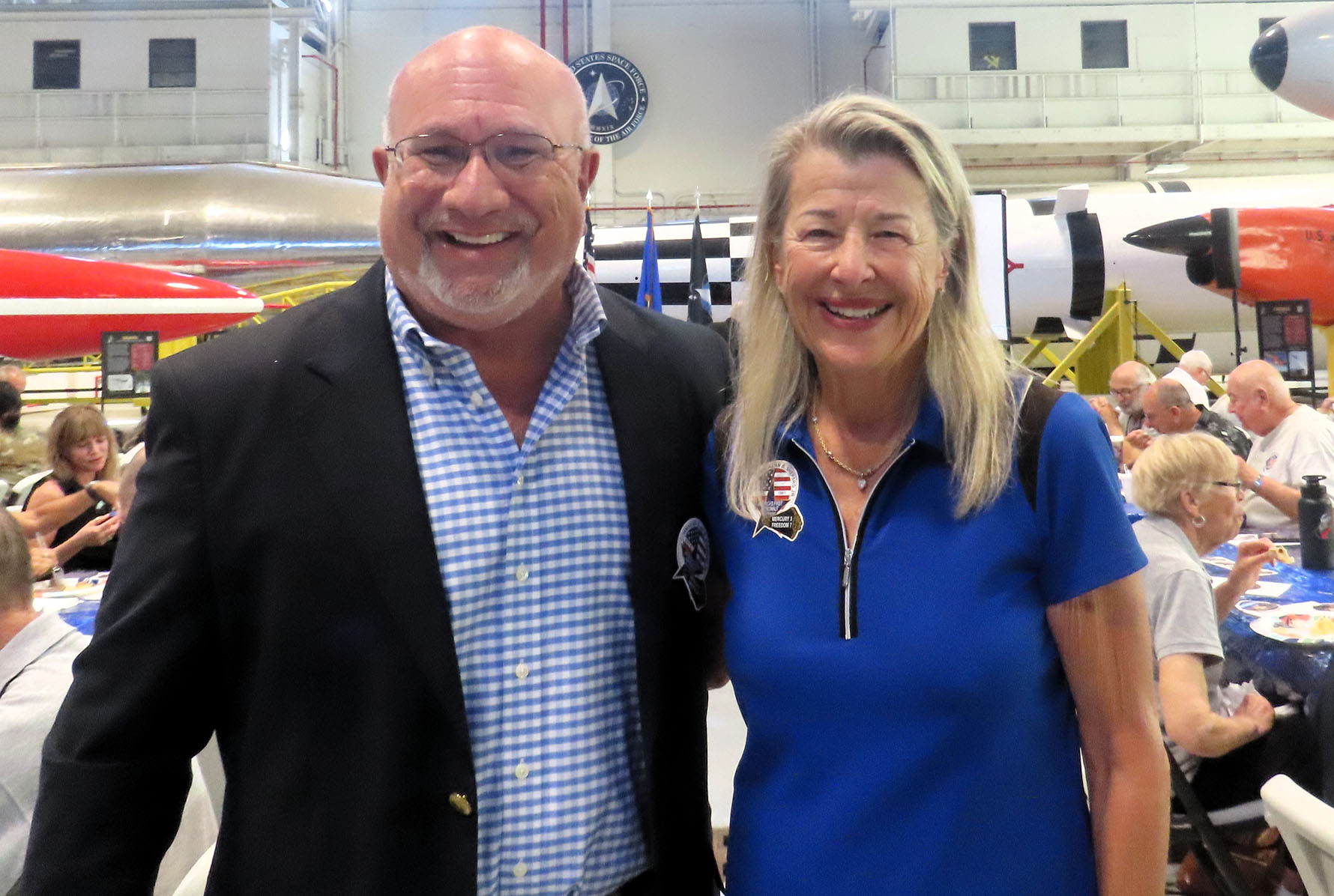
Walking in the Footsteps of History
There were additional presentations by Randal Coppola and Carl Clauch, two museum docents who provided further detail on the development of the Mercury-Redstone and the broader historical context of the mission.
Following the presentations, we traveled to Launch Complex 5/6, the very site where Shepard’s Freedom 7 mission lifted off. Standing at LC-5 and looking at the Mercury-Redstone replica, it is striking how modest the site appears compared to today’s launch complexes. And yet, from this relatively simple pad, the United States took its first step into human spaceflight.
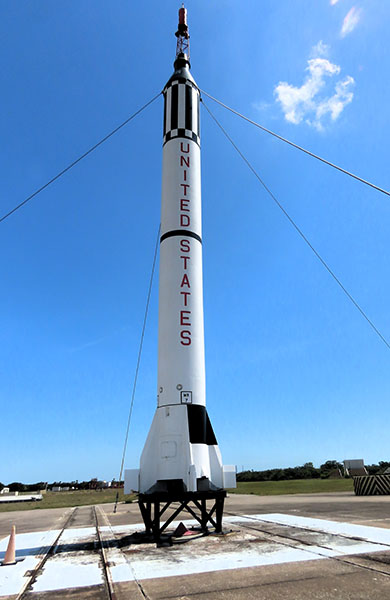
A bit of space trivia I have always remembered: the Launch Escape System on Shepard’s later Apollo 14 Saturn V produced nearly twice the thrust of the Mercury-Redstone, roughly 138,000 to 155,000 pounds of force compared to about 78,000. It is a powerful reminder that transformative achievements do not always begin with grand infrastructure. They begin with vision, courage, and determination.
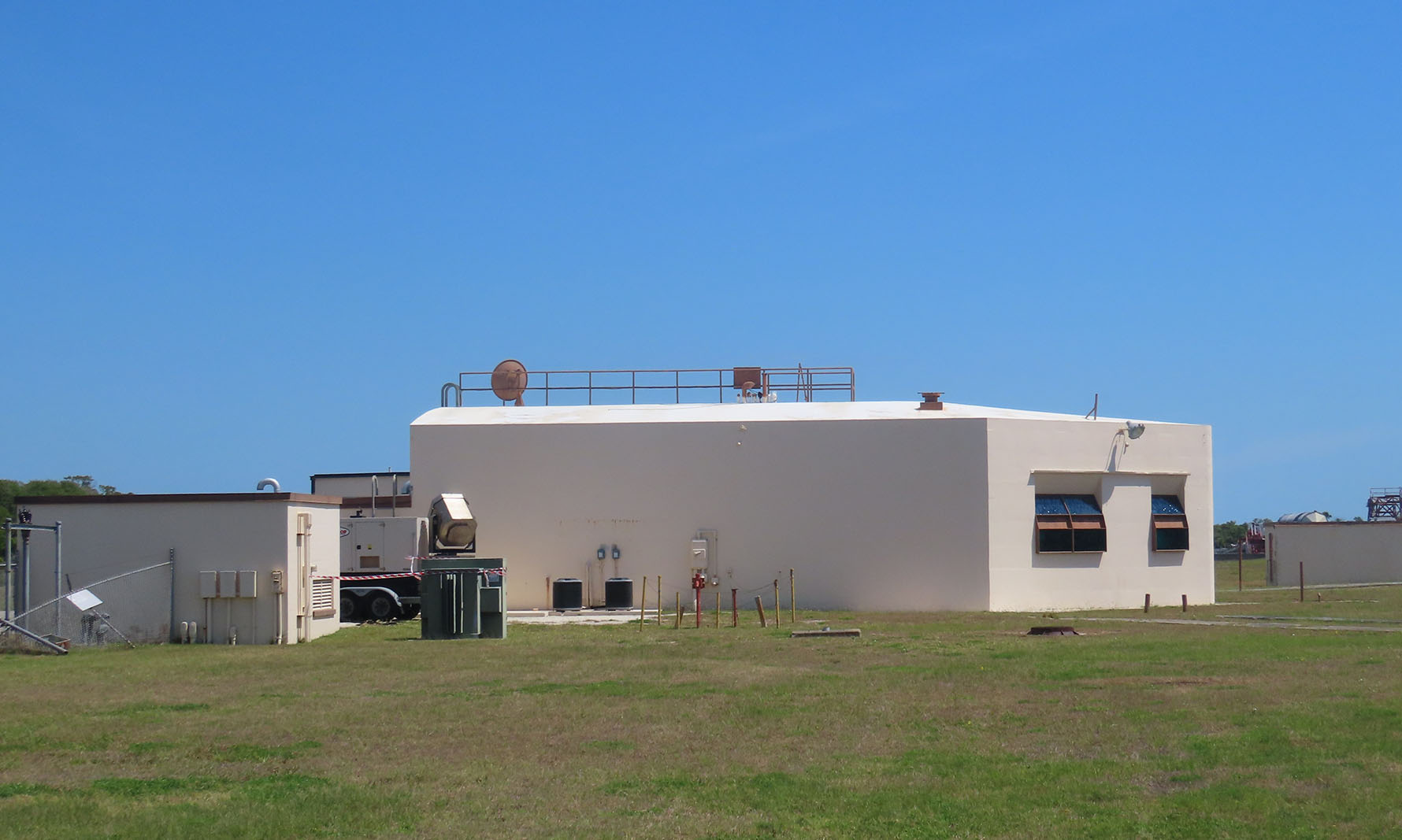
One of the true highlights of the day was touring the LC-5 blockhouse. This protective shelter, located just a few hundred feet from the launch pad, is where the launch team monitored systems and made the final decisions that sent Shepard into space.
Inside, the banks of analog equipment speak to the technology of the era. During Shepard’s launch, 73 engineers, technicians, and support personnel, including Dr. Wernher von Braun, were inside the blockhouse. Standing there, you can almost feel the tension and excitement they must have experienced on that historic morning.
Why It Still Matters
As someone who has long been inspired by the Apollo era and its legacy, being at Cape Canaveral for this anniversary brought everything full circle. It is one thing to study or write about history. It is another to stand where it unfolded.
Shepard’s 15-minute flight may seem brief by today’s standards, but its impact was profound. It demonstrated that the United States could compete in space, helped restore national confidence, and set the stage for the rapid progression to Gemini and Apollo.
Sixty-five years later, as we prepare for new missions beyond low Earth orbit, that first step still matters. It reminds us what is possible when engineering excellence meets bold ambition.
Events like this do more than honor the past. They keep it alive. They allow us to experience history not as something distant, but as something we can still touch, walk through, and learn from.
As we concluded the day, I was struck by how much of Shepard’s legacy is still present at Cape Canaveral, not just in preserved sites like LC-5 and the blockhouse, but in the ongoing work happening just miles away.
The story that began on May 5, 1961, is still being written. And from Freedom 7 to Artemis, the path forward still traces back to that first 15-minute flight.






1 thought on “Honoring a Historic First: The 65th Anniversary of Alan Shepard’s Flight”
Burt’s articles are always well done and inspiring. I was 9 when Shepard blasted off. Reliving the event gives me goosebumps. Keep going!