By Hoyt Davidson, NSS Executive Vice President
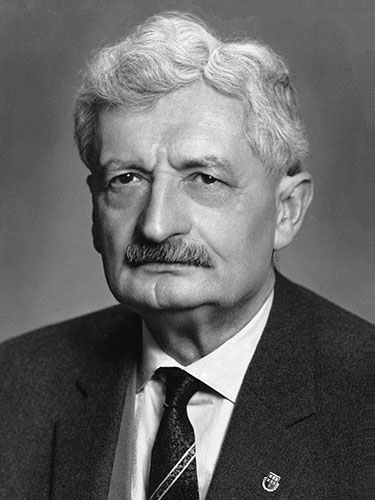
The National Space Society celebrates the 100th anniversary of the seminal 1923 publication of Hermann Oberth’s Die Rakete zu den Planetenräumen (The Rocket into Planetary Space). Mr. Oberth was considered to be a founding father of rocketry and astronautics. His self-published book, based on a rejected PhD thesis, was a huge hit in Germany and Europe showing how the popular Jules Verne masterpiece From the Earth to the Moon could actually happen. As Jeffrey Manber argues in his recent book From the Earth to Mars, Oberth’s book provided “mathematical formulas proving that a rocket could travel in the vacuum of space and Oberth’s ideas for space utilization, such as using space stations to monitor Earth’s weather, fuel depots and launching spacecraft to other planets.” If this all seems obvious now, it was not so obvious in 1923. The New York Times went so far as to publish a piece insulting the idea that rocket propulsion was even possible without an atmosphere.
Oberth later expanded his book into a larger volume titled Wege zur Raumschiffahrt (Ways to Spaceflight) where he explored in-space cargo vehicles (orbital tugs) and in-space manufacturing in zero gravity to produce new materials.

These books inspired Thea von Harbou to write space travel novels and to get her husband, Fritz Lang, to produce the sci-fi classic black and white movie Die Frau im Mond (The Woman in the Moon), which was a sensation premiering in 1929. As part of this movie production effort, Oberth became the first physicist to be hired by a movie studio as a space technology expert. He was also asked to manufacture and launch a rocket within four months as a publicity stunt for the film, a schedule that would make even Elon Musk blush. He thus became the first space entrepreneur and upon the venture’s failure, the first CEO of a failed rocket company.
To learn more about Oberth’s story and these exciting early years of rocketry and space enthusiasts, NSS recommends Jeffrey Manber’s book From the Earth to Mars: The Surprising History of the Rocket Pioneers Who Launched Humanity Into Space, released April 2023.