By Burt Dicht
NSS Space Coast Correspondent
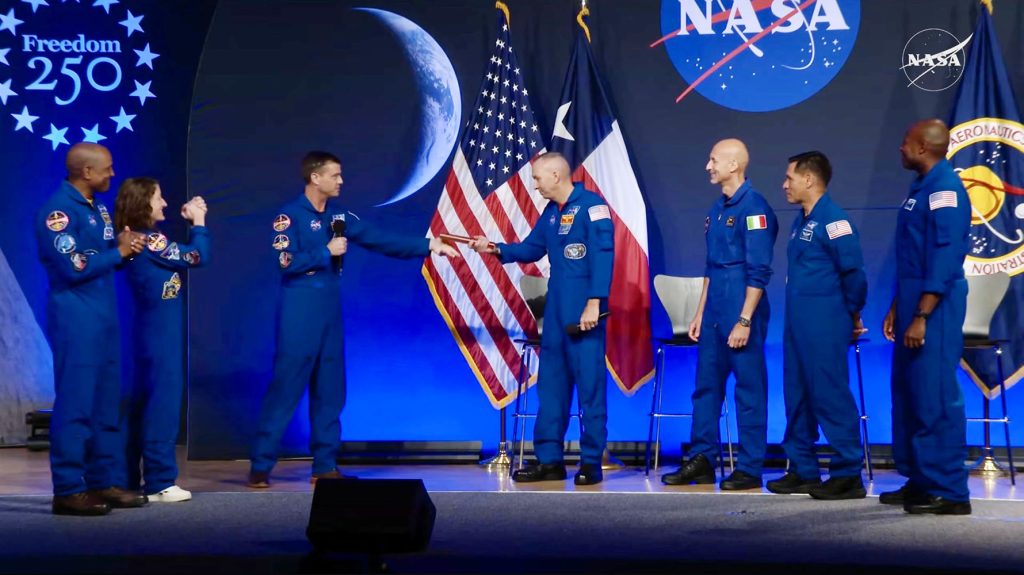
Image: Artemis III Commander Randy Bresnik accepts the baton from Artemis II Commander Reid Wieseman.
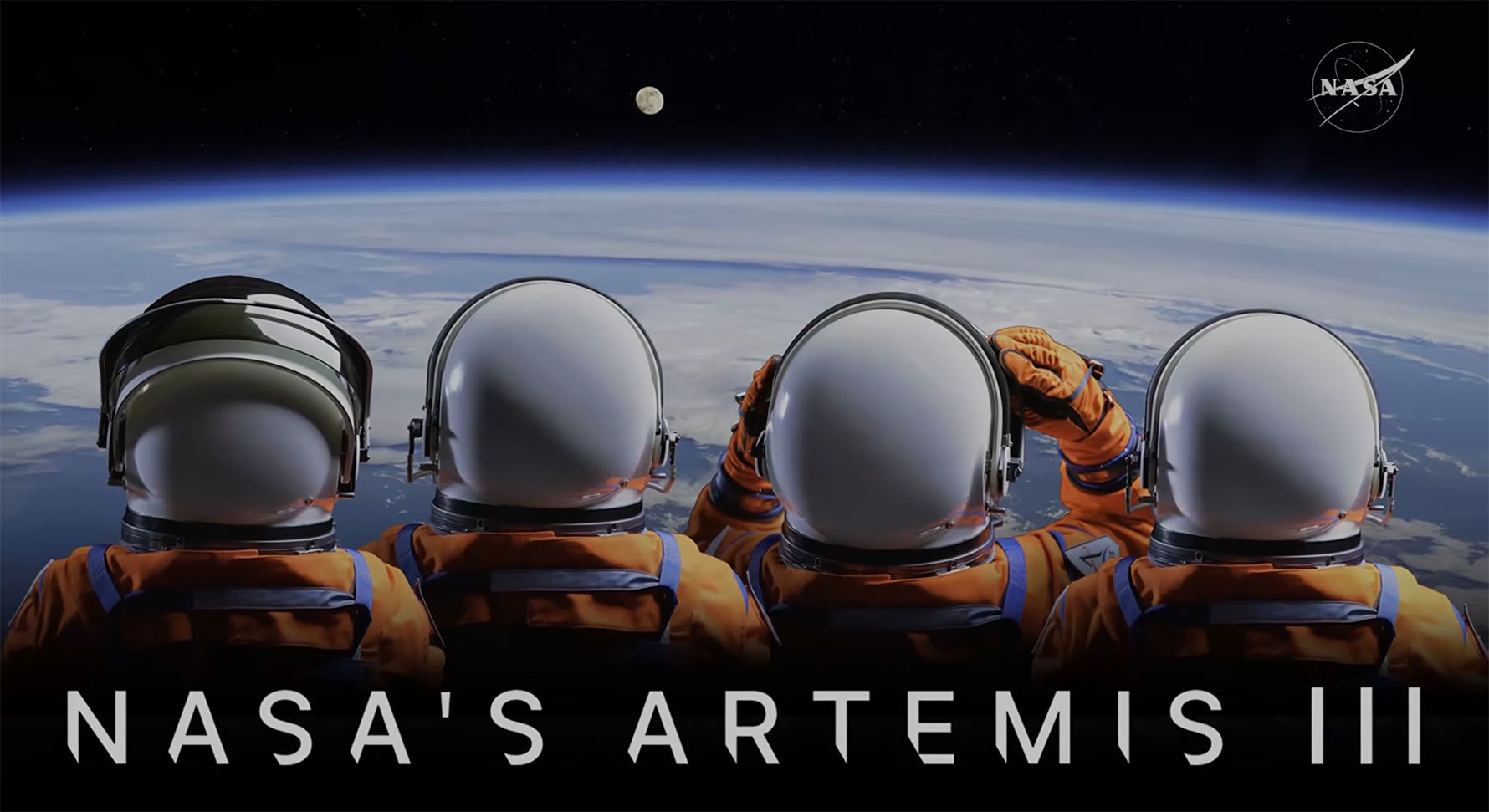
At the Johnson Space Center today, Artemis II commander Reid Wiseman symbolically handed the baton to Randy Bresnik, who will lead the four-person Artemis III crew on the next step toward a return to the Moon. In accepting command, Bresnik described Artemis III as “the link from Artemis II to the Moon landing,” underscoring the mission’s role in NASA’s evolving Artemis campaign.
The announcement, made by NASA Administrator Jared Isaacman, comes just two months after Artemis II splashed down on April 10, completing humanity’s first crewed journey around the Moon since Apollo 17 more than five decades earlier.
That image of a baton pass is more than just good ceremony. Artemis II demonstrated that Orion and the Space Launch System (SLS) can safely carry astronauts around the Moon and back. Artemis III, planned for 2027, will remain in Earth orbit and focus on testing the architecture needed for future lunar landings. Artemis II proved we can return astronauts to deep space. Artemis III will prove we can assemble and operate the systems that will eventually put astronauts back on the lunar surface.
A Personal View of a Program in Motion
I watched Randy Bresnik leave Earth aboard shuttle Atlantis on STS-129 in November 2009 from the Apollo/Saturn V Center at Kennedy Space Center. The orbiter arced out over the Atlantic on a mission to deliver supplies and equipment to the International Space Station. Chosen as part of NASA’s 2004 astronaut class, STS-129 was Bresnik’s first flight, and few people watching that launch could have imagined that his career would one day help bridge the transition from the Shuttle Program to Artemis.
In January, during the rollout of Artemis II from the Vehicle Assembly Building, I had the opportunity to meet Andre Douglas. As a backup crew member for Artemis II, he was part of the day’s activities as the orange-and-white SLS and Orion spacecraft slowly emerged into the Florida sunlight. We talked briefly about the challenges ahead and the promise of a sustainable return to the Moon. At the time, neither of us knew he would soon be assigned to Artemis III.
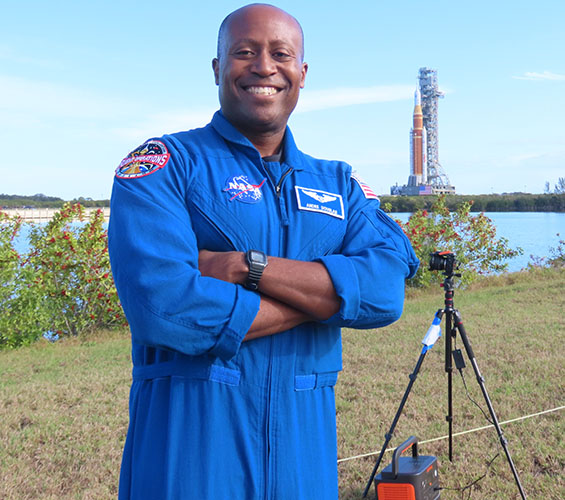
Seeing both of those names, Bresnik and Douglas, on today’s crew announcement was a reminder of just how long the road from Shuttle to Artemis has been.
Artemis III: The “Link” Mission
NASA’s announcement reflects how much the Artemis program has evolved over the past few months. Artemis III, originally envisioned as the mission that would return astronauts directly to the lunar surface, has become a critical Earth-orbit test flight. Its purpose is to validate the systems, procedures, and partnerships needed before NASA commits a crew to a lunar landing.
Launching atop SLS from Kennedy Space Center, Orion will carry the crew into Earth orbit, where it will rendezvous and dock with Human Landing System vehicles from both Blue Origin and SpaceX. During the approximately two-week mission, the crew will evaluate docking procedures, spacecraft operations, crew interfaces, guidance and navigation systems, and the coordination required between NASA and its commercial partners.
In many ways, Artemis III resembles Apollo 9, when astronauts tested Lunar Module in Earth orbit before Apollo 11 attempted a landing mission. Artemis III serves a similar purpose: proving that Orion and the commercial lander systems can work together safely and effectively before astronauts head back to the Moon.
If successful, Artemis III will clear the way for Artemis IV, now planned as NASA’s first Artemis lunar landing mission at the Moon’s south pole.
MEET THE CREW
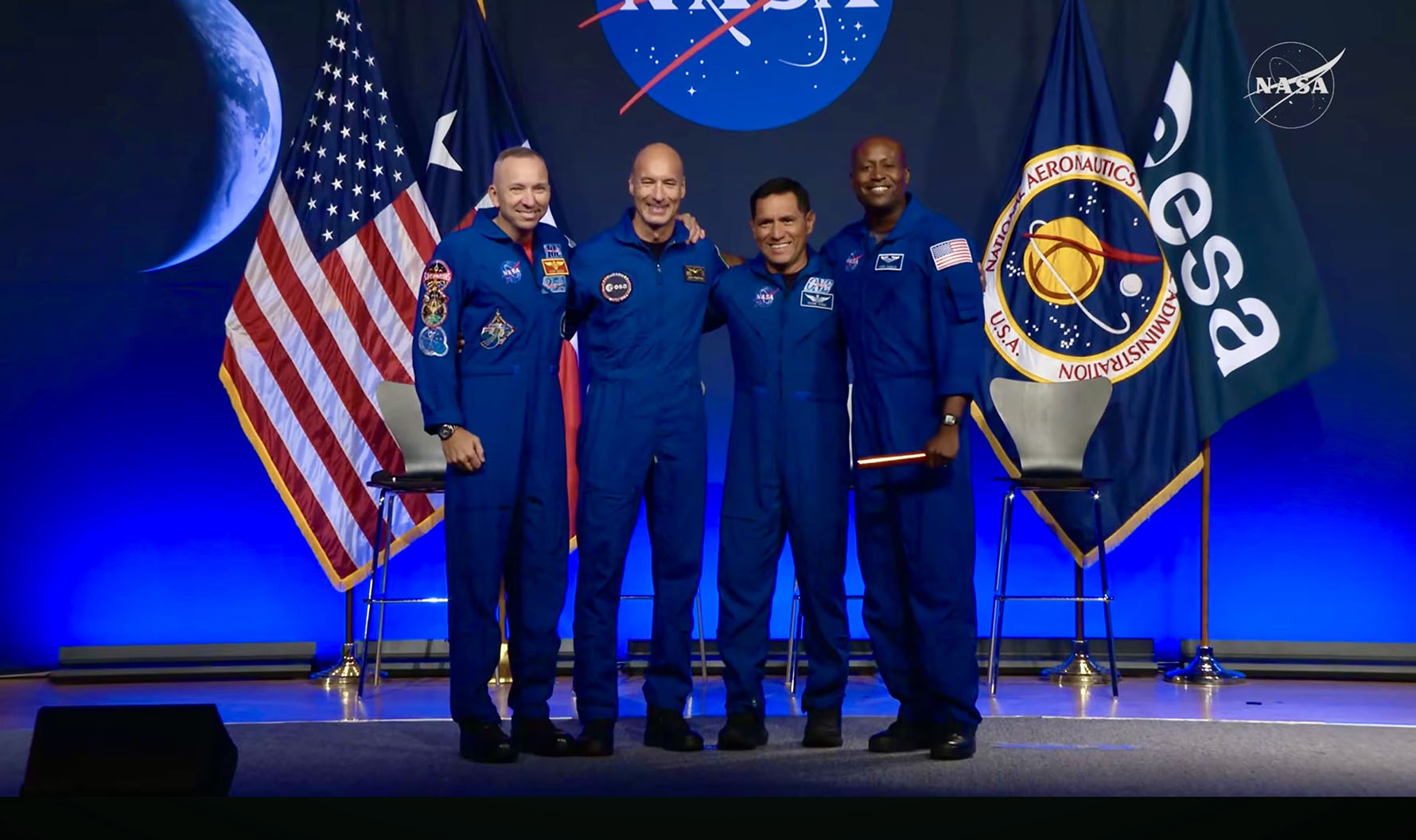
Randy Bresnik – Commander
NASA astronaut Randy Bresnik will command Artemis III. A former Marine Corps aviator and test pilot, Bresnik was selected as part of NASA’s 2004 astronaut class. He flew aboard STS-129 and later launched to the International Space Station aboard Soyuz MS-05, where he served as commander of Expedition 53.
His experience spans the Space Shuttle Program, long-duration ISS operations, and international partnerships, making him well suited to lead a mission focused on integrating multiple spacecraft and commercial systems into a single exploration architecture.
Luca Parmitano – Pilot
European Space Agency astronaut Luca Parmitano will serve as pilot, becoming the first ESA astronaut assigned to an Artemis mission. An Italian Air Force test pilot and veteran of two long-duration stays aboard the International Space Station; Parmitano has logged more than 360 days in space and conducted six spacewalks.
Parmitano’s selection reflects both his operational experience and the international nature of Artemis. Europe is already a key partner through its contributions to Orion’s service module, and his assignment further reinforces that partnership.
Andre Douglas – Mission Specialist
NASA astronaut Andre Douglas will make his first spaceflight as a mission specialist. A graduate of the United States Coast Guard Academy, Douglas earned a doctorate in systems engineering and built a career focused on robotics, autonomy, maritime systems, and complex mission integration before being selected as part of NASA’s 2021 astronaut class.
His background makes him a natural fit for Artemis III. Much of the mission is focused on integrating multiple spacecraft, systems, and operational teams into a functioning exploration architecture. Douglas’s expertise in systems engineering and autonomous operations will be valuable as NASA tests the technologies and procedures needed for future lunar landing missions.
Frank Rubio – Mission Specialist
Frank Rubio brings valuable operational experience to the crew. An Army physician, helicopter pilot, and veteran astronaut, Rubio completed a record-setting 371-day mission aboard the International Space Station after an unexpected extension caused by a problem with his Soyuz spacecraft.
That experience provided firsthand insight into long-duration human spaceflight, crew health, and operational resilience, knowledge that will be increasingly important as Artemis missions move farther from Earth and grow more complex.
Looking Ahead
The baton has been passed.
Artemis II demonstrated that we can once again send astronauts around the Moon and bring them home safely. Artemis III now takes on a different challenge: proving that Orion, commercial landers, and the partnerships behind them can function as a single exploration system.
If that happens, the road back to the lunar surface becomes much clearer.