National Space Society

NSS Congratulates NASA on Crew Selection for the Artemis III Flight

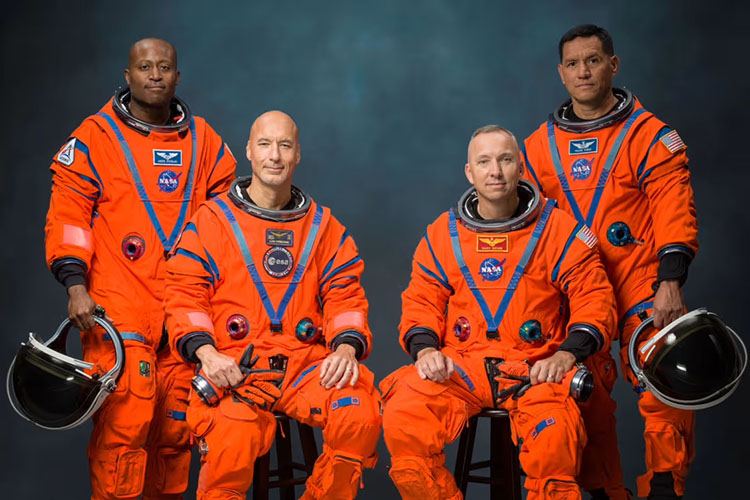
Artemis III Crew

Share:

Facebook
X
Pinterest
LinkedIn

NASA announces prime crew for critical orbital test flight of lunar landers

The National Space Society congratulates the four-person prime crew and backup astronaut selected for the upcoming Artemis III mission, a critical flight designed to validate key rendezvous and docking technologies before human flights return to the lunar surface.

The prime crew includes three NASA astronauts and one representative from the European Space Agency (ESA). The crew Commander is Randy Bresnik of NASA and the Pilot is Luca Parmitano of ESA. They will fly with Mission Specialists Andre Douglas and Frank Rubio, both of NASA, with Robert Hines as backup crew.

Karlton Johnson, NSS CEO, said, “Every generation is called to advance the frontier. The crew of Artemis III now carries that responsibility. By helping to validate the systems and partnerships that will enable future exploration, they are helping to write the next chapter of human spaceflight. The National Space Society congratulates them on this historic assignment.”

The crew assignments were finalized and announced on Tuesday during a live ceremony at NASA’s Johnson Space Center, led by NASA Administrator Jared Isaacman.

Targeted for launch as soon as late 2027, Artemis III will fly for approximately two weeks, compared with the 10-day timeline executed by the recent Artemis II lunar flyby mission in April. Instead of traveling to the Moon, the primary objective of Artemis III is to test the Artemis lunar landing system, including one or both of the Human Landing System (HLS) candidates, SpaceX’s Starship and Blue Origin’s Blue Moon, in low-Earth orbit (LEO).

Dale Skran, NSS COO and SVP, said, “We applaud Administrator Isaacman’s re-envisioning of Artemis III as an engineering test mission. His clear-headed leadership has put America on a realistic path to a permanent lunar base.”

Following a launch aboard NASA’s Space Launch System (SLS) rocket from the Kennedy Space Center in Florida, the crew will pilot the Orion spacecraft into orbit, where they will conduct a highly choreographed series of maneuvers to rendezvous and test docking capabilities with the HLS contenders.

According to NASA, the technical parameters of the mission are designed to mitigate risks before sending astronauts back to the Moon. By demonstrating integrated hardware, software, propulsion, and communication interfaces closer to Earth, NASA aims to secure operational baselines for the subsequent Artemis IV mission, which is currently scheduled for 2028 and aims to land Americans in the lunar south pole region for the first time in over 50 years.

Share:

Facebook
X
Pinterest
LinkedIn
Picture of By National Space Society

By National Space Society

Leave a Comment

Don't Miss a Beat!

Be the first to know when new articles are posted!

Search
Categories

Follow Us On Social Media

JOIN THE
GREATEST ADVENTURE

Give The Gift Of Space: Membership For Friends and Family

Book Review

HOTOLSkylon

Book Review: HOTOL & Skylon: The Story of Britain’s Spaceplanes

In HOTOL & Skylon: The Story of Britain’s Spaceplanes, Rob Coppinger covers the story of both in great detail, with the reminiscences of many who played integral roles in these ambitious programs. The book shines when it captures the enthusiasm and excitement of those involved, and there are extensive quotes from many who devoted years of work on these projects.

Read More »
Out of This World

Book Review: Out of This World

Anyone seeking a short but comprehensive introduction to human spaceflight would do well to start with this book. It reviews its history, highlights the accomplishments and tragedies, and describes the equipment used. It also looks at living in space, what space travelers experience, and how they work.

Read More »
desigining farms in space

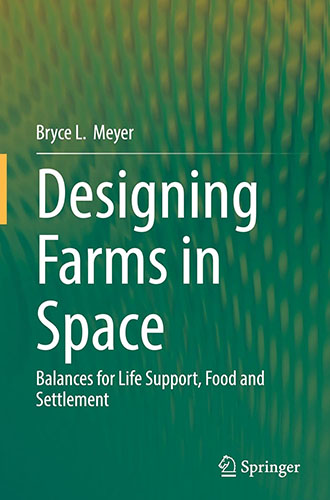
Book Review: Designing Farms in Space

Meyer’s academic textbook is loaded with numerous photographs, diagrams, charts, and graphs. There are chapters on subjects such as farm machines, animal and fungi production, plant and algae production, and space menus. The farming techniques outlined in the book can be applied to lunar, Martian, or rotating space settlements.

Read More »
Archives


Hilton McLean Tysons Corner, McLean, Virginia
June 4 - 7, 2026

Recent Blog Posts

In HOTOL & Skylon: The Story of Britain's Spaceplanes, Rob Coppinger covers the story of both in great detail, with the reminiscences of many who...

The National Space Society (NSS) welcomes the U.S. Administration’s proposal to establish a United States Space Academy, a NASA-led institution meant to prepare the next...

By Burt Dicht NSS Space Coast Correspondent Today’s successful launch of the Nancy Grace Roman Space Telescope will help answer two key questions: How does...

By Robin Scott National Space Society of North Texas (NSS-NT) President Ken Ruffin, shown above holding the 2026 NSS Chapter of the Year Award, acknowledged...

The National Space Society (NSS) welcomes the release of the National Space Transportation Policy, a comprehensive directive establishing the United States’ strategic framework for launch,...

In this NSS Space Forum, astronaut and former U.S. Navy test pilot Susan Kilrain joins us to discuss her new book, Slaying Snakes in the...
Anyone seeking a short but comprehensive introduction to human spaceflight would do well to start with this book. It reviews its history, highlights the accomplishments...
The Space Coast has extraordinary assets and an opportunity to continue its preeminence as a spaceport while becoming a destination for a new generation of...
adastra magazine

Your Doorway to New Worlds