Commentary by Dale Skran
NSS Board of Directors
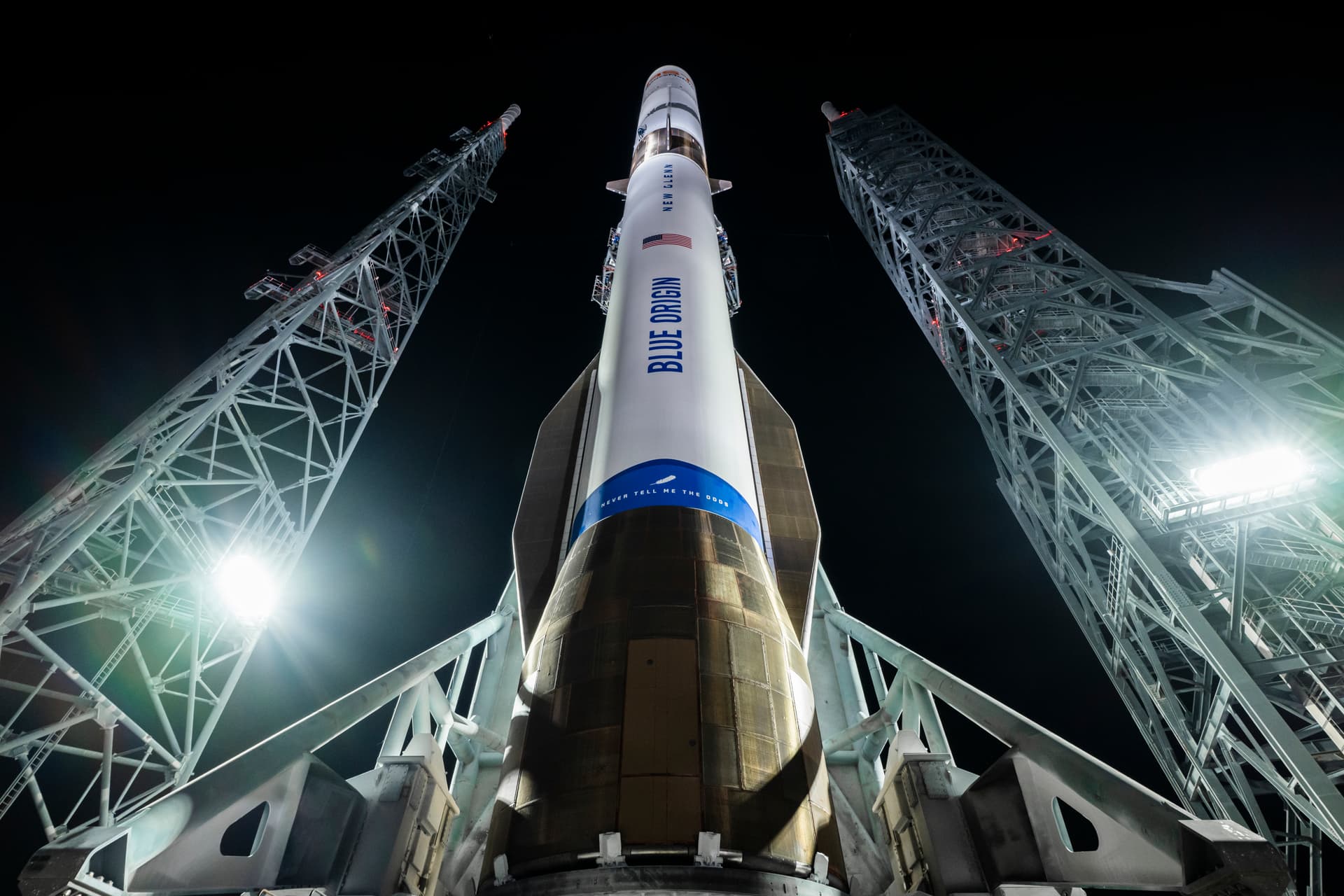
Over the last few years amazing progress has been made in space technology, but with a curious silence in the mainstream press. On November 23rd, Blue Origin flew their reusable New Shepard vehicle to the Karman line (100km), the official definition of the “edge of space” and back to the launch site for a soft landing on four legs. Previously, the DCX and SpaceX Grasshopper had flown vertically to various altitudes far lower than the Karman line, and landed for reuse. The venerable yet reusable X-15 rocket plane, launched by a B-52, crossed the Karman line on a couple of occasions, but did not land vertically. Viewed from this perspective, Blue Origin’s feat does not seem that remarkable.
And in some sense, like all engineering milestones, it is not that remarkable. It is one link in a long chain of tests. It needs to be followed by close investigation of wear and tear, multiple re-flights, and finally certification for use by sub-orbital tourists. This process will take several years. In parallel, Blue Origin is developing a much larger rocket, for which the New Shepard will be the 2nd stage. A methane/lox engine called the BE-4 is being constructed by Blue Origin both for usage in the first stage of their own “Big Rocket” and the United Launch Alliance Vulcan. The completion of this engine will take more years, and the testing of a reusable first stage based on the BE-4 still more years.
So what is different about Blue Origin’s achievement this time? First, although Blue has received a small amount of NASA funding as part of the COTS program, the great bulk of money was provided by Jeff Bezos himself. There is certainly no NASA line item, that, if cut, would cause Blue Origin to change direction or cancel New Shepard. Second, unlike NASA, Blue plans to start selling research slots on New Shepard right away – probably as early as next year. These commercial research flights will allow for extensive testing and certification of the BE-3 (the liquid hydrogen/liquid oxygen engine used in New Shepard) and the technology surrounding reusability. Finally, when space tourists start flying on New Shepard, and it increasingly seems like this could happen as soon as 2017, it will be a world-changing event. No humans flew on the DCX or grasshopper. Only government test pilots could fly the X-15. Regular tourist flights, even flights with 4 or 5 minutes of zero gravity, will introduce a new generation to space, and whet appetites for future orbital flights. Perhaps more significantly, the BE-3 will become the first truly re-usable (as opposed to refurbishable, as were the Shuttle engines) liquid hydrogen/oxygen engine, no small feat in itself.
Hence, although only a link in chain, the November 23rd landing of the New Shepard booster after reaching the Karman line must be viewed as historic event. I could not help but notice that the Wall Street Journal, which normally covers business news very well, did not devote any space in the first section to the safe return of New Shepard. I thought there might be a front-page story in the “Business & Tech” section, but instead there was a small pointer in upper left hand corner to the story, which appeared on the “back front page” of the business section. Now this is not the worst possible coverage, but it seems quite disappointing for such an important event.
My local paper, the Asbury Park Press, simply had no coverage whatsoever. The APP has given up on covering national news, and instead relies on an insert from USA Today for this purpose, which also had no coverage whatsoever. Readers of the Wall Street Journal are a distinct minority on the national level. This admittedly narrow example suggests that one reason Americans think that space program has been “canceled” is that reporters and editors have decided that nothing happening in space is of great interest unless someone dies. At the rate space coverage is declining, by the time Elon Musk retires on Mars, it won’t be covered at all, since, after all, who really cares where some rich guy is going to live then he retires!