
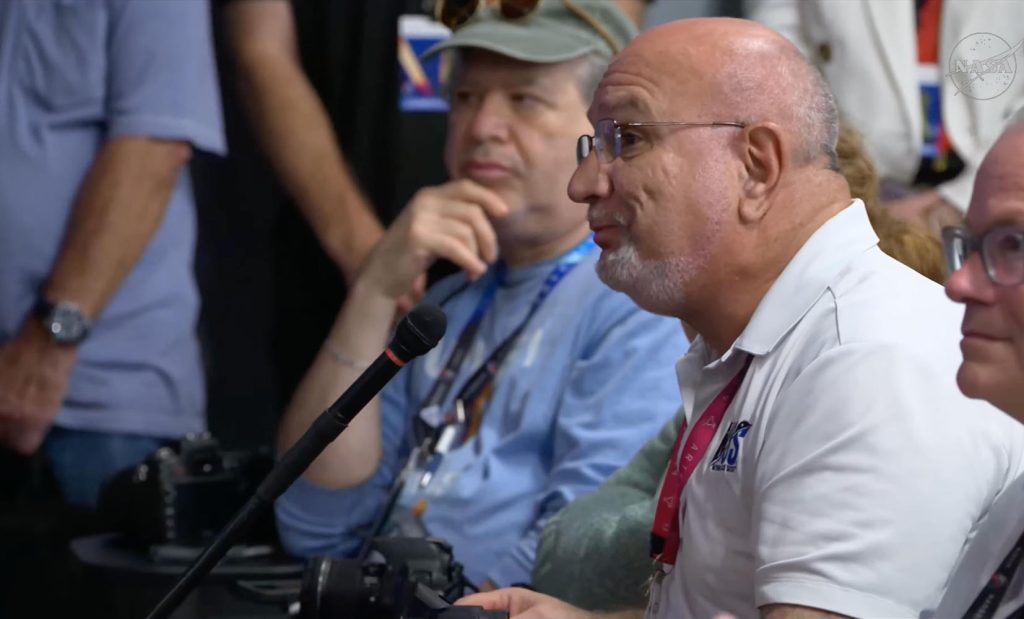
Story and Photos by Burt Dicht
NSS Space Coast Correspondent
Above: Burt asking a question at the April 1 NASA press conferences
“Will it go?”
I don’t know how many times I was asked that question in the days and hours leading up to the scheduled Artemis II launch on April 1. I had no inside track, no special sources, and no privileged information. But after witnessing multiple launches over the years, I have developed a deep appreciation for what it takes to get a rocket off the pad. So many things must align—hardware, weather, procedures, and people. Everything has to come together.
Still, I was optimistic. In fact, a week earlier I had told one friend that I believed it was going to launch. Yesterday morning, as we all gathered to witness the historic launch of Artemis II, I was asked the same question again.
“Will it go?”
And this time, without hesitation, I said yes.
From the crew arrival and the prelaunch press conferences to my own interviews with key Artemis II experts and, especially, the crew walkout, I was picking up on something special. I know it is not a very engineering way to describe it, but to borrow from the Beach Boys, I was getting good vibrations.
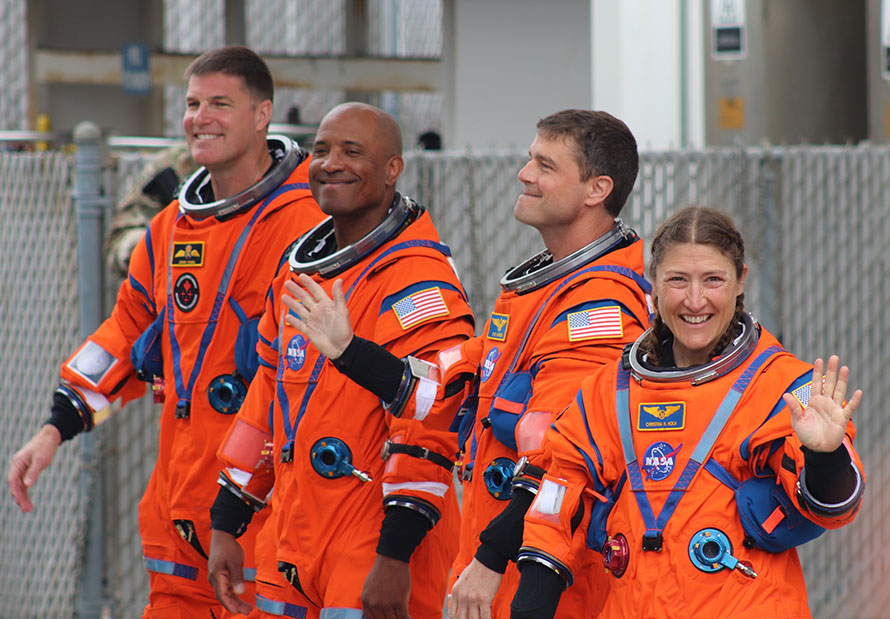
The dedication, enthusiasm, passion, and sheer joy of everyone involved in Artemis II were on constant display. You could feel it in the crowd, in the NASA team, and in the thousands gathered along the Space Coast.
So even as a few issues surfaced during the countdown, I held to that belief. At the planned hold at T-10 minutes, the entire viewing area seemed to hold its breath as Launch Director Charlie Blackwell-Thompson conducted the final poll.
One by one, each console responded: “Go.”
Then came the words everyone had waited to hear:
“Go for launch.”
The countdown resumed.
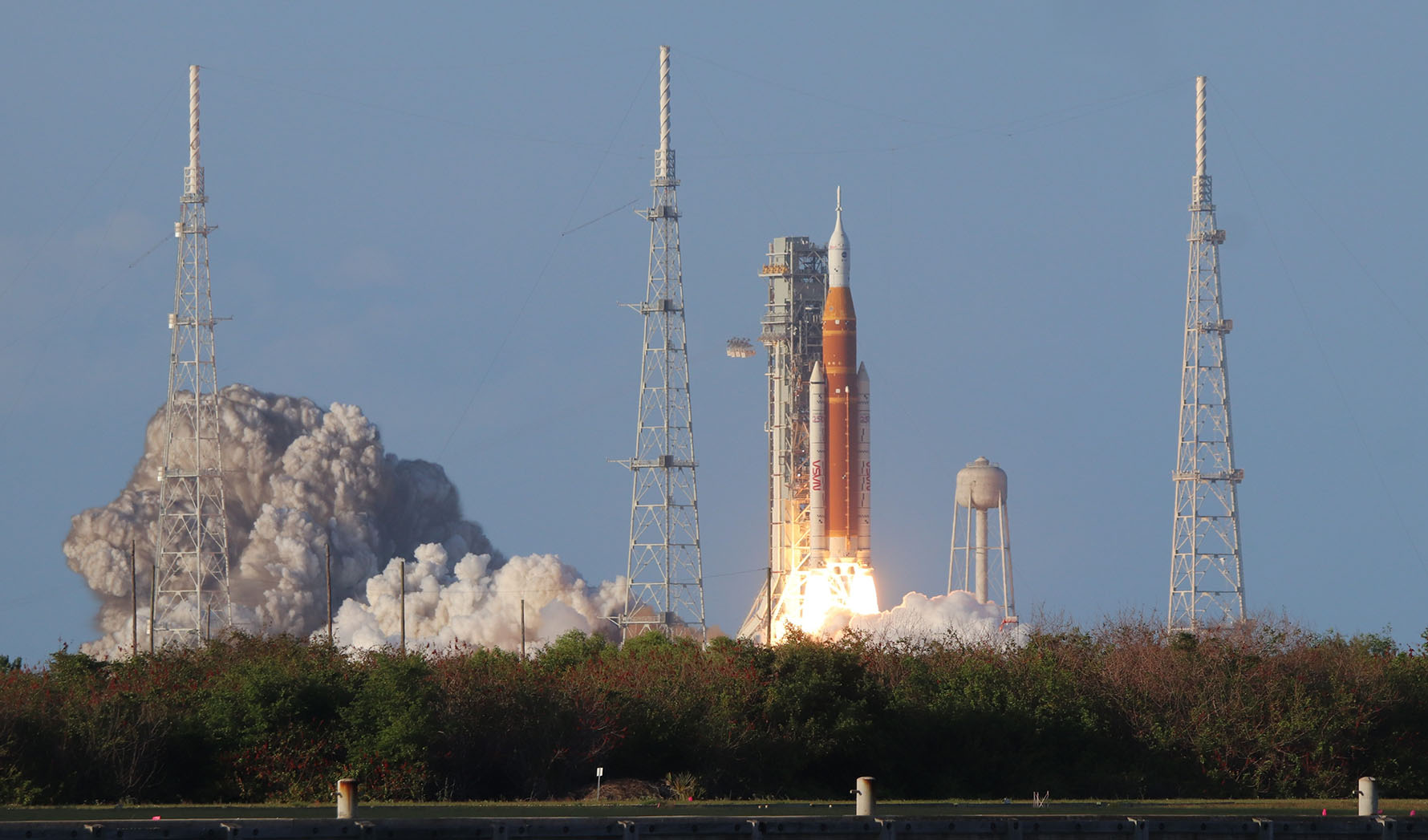
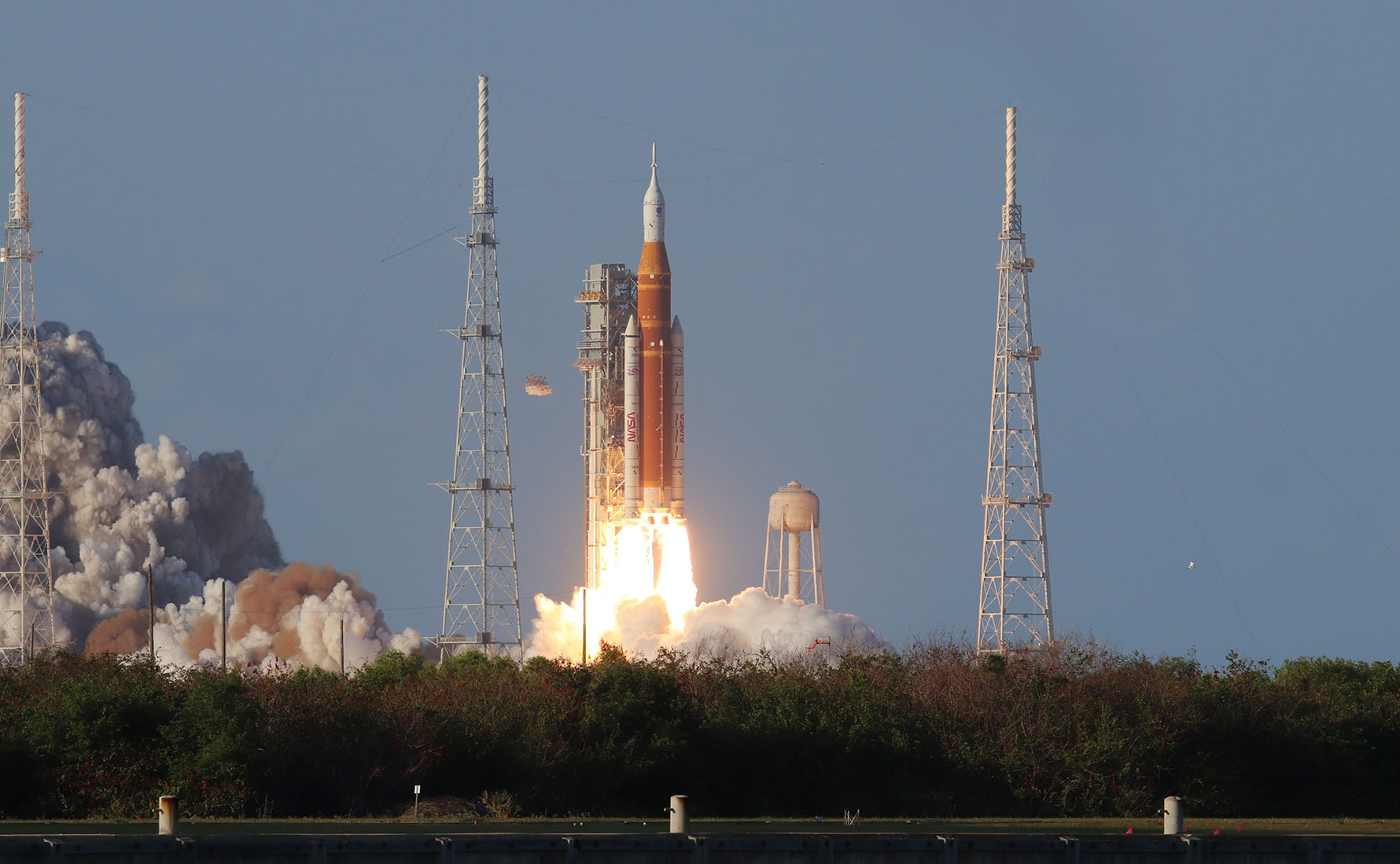
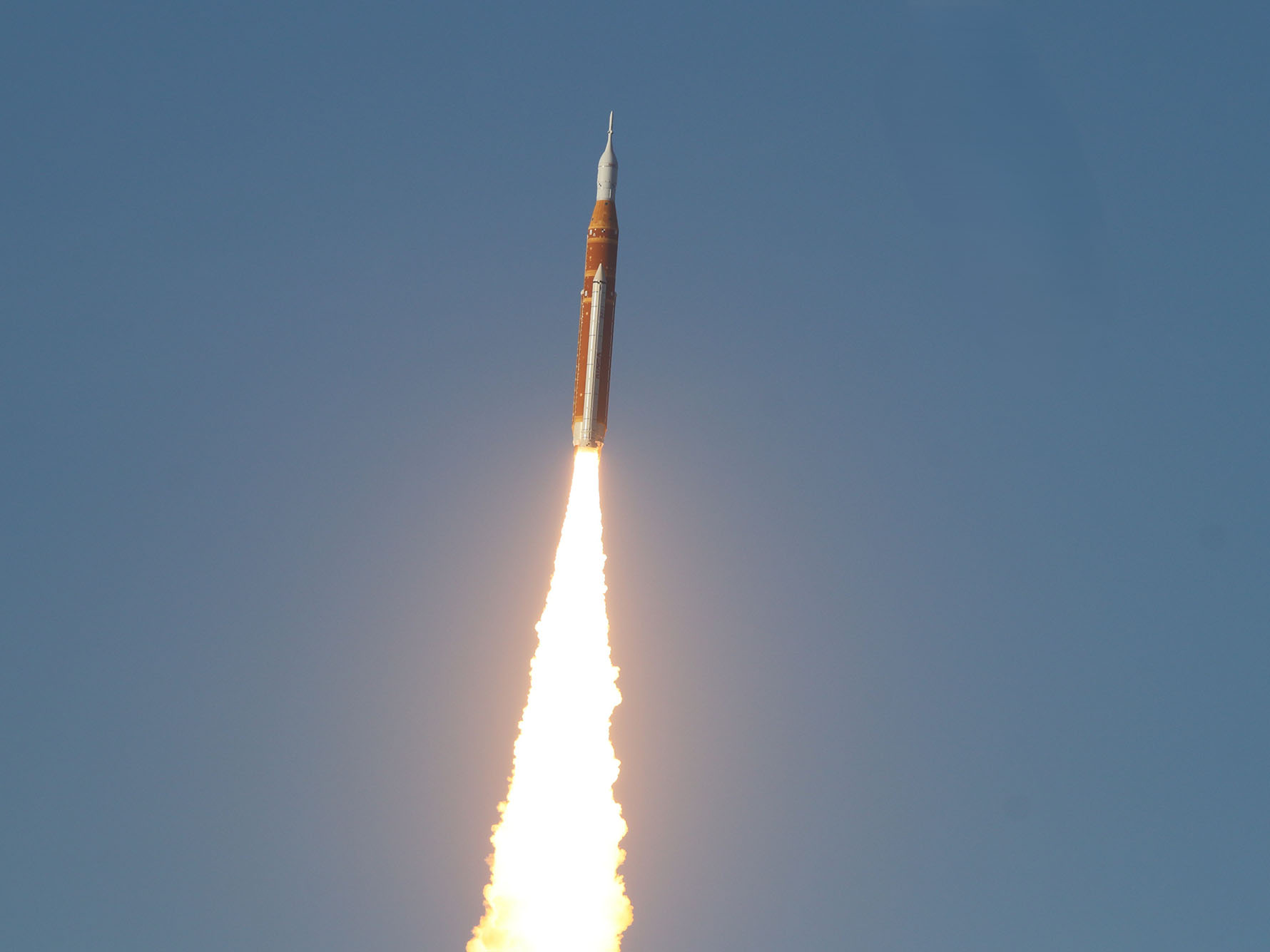
At T-7 seconds, the four core stage RS-25 engines roared to life. Then, at T-0, the twin solid rocket boosters ignited, unleashing more than 7.2 million pounds of thrust (8.8 million pounds total for SLS) and sending Artemis II skyward at 6:35 p.m. EDT on April 1, 2026, just 11 minutes into its launch window. It was the first crewed mission to the Moon in more than 53 years.
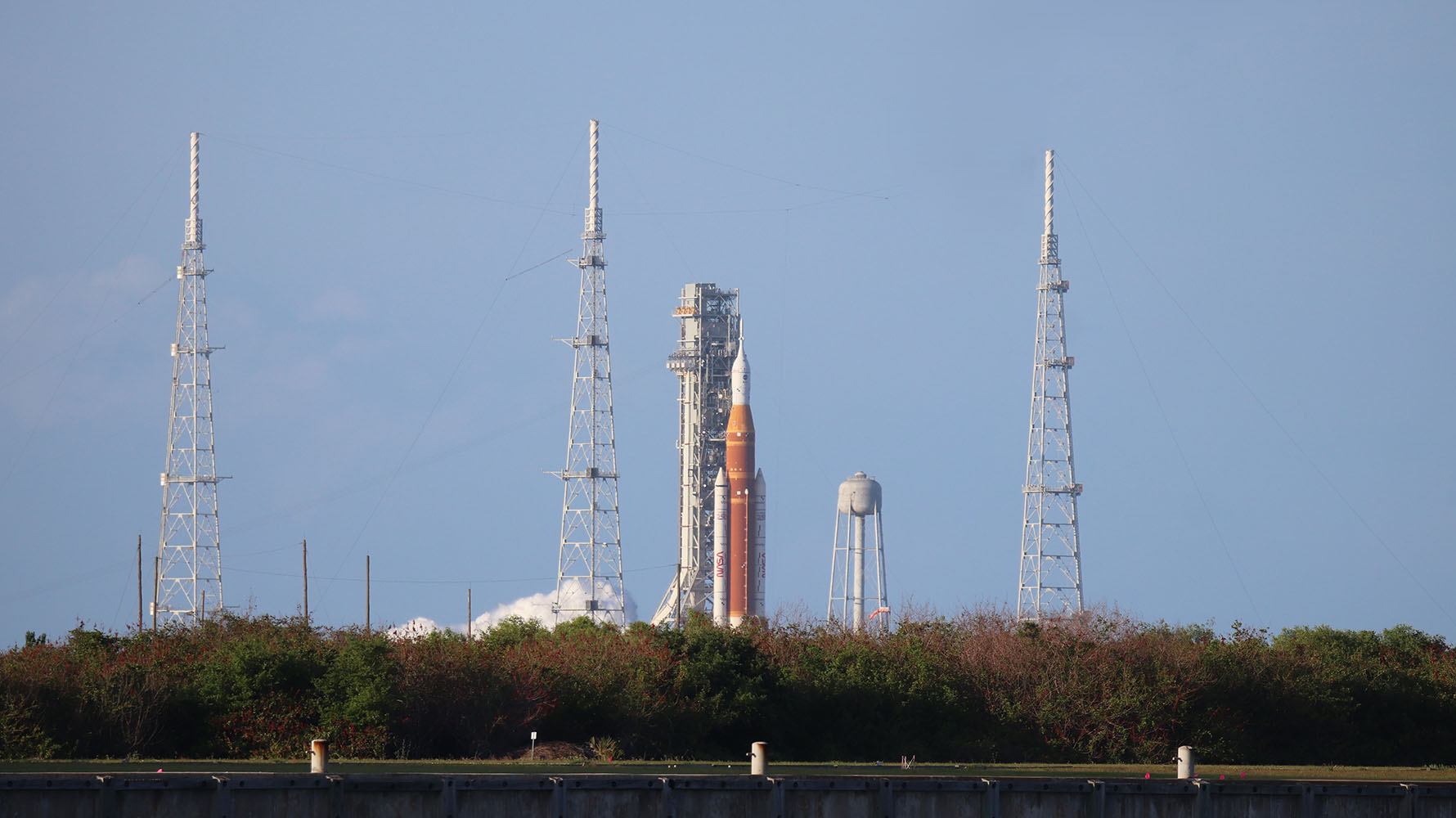
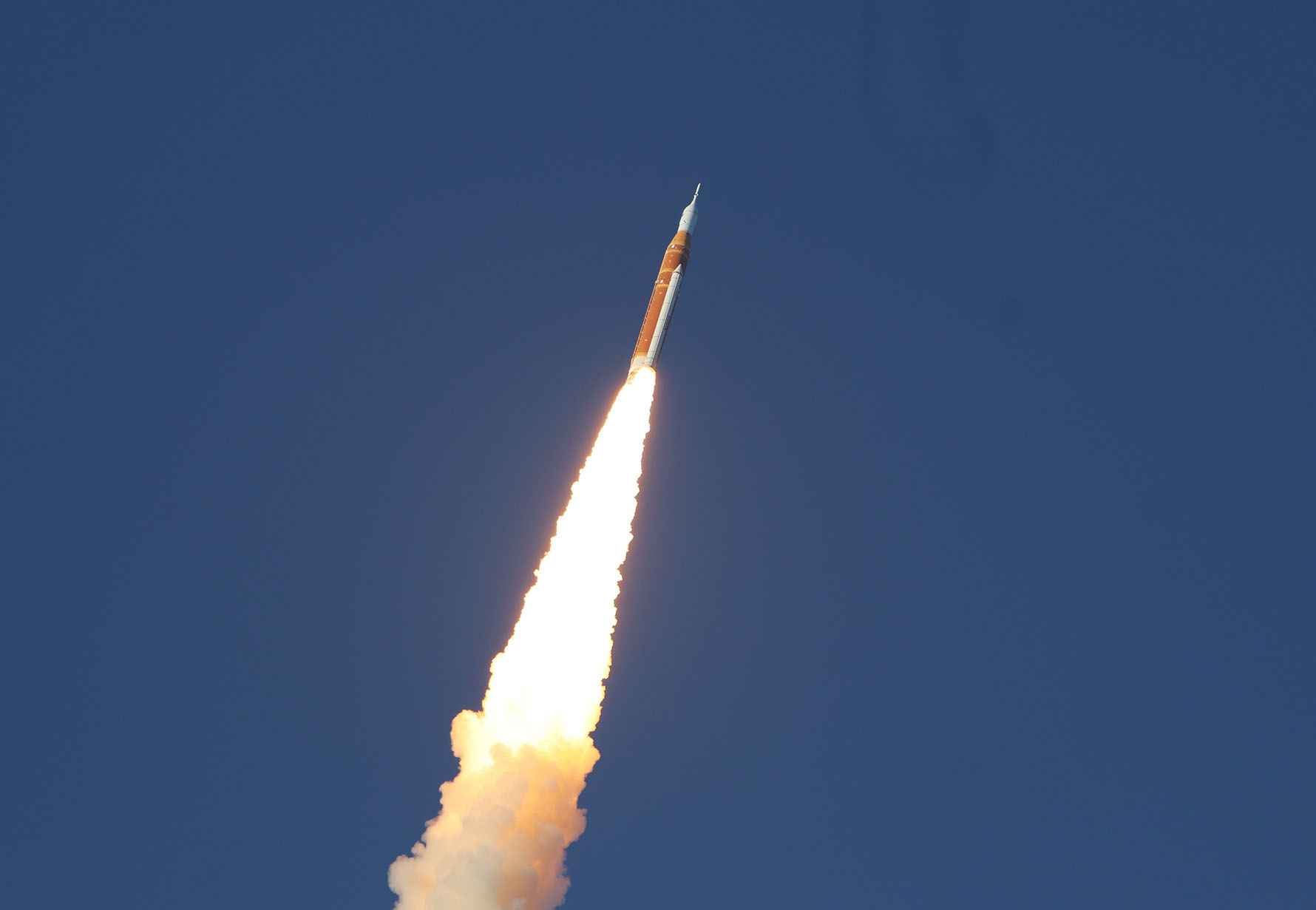
The Artemis II stack looked magnificent on the pad, but rockets are meant to fly. Against the backdrop of a brilliant blue sky, the Space Launch System and Orion spacecraft looked exactly where they belonged, climbing powerfully toward space and beginning humanity’s return to deep space.
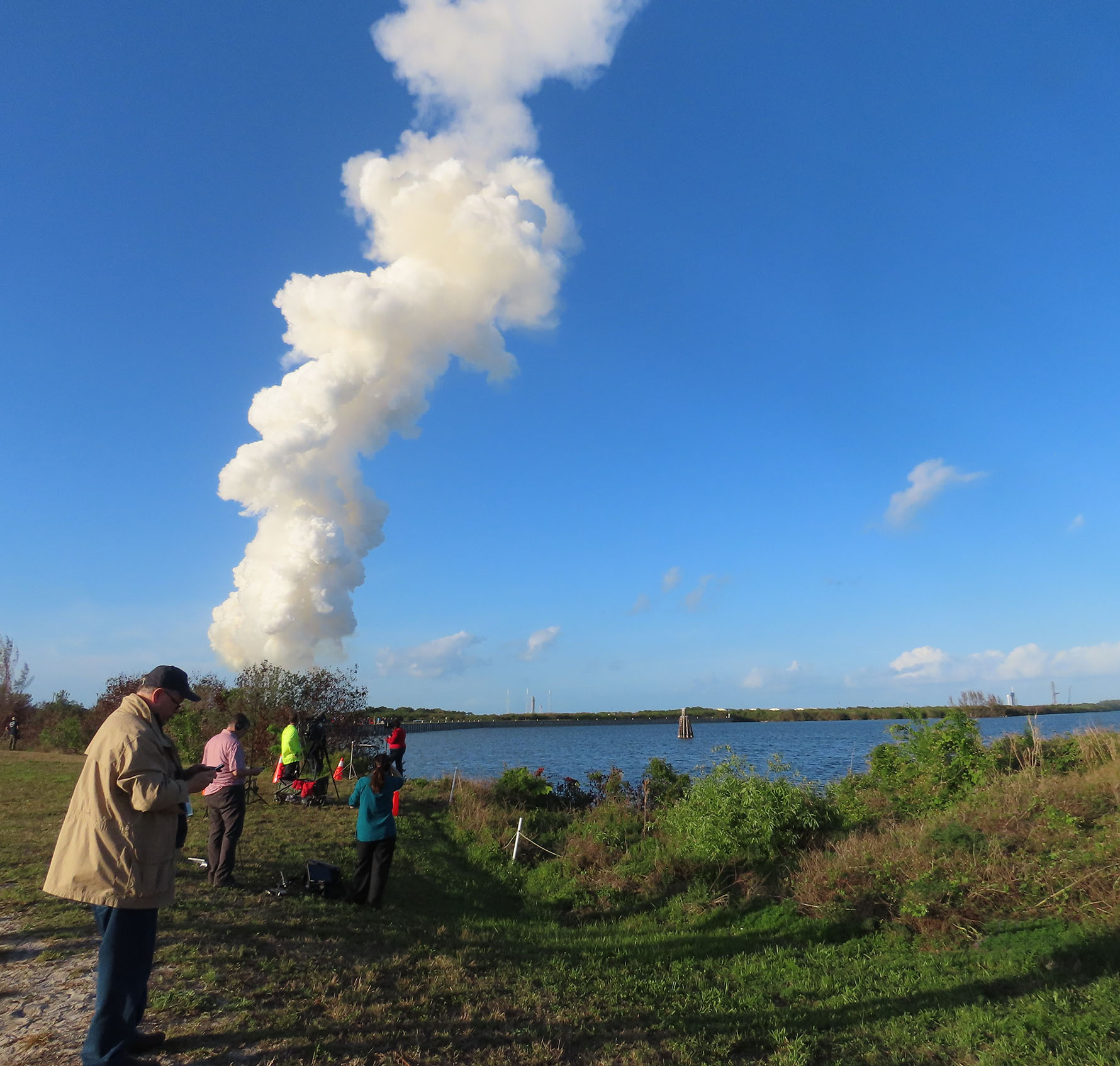
Below, an immense cloud of steam and exhaust enveloped Launch Complex 39B, while cheers erupted from the tens of thousands gathered across the Space Coast to witness history.
What made this launch even more impressive was that, for a rocket making only its second flight, many of the issues that surfaced during Artemis I appeared to have been addressed and resolved. That did not mean, however, that launch day was without its tense moments.
Earlier in the countdown, teams were working two issues that had the potential to stop the attempt. The first involved the flight termination system, often referred to as the range safety system. This is the system that allows the range to destroy the vehicle if it ever veers off its planned trajectory and poses a risk to public safety. Importantly, this was not a problem on the rocket itself, but rather an issue within the Eastern Range systems that had to be cleared before launch could proceed. For a period of time, it stood as a genuine launch constraint, and it was one of those moments that reminded everyone just how many systems—far beyond the vehicle itself—must work in perfect concert on launch day.
The second issue involved a battery temperature reading in the Launch Abort System. Engineers noted that one of the battery sensors was reporting a temperature outside the expected range. After troubleshooting, the team determined that this was most likely an instrumentation or sensor issue rather than an actual battery problem, and it was cleared as not affecting the launch attempt.
That, in many ways, is the nature of launch operations. Even after years of preparation, launch day is a real-time engineering exercise, with teams diagnosing, assessing, and resolving issues under the pressure of the clock.
Once Artemis II reached orbit, the mission quickly moved into its next major milestones. Nearly 50 minutes after liftoff, the Interim Cryogenic Propulsion Stage (ICPS) ignited for its first in-space burn, raising Orion’s orbit and placing the spacecraft on a stable elliptical path safely above Earth’s atmosphere.
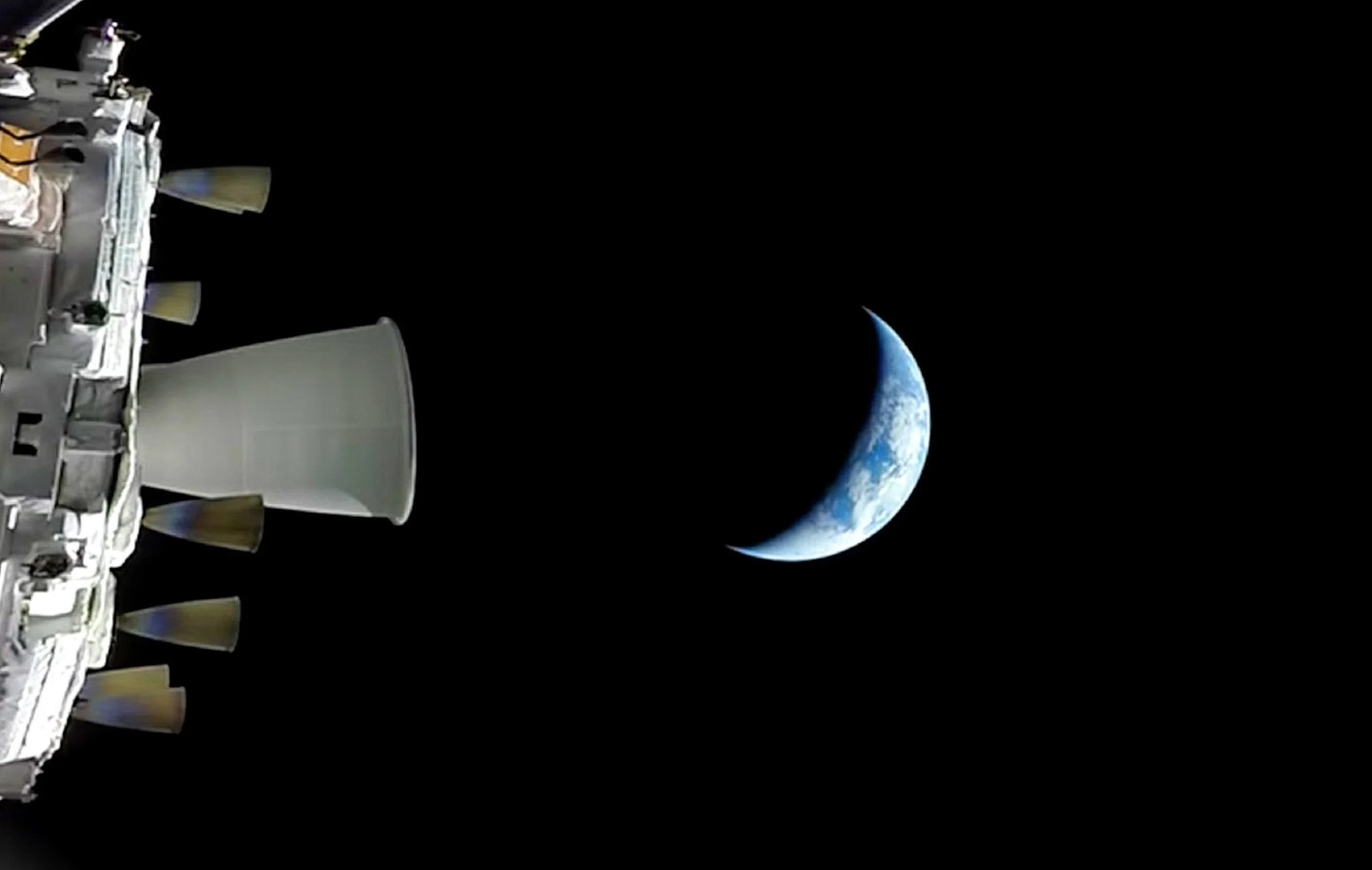
A second ICPS burn then lifted Orion’s apogee to more than 43,000 miles above Earth, setting up the spacecraft for the next critical event: the translunar injection (TLI) burn later today (expected between 6-8 pm EDT, but check the NASA website as the schedule is confirmed).
As with any new spacecraft, there are going to be issues. While Artemis II is on a mission of exploration, this is also very much a test flight. About 51 minutes into the mission, during a planned handover between satellites, there was a temporary loss of communications, with the ground team briefly unable to receive data from the crew or spacecraft. Communications were restored, and controllers immediately began working to understand the problem. It is a cautious and deliberate approach as the spacecraft is put through its paces.
The translunar injection burn is the moment when Artemis II truly becomes a lunar mission.
During this engine firing, Orion’s service module will increase the spacecraft’s velocity enough to break free from Earth orbit and begin its free-return trajectory toward the Moon. Once completed, Orion will no longer be circling Earth. It will be on a path that carries the crew around the far side of the Moon and safely back home.
For those of us who grew up inspired by Apollo, this is the moment that resonates most deeply. Launch was the visible and emotional milestone, but TLI is the engineering milestone that confirms humanity is once again venturing beyond low Earth orbit. It is the point at which the Moon is no longer an aspiration, but an actual destination.
NASA Administrator Jared Isaacman, reflecting the joy and pride of the launch, reminded everyone during the post-launch press conference:
“We will hold our celebration until this crew is under parachutes and splashes down off the West Coast.”
It was a powerful reminder that much remains to be accomplished during the rest of the mission. That is why Artemis II matters so much.
This mission is about proving that the spacecraft, the crew systems, the mission architecture, and the operational discipline are ready for the missions that follow. It is the essential bridge between the successful uncrewed Artemis I test and the day astronauts once again return to the lunar surface.
As someone who has waited more than 50 years to witness another moonshot, watching Artemis II rise into that blue Florida sky was more than a launch. It was a reminder that exploration still has the power to inspire, unite, and push us toward what comes next.
The cheers along the Space Coast marked the beginning.
Addendum: The Artemis II Mission Management Team will meet shortly to make a pivotal “go” or “no-go” decision for the trans-lunar injection (TLI) burn. If it’s a “go” for the TLI, the burn will occur Thursday at 7:49:50 p.m. ET. This burn commits the Orion spacecraft to the remainder of its 10-day mission and the journey to the Moon truly begins.








1 thought on “Witnessing the Return of the Moonshot”
Nice article and photos! How wonderful to have seen it!