
Inside the 45th Weather Squadron’s Critical Role in Space Launches
Forecast for Crew-9 Launch Currently Favorable
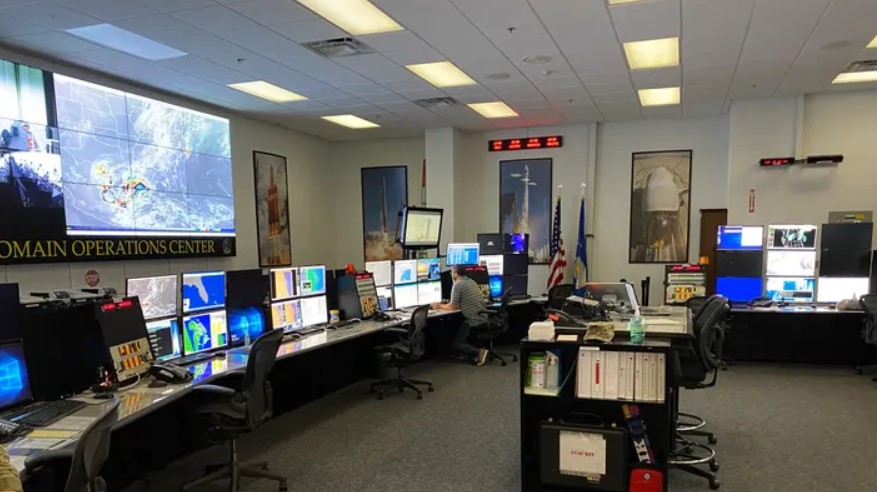
Image: 45th Weather Squadron Control Room. Credit: Robert Sherman, Fox News
By Burton Dicht
NSS Managing Director of Membership
Veterans of watching rocket launches understand that until T-0 and the rocket engines ignite, any number of delay gremlins might surface. These might be technical, or an unauthorized ship or aircraft in the launch zone—or the unpredictable Florida weather. There’s no way to know when a technical glitch might arise or when someone might stray into an area they shouldn’t, but with the weather, we can track the forecasts and hope that it holds long enough to get the launch off.
The first thing launch veterans do is check one of the many apps that cover launches to see the weather forecast. For example, the forecast for the scheduled Saturday, 28 Sept launch of Crew-9 (1:17 pm EDT) is as follows: “According to weather officials, there’s a 55% chance of favorable weather conditions at the time of the launch. The forecast calls for a temperature of 86°F, light rain, 56% cloud cover, a wind speed of 12mph, and 0.58 inches of rain.”
The weather officials responsible for that forecast are the dedicated meteorologists of the 45th Weather Squadron at Cape Canaveral Space Force Station (CCSFS). These highly trained professionals monitor weather conditions at the Kennedy Space Center/CCSFS leading up to and during the countdown and launch windows. Based on launch weather criteria, they relay to the launch team whether the weather conditions are “go-for-launch.”
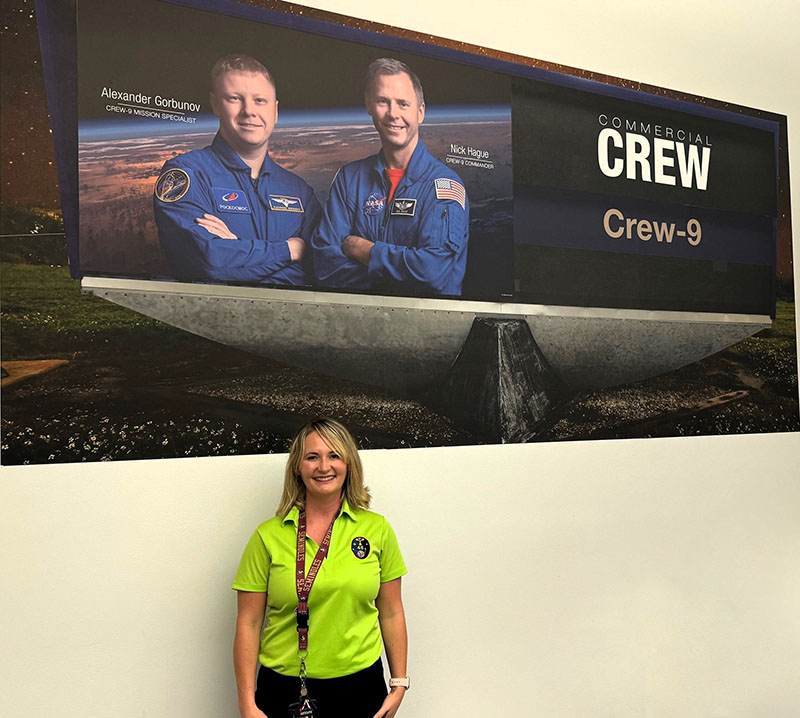
I had the pleasure of meeting one of these Launch Weather Officers (LWO), Melody Lovin, a civilian meteorologist who has been with the 45th Weather Squadron for six years. Before joining the Squadron, Melody worked for the National Weather Service (NWS), where the focus was on tracking severe weather. “It’s a very different job here,” she explained. “For rocket launches, we track many variables, even something as small as a single cloud that could be in the way of the rocket’s trajectory.”
The launch weather criteria are designed to ensure the safety of the vehicle, payload, and surrounding environment. While companies like SpaceX and United Launch Alliance may have specific criteria for their rockets, Melody explained that most of the criteria enforced by the 45th Weather Squadron apply to all rockets in the launch range. These criteria, established from years of experience, include proximity to lightning and thunderstorms, wind limits (both surface and upper level), cloud cover, and precipitation—all must be met before a launch.
Melody detailed how the favorable weather probability is calculated. The Squadron reviews historical climate data to establish a baseline, then compares that to expected conditions at the time of the launch. This forecast is a critical factor for rocket companies, as they need to decide whether to delay the launch or start the tanking process. Weather delays after tanking begins can be costly, so there’s pressure to provide the most accurate and up-to-date information. During the launch, the 45th Weather Squadron is on the launch director’s communication loop, sharing real-time updates.
Thanks to advancements in technology and the use of new weather satellites like GOES-U, forecasting has improved significantly. These tools enable the team to provide more accurate data, sometimes even allowing the rocket to thread the needle between weather patterns to get the launch off.
Melody described it as an exciting job that ensures the safety of the rocket and the surrounding area while helping push our space program forward. And sometimes, when everything is running smoothly, she even gets to step outside and watch the launch from her office.

You can read more about Melody here: Meet the first all-female Air Force launch weather team who will work SpaceX Starlink launch.










1 thought on “Weathering the Launch”
Great piece, as always, Burt. Thanks for the exciting behind-the-scenes insights. (See if Melody can help the rest of us keep our network gremlins at bay.)