A Life Dedicated to Space, Learning, and Service
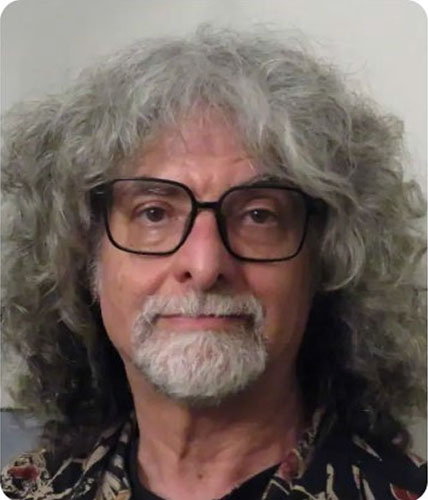
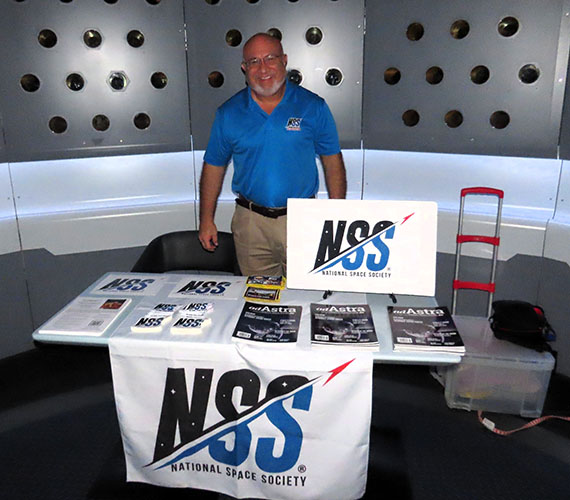
The National Space Society mourns the sudden passing of David Cheuvront—a long-time space advocate, mentor, and deeply respected member of our community. His loss is profoundly felt not only within NSS but across the entire aerospace world, where his expertise, generosity, and leadership touched countless lives.
Adding to the tragic circumstance, David had been scheduled to be the speaker at the NSS Space Forum today (now cancelled) on the topic “Alternatives to Deorbiting the ISS: Repurposing an International Treasure.”
David was a pilot, mechanical engineer, and former NASA professional with more than 45 years of experience in aviation, spaceflight, and advanced technology development. His career began at the Naval Air Rework Facility, where he worked in aircraft maintenance engineering and developed a strong foundation in hands-on aviation and sustainment. He then moved into the aerospace industry, holding key engineering roles at Rockwell International, Rocketdyne, and McDonnell Douglas, where he contributed to reliability and maintainability engineering for major human spaceflight and space station programs, including Space Station Freedom—the precursor to the International Space Station.
In 1994, David joined NASA’s International Space Station Program Office, playing pivotal roles in vehicle effectiveness assessments, electromagnetic compatibility work, and ultimately serving as a lead engineer for ISS Test & Verification. His work strengthened the foundation of one of humanity’s most ambitious engineering achievements.
David later joined NASA’s Johnson Space Center Advanced Development Office as a Technology Integration Manager. In this role, he supported concept development for next-generation launch systems, lunar lander planning, and Shuttle-derived system cost evaluation. He contributed to NASA’s long-term architecture planning and advanced technology efforts, reinforcing his reputation as a visionary systems engineer. After NASA, he continued his impact through consulting work, advising on maintainability, safety, reliability, lunar concepts, and advanced space systems. His ability to bridge engineering rigor with practical implementation made him a trusted voice throughout the community.
David’s contributions to the National Space Society extended just as deeply. He was an active member of the NSS Policy Committee, bringing his broad industry and government experience to discussions about the future of human spaceflight. He represented NSS at NASA’s Moon to Mars Workshops, ensuring that the Society’s forward-leaning perspectives were included in the development of NASA’s Moon to Mars architecture. With expertise in lunar systems and commercial/NASA Public Private Partnership (PPP) initiatives, David contributed to the 2015 Evolvable Lunar Architecture study and conducted economic evaluations for lunar resource utilization—an effort aimed at charting sustainable pathways to a permanent human presence beyond Earth.
At every International Space Development Conference®, David was more than a presenter; he was a mentor. Over the last several years, he volunteered his time for the Speed Mentoring sessions, offering thoughtful, practical, and encouraging guidance to students and early-career professionals. He also mentored student competitors in the Space Settlement Design Competition, sharing his belief that building humanity’s future in space begins with investing in those who will carry the torch forward.
“David was more than a colleague—he was a friend and an unwavering champion for students. We spoke at conferences together, mentored student competitors side by side, and I saw firsthand how deeply he cared about helping young people gain a greater love for aerospace. He believed, with absolute conviction, that our future depends on preparing and inspiring the next generation. David understood that the future of space rests squarely on our shoulders, and he dedicated himself to lifting students up so they could carry that future forward. His passion, his kindness, and his commitment to education will continue to guide us.”
— Xavier Gonzalez, NSS Vice President for Education
Most recently, David embarked on a deeply personal project: transforming his property in New Hampshire into the Earth-Space Conservation Demonstration Center, a unique blend of analog habitat, research facility, and educational environment. His vision brought together sustainability, exploration, and hands-on learning—a place where future engineers and scientists could grapple with the challenges of living beyond Earth while fostering stewardship of our home planet. It exemplified the creativity, technical insight, and idealism that defined his life’s work.
NSS has lost an advocate, a colleague, and a friend. The space community has lost a tireless contributor whose work, mentorship, and imagination will influence generations to come.
We extend our heartfelt condolences to David’s wife, Bonnie, to his family, to his friends, and to everyone who had the privilege of learning from him. His legacy—in space engineering, in mentorship, and in his unwavering belief in humanity’s future among the stars—will continue to inspire us.



8 thoughts on “Remembering David Cheuvront”
David frequently had insightful contributions to meetings of both the NSS POLICY COMMITTEE as well as the independent Space Development Steering Committee.
I learned a great deal from Dave Cheuvront for 8 years at the Friday Alliance for Space Development online meet-ups. Being a lifetime space advocate with a Space Studies Graduate degree, I am a professional Musician who has never worked in the space sector. Dave, being a 45 year veteran engineer in the Aerospace sector, contributed real working knowledge of the manned space program at the ASD meet-ups. He will be missed.
Dave was part of the NASA delegation that came to Spar in Toronto for the Canadarm2 CDR in December 1992. He had helped us a lot on maintainability and was a gracious and wise friend.
Excuse my asking, but is anyone else advocating alternatives to deorbiting ISS? Seem like a big waste to put all that hardware together, only to dump it into the Pacific. Never met him, much to my regret.
When Mir deorbited, Rick Tumlinson wrIte a book about the difficulties of saving and repurposing the smaller Mir.
David was truly a classic example of the NSS formation reason, a visionary engineer.
Dear Mike,
In recent position papers, the NSS has addressed the issue of the ISS including alternatives to deorbit and the emerging commercial space station economy.
From the paper “Maintaining U.S. Leadership in LEO Research and Commercialization after the ISS”:
-“One example of a valuable use of the ISS might be to first boost it using the planned deorbit vehicle, and then use it as a test bed for ion/plasma engines needed to travel to Mars, with a long-term test of such engines being used to boost the ISS to a very high, and very safe, orbit.”
-An extended ISS mission must not negatively impact commercial space stations: “NSS urges that [new uses for the ISS] not be allowed to compete with commercial LEO stations by offering free or subsidized services.”
-“NSS urges that if the life of the ISS is extended, it be in the context of specific, funded plans to use the ISS for a purpose that is neither currently available from commercial LEO stations, nor likely to be supplied by them in the future.”
From the paper “Disposal of the International Space Station and Future Large Space Objects”:
-NASA should continue to look for opportunities to reuse or recycle ISS parts: “the NSS recommends that NASA continue to solicit industry input for at least three more years, and possibly longer. The commercial space industry is rapidly growing, and more opportunities may develop over that period.”
-“Efforts should be made to repurpose ISS components and scientific equipment”
-Future space infrastructure should be built with reuse and recycling in mind: “The most sustainable long-term direction may lie in the re-use or recycling of structures, components, and materials that make up objects in space like the ISS. Currently such objects are not designed to be readily re-purposed or recycled, but now seems like a good time to start this learning process and create a new space market sector.”
-“NASA should additionally…call on industry to submit proposals for the indefinite extension with repair for future in-space infrastructure, and consider demonstration of such techniques with the ISS prior to disposal”
Regards,
Grant Henriksen
I met Dave about six years ago when he first started coming to Clear Lake Area -NSS meetings (near JSC). He played a key role in setting up our online connectivity arrangements. With the demise this year of that chapter, he pivoted to assisting the North Houston-NSS chapter. Dave was a truly nice guy, always ready to listen, always ready to assist, a man with good suggestions. I knew he had worked for NASA, but he was a modest man. I didn’t know his history until I read the missive above. He was a quiet exemplar of a high quality and high class individual. I will miss him greatly.