The Sub-Orbital Journey Presages an Age of Space Tourism
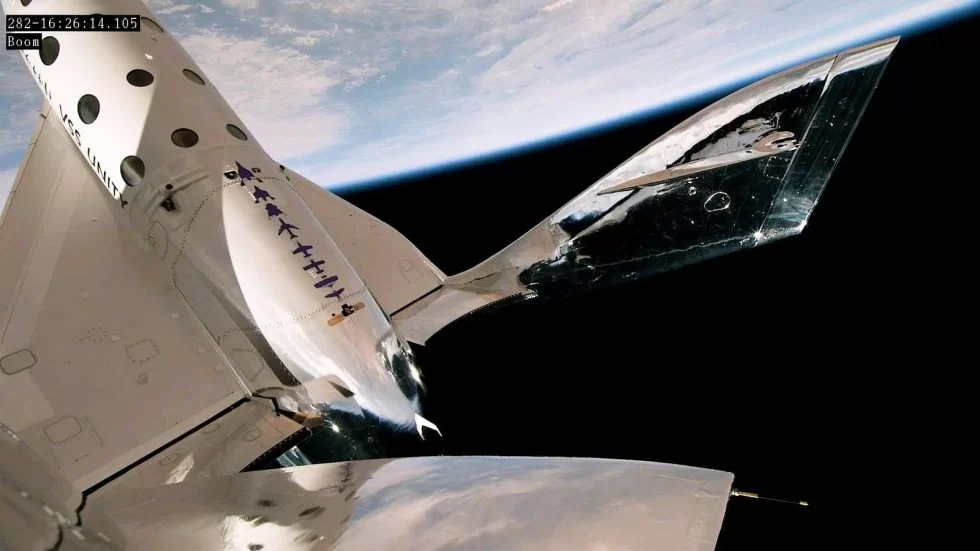
On June 29, Virgin Galactic flew its first entirely commercial mission, dubbed “Galactic 01.” The suborbital flight was apparently successful in all aspects and pushes Richard Branson’s commercial spaceflight company forward in its efforts to provide routine, safe operations for space tourism and short-duration microgravity research.
“The National Space Society is thrilled to see Mr. Branson’s company achieve this important milestone,” said Dale Skran, COO of the National Space Society. “Commercial space operators like Virgin Galactic and Blue Origin are helping to open the final frontier to routine, safe operations, and will allow thousands of people to experience the wonders of spaceflight firsthand.”
The flight departed Spaceport America in New Mexico at 10:30 a.m. Eastern Time and reached suborbital space about an hour later. After reaching a peak altitude of 52.9 miles (85.1 kilometers), the spaceplane returned to Spaceport America 72 minutes after takeoff. Rather than launching from a rocket, Virgin Galactic’s rocketplane, dubbed VSS Unity, is carried aloft by a large, purpose-built carrier plane and released at about 50,000 feet.
On this flight were two pilots and four passengers, including two members of the Italian Air Force and an engineer with the National Research Council of Italy. The flight was piloted by Michael Masucci and Nicola Pecile, and the crew members were Walter Villadei, Angelo Landolfi, and Pantaleone Carlucci. The final seat was occupied by Virgin Galactic crew trainer Colin Bennett.
At touchdown, the assembled crowd cheered loudly. Virgin Galactic’s Sirisha Bandla said “What a beautiful landing and a perfect way to complete our first commercial flight and our first dedicated science mission. Congratulations to everyone on board.”
Virgin Galactic was founded in 2004 and aimed to fly commercial passengers by 2007, but the actual date of the first successful, full-up test flight was 2018. Despite many challenges, including the loss of an earlier rocketplane and a pilot, the company has persevered in the difficult space tourism sector and appears to now be ready to prepare for routine operations. The cost of a single ticket is about $450,000 dollars. A new class of rocketplane, called Delta, is planned for operations in 2025. The new design should be more capable of routine, profitable operations and will incorporate the many lessons learned by flying the current model.






3 thoughts on “NSS Applauds Virgin Galactic’s First Commercial Flight”
I think the cost needs to drop two orders of magnitude.
Congratulations to Virgin Galactic and best wishes for further success.
Congratulations Virgin Galactic for resuming sub-orbital tourism. Good luck with the next design for the sub-orbital spacecraft.