By Burt Dicht
NSS Space Coast Correspondent
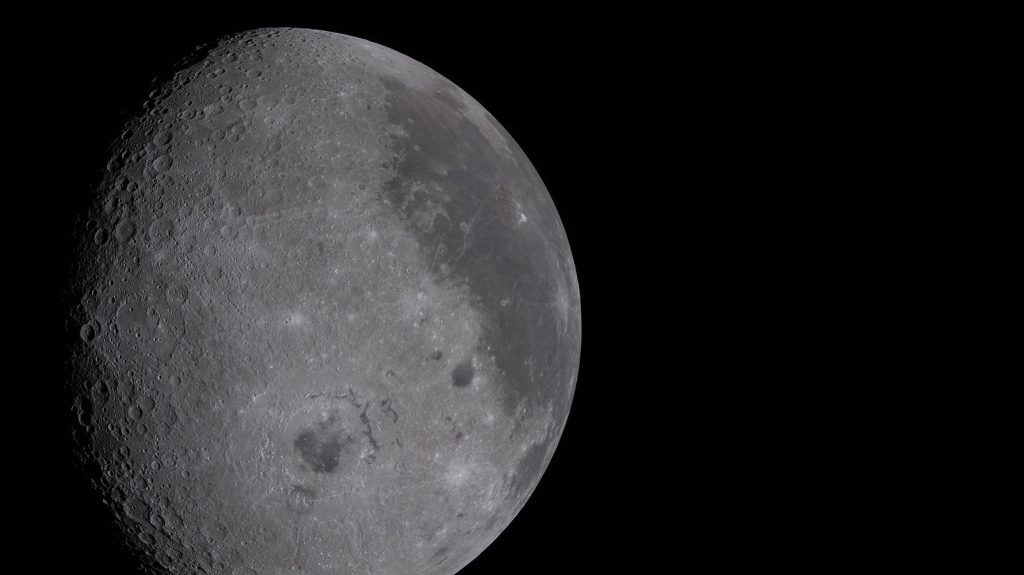
Image: On the first shift during the lunar flyby observation period, the Artemis II crew captured more than two-thirds of the Moon. The 600-mile-wide impact crater in the lower middle, Orientale basin, lies along the transition between the near and far sides and is sometimes partly visible from Earth.

HEADING HOME
Flight Day 7 in deep space — Heading Home
After their historic lunar flyby, the Artemis II crew began preparing for the journey back to Earth. They started the day 36,286 miles from the Moon and 236,022 miles from Earth, waking to the sounds of “Tokyo Drifting” by Glass Animals and Denzel Curry.
SCIENCE DEBRIEF — RELIVING THE FLYBY
Flight Day 7 was all about reflection. The crew met with teams on the ground for a full lunar flyby debrief, sharing their observations of the Moon and its features. Science officer Dr. Kelsey Young closed out the flyby with high praise for the crew on Day 6: “I can’t say enough how much science we’ve already learned and how much inspiration you’ve provided to our entire team, the lunar science community and the entire world with what you were able to bring today. You really brought the Moon closer for us today. And we cannot say thank you enough.”
Commander Wiseman was equally complimentary in return: “We were well prepared, and we appreciate all of you, and this is what we do best when we all come together and work as a team. So y’all knocked it out of the park. Thank you for giving us this opportunity.”
LEAVING THE MOON BEHIND
Orion exited the lunar sphere of influence at approximately 1:25 p.m. EDT, at a distance of 41,072 miles from the Moon — the point at which Earth’s gravity once again took over as the dominant pull on the spacecraft. The crew is now firmly on their way home.
A WELL-EARNED REST DAY
Following the science debrief, the crew staggered off-duty periods, giving them time to rest and recharge before their final tasks ahead of reentry. After the intensity of the seven-hour lunar flyby, the day is intentionally lighter, a chance for the crew to decompress before the mission’s final stretch.
SHIP-TO-SHIP CALL — INTEGRITY MEETS THE INTERNATIONAL SPACE STATION
In a moment that put the full breadth of human spaceflight in striking perspective, the Artemis II crew paused their homeward journey to connect with their fellow astronauts orbiting Earth.
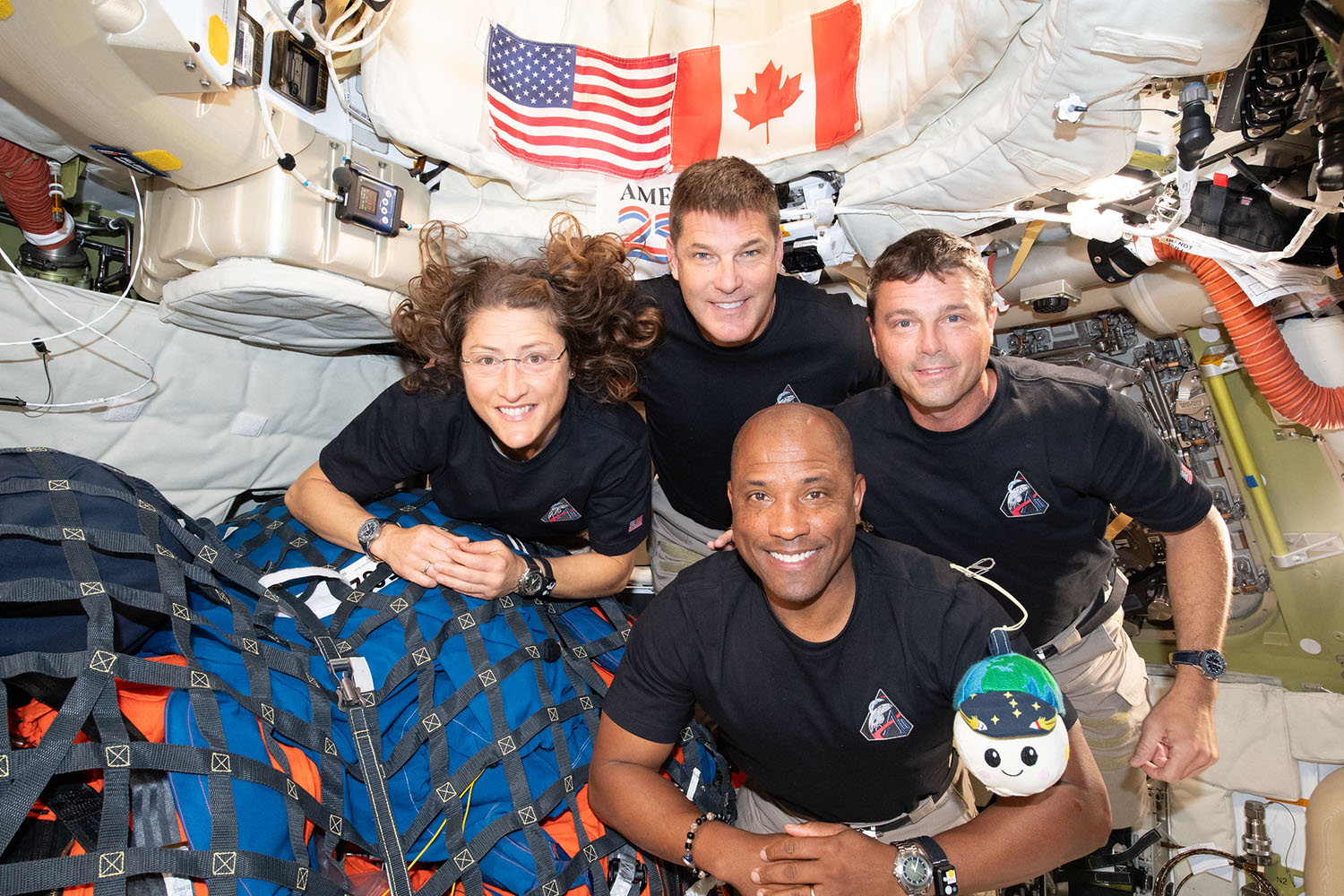
A 15-minute audio-only call took place at 2:40 p.m. EDT between the Expedition 74 crew aboard the International Space Station and the Artemis II flight crew aboard Integrity. The call was opened by ISS Commander Jessica Meir: “Integrity. This is the International Space Station. How do you hear?” Commander Wiseman’s reply set the tone: “We have been waiting for this like you can’t imagine.”
The ISS crew, NASA astronauts Jessica Meir, Jack Hathaway, and Chris Williams, and ESA astronaut Sophie Adenot — expressed their curiosity about the differences between the two spacecraft, while the Artemis II crewmates shared their experiences seeing the Moon up close.
The call carried a personal touch as well. Koch, who performed a pair of spacewalks with Meir back in January 2020, remarked during the call: “Every single thing that we learned on ISS is up here.” It was a reminder that Artemis II did not emerge from a vacuum, the years of learning, training, and living aboard the ISS laid the foundation for this deeper journey into space.
At the moment of the call, the two crews were separated by an extraordinary distance — the ISS orbiting roughly 250 miles above Earth, while Integrity was more than 230,000 miles away from Earth itself. Yet for 15 minutes, the two outposts of human spaceflight were simply space neighbors catching up.
FIRST RETURN TRAJECTORY CORRECTION BURN — COMPLETE
At 8:03 p.m. EDT, the Orion spacecraft Integrity ignited its thrusters for 15 seconds, producing a change in velocity of 1.6 feet per second and guiding the Artemis II crew toward Earth. NASA astronaut Christina Koch and CSA astronaut Jeremy Hansen reviewed procedures and monitored the spacecraft’s configuration and navigation data throughout the maneuver. The crew then settled in for a full night’s rest before a busy day of flight test objectives and return-to-Earth tasks on Wednesday, April 8.
A RARE SCIENTIFIC MOMENT — METEOROID IMPACT FLASHES
Among the most scientifically significant observations of the entire flyby came near its end, in the darkness of the solar eclipse — and it almost wasn’t planned at all.
As the eclipse plunged the Moon into darkness, the crew reported six light flashes created by meteoroids impacting the lunar surface while traveling many thousands of miles per hour. NASA Commander Wiseman and Canadian astronaut Hansen reported seeing at least four of the impact flashes — visible glints of light caused by meteoroids striking the lunar surface.
Mission scientists had hoped the crew would catch a glimpse of these flashes but did not know how easy they would be to see. Apollo astronauts saw at least three of them on the night side of the Moon during their flights. Seeing them again, this time from a unique deep space vantage point, during a solar eclipse, by a crew specifically trained to document what they observed represents a meaningful leap forward.
Science officer Kelsey Young’s response to the news was immediate: “Incredible news, Reid,” she told Commander Wiseman. During the eclipse, the astronauts saw several flashes to the delight of the Mission Control room.
During Tuesday’s science debrief, Young led the crew through a detailed discussion of the flashes. Both Wiseman and Hansen recalled seeing a momentary “pinprick of light,” but could not say precisely how long each flash lasted.
The crew reported seeing the impact flashes on and south of the equator on the Earth-facing side of the Moon, good news for researchers. As Young reminded the crew, citizen scientists on Earth were monitoring the Moon for impact flashes at the same time. Because the impacts were on the nearside, there is a chance that amateur astronomers also observed them, which would allow scientists to cross-check and compare observations from two completely different vantage points.
After the lunar data was downlinked from the spacecraft overnight, scientists began reviewing images, audio, and other data to determine the precise times and locations of the flashes and are actively seeking input from amateur observers who were watching the Moon during the flyby.
Why does this matter so much? Every meteoroid impact on the Moon’s unprotected surface sends debris spraying across the surrounding terrain, a hazard that future astronauts living and working on the lunar surface will need to understand and plan for. These observations could offer critical insight into potential hazards on the Moon NASA for future Artemis crews landing near the lunar south pole. The fact that human eyes, in the right place at the right moment, caught something ground-based telescopes might have missed entirely is precisely the argument NASA has been making for why sending people, not just robots — back to the Moon matters.
WHAT’S NEXT — FLIGHT DAY 8 PREVIEW
Wednesday, April 8, 2026
After their wake-up call, the Artemis II astronauts will have a full day ahead, focused on in-flight procedures for dealing with radiation and tests on Orion’s attitude control system modes. It’s the mission’s most operationally intensive day since the lunar flyby, a series of demonstrations designed to prove that Orion and its crew can handle deep space’s most demanding scenarios.
Going with the Blood Flow
First up is a medical evaluation with real-world consequences. All four crew members — Wiseman, Glover, Koch, and Hansen are scheduled to test an orthostatic intolerance garment: specialized equipment designed to help astronauts maintain blood pressure and circulation during the transition back to Earth’s gravity. After more than a week in microgravity, the cardiovascular system adapts to the weightless environment, and returning to gravity can cause blood pressure to drop dangerously. The garment test evaluates whether this countermeasure works effectively in the actual deep space environment, critical data for the health of future crews on longer lunar missions.
Building a Radiation Shelter
NASA has scheduled a radiation shelter demonstration in which the crew uses Orion’s own supplies and equipment to create a temporary protected zone, simulating how the crew would respond to a high-radiation event such as a solar flare. During the exercise, Orion’s life support systems work at peak capacity, scrubbing the air and regulating temperature while the entire crew huddles together in the confined shelter space. Deep space offers no protection from solar particle events, knowing the crew can rapidly build an effective shelter is a foundational requirement for any future mission to the lunar surface.
Piloting Orion
The day’s headline demonstration begins at 9:59 p.m. EDT: the crew will take manual control of Integrity, using Orion’s field of view to center a designated target before guiding the spacecraft to a “tail to Sun” attitude and comparing different control modes. The manual piloting test is designed to prove the crew can pilot the ship home if automated systems fail. This kind of hands-on deep space flying has direct implications for Artemis III and beyond, when crews will need to manually maneuver Orion during rendezvous and docking with a lunar lander in lunar orbit.
LOOKING AHEAD — RECOVERY OPERATIONS AT SEA
Splashdown: Friday, April 10, ~8:07 p.m. EDT off San Diego
While the crew prepares for the final leg home, a Navy ship is already on the move to meet them.
The San Diego-based USS John P. Murtha — an amphibious transport dock ship has been deployed to recover the Artemis II crew after their capsule splashes down off the coast of San Diego just after 5 p.m. local time on Friday. Sailors aboard have been undergoing training specifically in preparation for this recovery operation.
The Navy noted that the ship has “unique advantages” that will assist NASA once the Orion capsule is in the water, and that officials plan to collect critical data to ensure the ship is ready to recover astronauts during future Artemis missions as well.
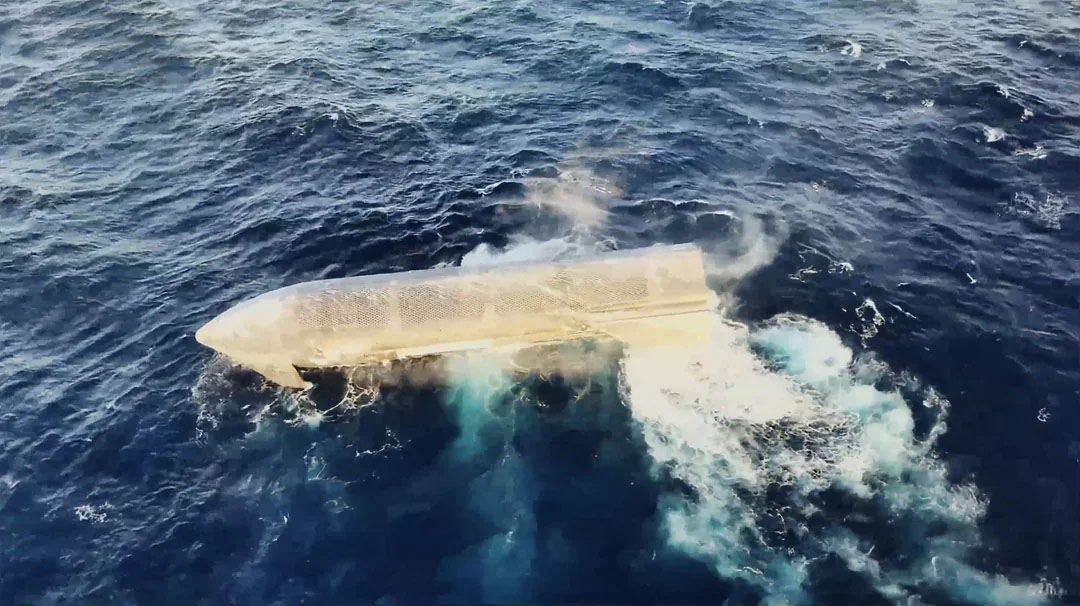
A U.S. Navy helicopter squadron based out of Naval Air Station North Island will assist in tracking the capsule as it travels through Earth’s atmosphere. Navy divers will then collect and transport the Orion capsule from the water to the ship’s deck, where the four astronauts will be brought aboard for assessment.
The ship’s commanding officer, Capt. Erik Kenny, called the mission “a fitting tribute” to the ship’s namesake, Pennsylvania Congressman John P. Murtha. “We are honored to carry on his legacy by supporting NASA and the Artemis II mission,” Kenny said.
Once aboard the Murtha, the crew will undergo post-mission medical evaluations in the ship’s medical bay before traveling back to shore and boarding an aircraft bound for NASA’s Johnson Space Center in Houston.