By Burt Dicht
NSS Space Coast Correspondent

Spacesuit Drills, a Correction Burn & Lunar Sphere Crossing
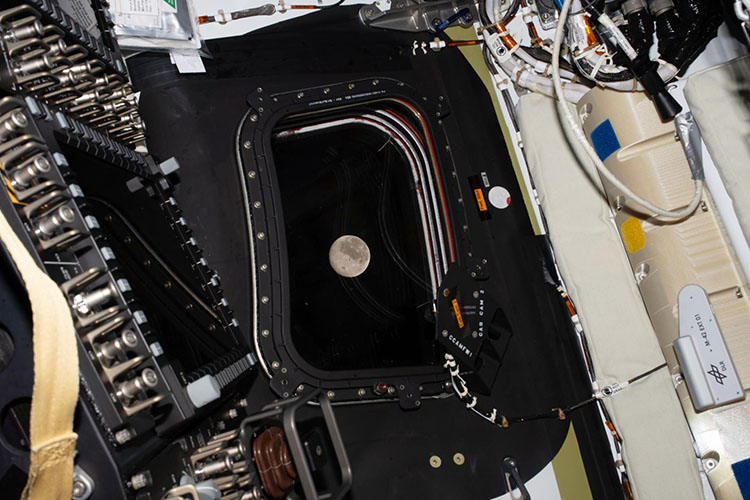
Flight Day 5 in deep space — and the crew marked it with their most mission-critical suit test yet, a successful trajectory correction burn, and the crossing of a major gravitational milestone. Mission Control woke the crew at noon EDT to CeeLo Green’s “Working Class Heroes (Work).” At wake-up, Orion was approximately 65,235 miles from the Moon and closing fast.
The day began immediately with the Orion Crew Survival System suit evaluation — the first time these emergency suits have been tested in the actual deep-space environment with crew aboard. All four astronauts worked through a full sequence: donning, pressurizing, leak checks, seat entry while suited, and eating and drinking through the helmet port.
Late in the evening, the crew fired Orion’s thrusters for the third outbound trajectory correction burn — the first such burn of the mission, following two cancellations. It began at 11:03 p.m. EDT and lasted just 17.5 seconds, making a small but precise adjustment to Orion’s path ahead of the flyby.
Key Events — Flight Day 5
- Spacesuit evaluation: All four crew members completed the full Orion Crew Survival System test sequence — the first time this emergency suit has been evaluated with crew aboard in the actual deep-space environment.
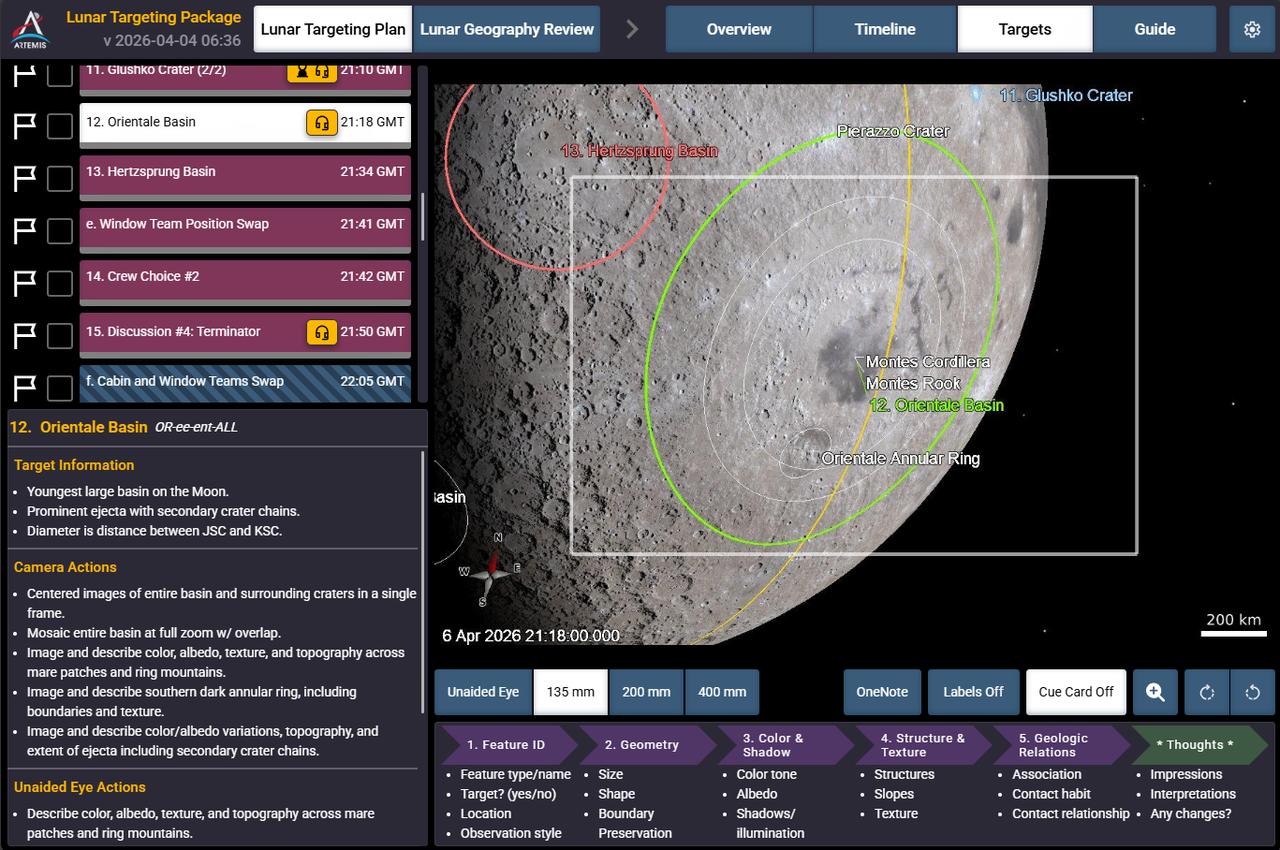
- Final lunar science targets received: Mission Control sent the crew the final list of 30+ geological targets for the flyby, including Orientale Basin, Apollo legacy landing sites, and a potential future uncrewed payload landing area near the lunar south pole.
- Orientale Basin first human sighting: Crew photographed Orientale Basin — a 600-mile-wide, 3.8-billion-year-old impact basin straddling the near and far sides — becoming the first humans to see it in its entirety.
- Outbound correction burn: A 17.5-second thruster firing at 11:03 p.m. refined Orion’s trajectory to the Moon. The first such burn of the mission, after two prior scheduled burns were cancelled due to outstanding navigation accuracy.
- Lunar sphere of influence entered: At 12:41 a.m. (Apr 6) Orion officially crossed into the Moon’s gravitational domain. The Moon’s gravity now exceeds Earth’s pull on the spacecraft — the final threshold before the historic flyby.
- Sleep period began: The Crew signed off at 2:20 am EDT ahead of the mission’s defining day. Mission Control scheduled a 10:50 a.m. wake-up for Flight Day 6.
Looking Ahead · Flight Day 6 — April 6
The Flyby — Humanity’s Closest Look at the Moon Since 1972
Today is the defining day of the mission. The six-hour lunar flyby observation window runs from 2:45 p.m. to 9:40 p.m. EDT. Live coverage is available on NASA+, Amazon Prime, Apple TV, Hulu, Netflix, HBO Max, Roku, and NASA’s YouTube channel from 1 p.m. Note: NASA will not hold its usual daily press briefing today due to flyby operations.
Preparing for the Flyby: The Moon in a New Light
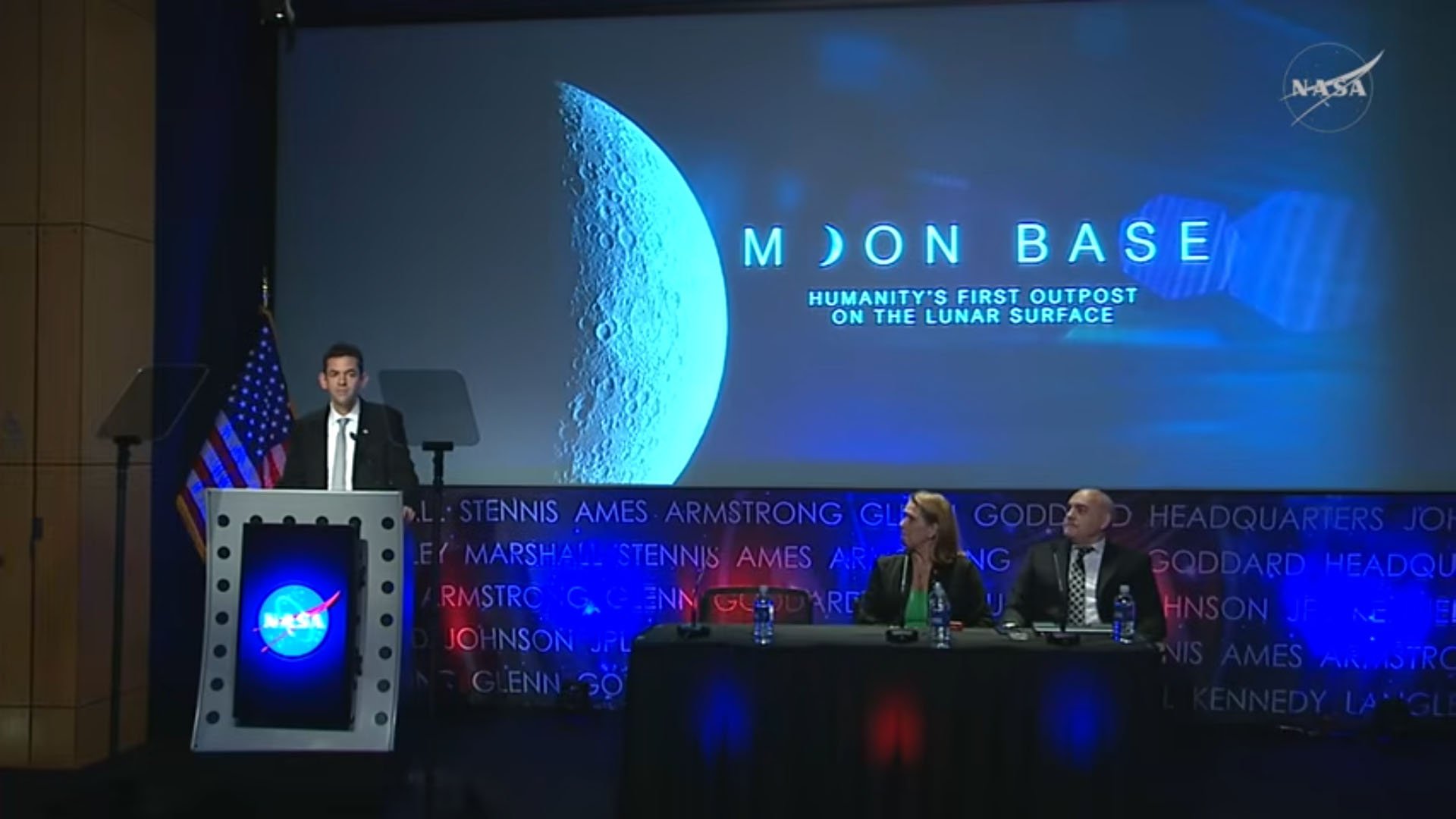
As the Artemis II astronauts prepare for today’s lunar flyby, yesterday’s NASA briefing offered an excellent preview of what lies ahead. Dr. Kelsey Young, Artemis Science Flight Operations Lead for NASA’s Science Mission Directorate and a planetary scientist at the Goddard Space Flight Center, provided a compelling overview of the training the astronauts have completed in preparation for this moment.
The crew has conducted multiple dry runs, learning how to build on one another’s observations in real time. Their work during the flyby will be guided by a carefully developed Lunar Targeting Plan — a prioritized list of key geological features, lighting opportunities, and science observation points to be documented as Orion passes the Moon. At the same time, a team of scientists in the Science Evaluation Room stands ready to support the crew, compare observations against the targeting plan, and help interpret what they are seeing in real time.
“The human eye is the most nuanced detector there is, especially when connected to a well-trained human brain.” — Dr. Kelsey Young, Artemis II Lunar Science Lead
Dr. Young also described what the crew may witness as Orion moves from the Moon’s dark side into sunlight. As the light first begins to spill across the surface, subtle differences in brightness and tone — the albedo variations between the darker basaltic plains and the brighter ancient highlands — may begin to emerge. Then, as the lighting angle changes, long shadows will stretch across crater rims, ridgelines, and basin walls, bringing the Moon’s topography into sharp relief. It is a reminder that the lunar surface tells a different story depending on how the Sun illuminates it, revealing both its composition and its history in real time.
In additional NASA coverage leading into the flyby, Young explained the scientific rationale for the crew’s focus on color: “Color traces back to formation processes and evolution — it tells us something about geological processes and how recently they were active on the Moon.” She pointed to Apollo 17 as a powerful precedent, when astronaut Harrison Schmitt identified the now-famous orange soil at Taurus-Littrow, evidence of volcanic activity far more recent than scientists had previously expected. The Artemis II crew has been briefed to watch for exactly that kind of subtle observation during the flyby.
“As a scientist, and as a mom, and as a citizen of this planet, I’m really looking forward to tomorrow. I cannot wait.” — Dr. Kelsey Young, Artemis II Lunar Science Lead
| Lunar Flyby Schedule — Monday, April 6 · All times EDT | |
| 1:00 pm | Live coverage begins. NASA+ and all streaming platforms go live. |
| 1:30 pm | Science briefing with crew. Crew and Dr. Kelsey Young’s science team hold final flyby objectives and timeline review from Mission Control. |
| 1:56 pm | Apollo 13 distance record broken. Orion surpasses 248,655 miles from Earth — the farthest humans have ever travelled. Brief audio from crew. New record: 252,760 miles. |
| 2:10 pm | Crew remarks on record. Audio-only comments from the crew on breaking the Apollo 13 distance record. |
| 2:15 pm | Cabin configured for flyby. Crew positions cameras and observation equipment in Orion’s windows. |
| 2:45 PM | Flyby observation window opens. Orion’s main windows point toward the Moon. Crew begins photographing and describing 30+ geological targets in pairs, relaying observations to Mission Control in real time. |
| Approx. | At ~4,070 mi, closest approach to the lunar surface. The Moon appears roughly the size of a basketball held at arm’s length. Crew observes Orientale Basin, Apollo legacy sites, the far side, and potential future landing zones near the south pole. |
| Approx. | Comms blackout — ~40 minutes. Orion passes behind the far side. No contact with Mission Control. Flight Director Judd Frieling: “Physics takes over and physics will absolutely get us back to the front side of the Moon.” |
| Approx | Solar eclipse visible from Orion. The Sun disappears behind the Moon for approximately 53 minutes. Crew watches the solar corona with eclipse glasses and reports any unusual solar activity to Dr. Young’s science team. |
| 7:07 PM | Maximum distance from Earth. Orion reaches 252,760 miles — the farthest any human has ever travelled from Earth. |
| 9:20 PM | Flyby observation window closes. Crew begins transferring imagery to the ground. Science team reviews overnight; crew debrief the following morning while impressions are fresh. |
| 9:45 PM | Live coverage ends. Orion now on its free-return trajectory homeward. Splashdown off San Diego: Friday, April 10 at approximately 8:07 p.m. EDT. |