A new NSS Position Paper “Lunar Bases Should Be the Focus of Artemis” has just been released.
Summary
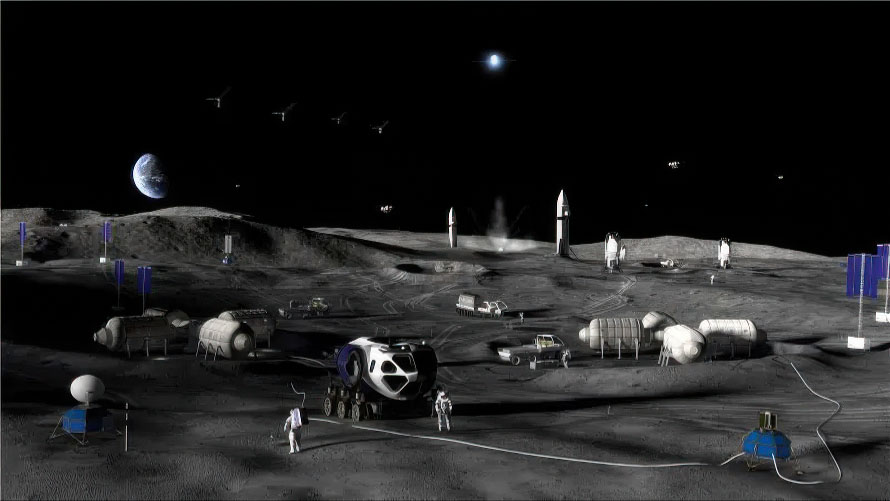
The National Space Society (NSS) argues that the U.S. already won the original Moon race with Apollo, and future leadership will be determined not by who lands next, but by who builds sustained, permanent lunar infrastructure. The Artemis program should shift from sortie missions toward establishing one or more permanently crewed lunar bases with strong mobility, resource utilization, and commercial participation.
NSS supports commercially owned and operated lunar bases, with NASA acting as an anchor tenant rather than owner-operator. This model would encourage economic development, competition, and long-term sustainability while avoiding costly, government-dominated approaches. Mobility is essential: multiple pressurized rovers and reusable lunar “hopper” vehicles should be added to expand exploration range. Shared infrastructure such as power (including nuclear fission), communications, and positioning systems should support multiple bases.
While the lunar south pole is important, NSS urges broader site consideration, noting other valuable resources beyond water ice and the operational challenges of polar terrain. Site selection for Artemis and CLPS missions should prioritize future base development over purely scientific goals.
Initial resource development should focus on water, oxygen, and construction materials rather than speculative Helium-3 mining. Reusability, in-situ resource utilization (especially oxygen production), and commercial heavy-lift systems are foundational. NSS supports reducing reliance on the costly Space Launch System and canceling certain upgrades, while redirecting the savings toward lunar infrastructure.
Competition and multiple suppliers are essential to avoid monopolies and cost overruns. Fixed-price contracts and commercial risk-sharing are preferred over cost-plus models.
Finally, NSS emphasizes international collaboration through the Artemis Accords, treating partners as valued participants. Long-term success requires commercial leadership and a permanent, growing human presence on the Moon.