
By Burt Dicht
NSS Space Coast Correspondent
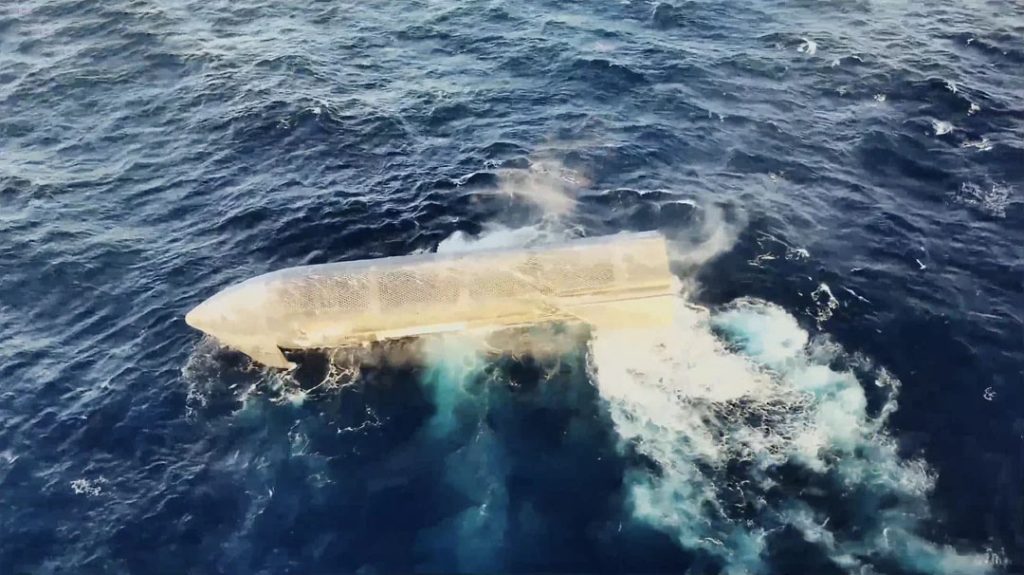
Image: Starship 13 after “landing” in the Indian Ocean.
Last week I had the opportunity to speak to a group of high school students attending the University of South Florida’s Aerospace Engineering Summer Camp. We discussed many aspects of engineering, from the challenges of designing aircraft to the complexity of building spacecraft capable of surviving launch, operating in space, and returning safely to Earth.
One topic generated considerable discussion: the Engineering Design Process. Engineers define a problem, develop possible solutions, build and test a design, evaluate the results, and use what they learn to improve the next version.
On paper, it is a simple flowchart. In practice, it is rarely that neat.
An improvement in one area can reveal a weakness somewhere else. A successful test may answer one question while raising several more. The purpose is not to produce a perfect design on the first attempt. It is to gather the knowledge needed to make the next design better.
Only a few days after my presentation, I watched that process unfold as SpaceX launched Starship Flight 13 on Friday, July 24.
Like many people, I enjoy watching a rocket launch. As an engineer, however, I often find myself wondering what questions the test team is trying to answer. That perspective changes how you view a flight.
The public naturally asks whether a launch succeeded or failed. Did the vehicle reach its planned trajectory? Did every objective go as planned? Were there any visible problems?
Those are reasonable questions. Engineers also ask another one: What did we learn?
Starship remains an experimental launch system. Ground tests and computer simulations can answer many questions, but only flight reveals how the complete vehicle responds to vibration, aerodynamic loading, thermal stress, engine transients, software commands, and the interaction of thousands of components.
Flight 13 was particularly important because it was only the second flight of Starship Version 3. While the vehicle retained the familiar Starship form, the new configuration included substantial changes to structures, propulsion, software, and thermal protection. Those modifications were intended to improve performance and reliability, but they also had to be validated together in flight.
Flight 12 had provided the first opportunity to test Version 3. It also exposed problems during Super Heavy’s return sequence. Heat effects on propulsion components and incorrect engine alarm settings contributed to the loss of the booster before the planned controlled splashdown. SpaceX reviewed the data, revised hardware and software, and carried those changes into Booster 20 for Flight 13.
That is the Engineering Design Process as I had described it to the students: identify the problem, develop a solution, test it, evaluate the results, and repeat.Before examining the results, it helps to understand the questions SpaceX placed on the Flight 13 test card.
The Questions Behind the Flight
Every flight test is built around specific objectives. Together, they form a test card: the planned demonstrations and measurements that will determine what the mission teaches the engineering team.
Flight 13 focused on five areas: validating the second Version 3 stack during ascent; improving Super Heavy’s return sequence; deploying 20 production Starlink Version 3 satellites; restarting a Ship Raptor engine in space; and collecting more demanding reentry and heat-shield data.
The first objective sounded simple: launch the new configuration successfully. Yet there is nothing routine about flying a redesigned vehicle. Ground testing can verify individual components and subsystems, but ascent is the first time the entire stack must perform under full aerodynamic, structural, thermal, and propulsion loads.
Super Heavy’s return was another major focus. After separating from Starship, the booster must flip, restart selected engines, complete a boostback burn, survive atmospheric descent, and ignite a larger group of engines for the landing burn. Each event occurs quickly, and each depends on propulsion, guidance, navigation, flight software, and vehicle control working together. Flight 13 would show whether the changes made after Flight 12 had improved that sequence.
The Starlink payload represented a different kind of milestone. Previous flights had concentrated primarily on proving the vehicle. Flight 13 began testing whether Starship could perform useful work.
Ship 40 carried 20 production Starlink V3 satellites. Because the mission followed a suborbital trajectory, the satellites were not intended to remain in space. Their purpose was to separate from Starship, deploy their arrays and antennas, establish radio-frequency and laser communications, and return data before reentering. Six also carried cameras intended to observe Starship and its heat shield.
The mission also called for a single Raptor relight in space. Future Starship operations will require reliable restarts for orbital maneuvering, rendezvous, propellant-transfer missions, lunar operations, and departures beyond Earth orbit. A brief relight during a test flight may not look dramatic, but it validates a capability on which much more ambitious missions will depend.
Finally, SpaceX planned another demanding reentry. Flight 13 included load-sensing heat-shield tiles, revised attachment methods, and changes around the aft flaps. The ascent and reentry profiles were designed to subject the vehicle to greater dynamic pressure, giving the team better information about tile retention and thermal protection under increased loads.
The test card showed how the program’s questions have changed. SpaceX is no longer asking only whether Starship can launch and separate. It is testing payload deployment, in-space propulsion, thermal protection, and the elements needed for a reusable transportation system.
That is why the mission could not be judged by one spectacular moment, whether good or bad.
The Flight
After a week of schedule changes caused by a last-second abort and then weather, Flight 13 lifted off from Pad 2 at Starbase at 6:51 p.m. EDT on July 24. Booster 20’s 33 Raptor engines ignited, and the 407-foot vehicle climbed away from South Texas.
The second Version 3 stack performed well during ascent. All 33 booster engines were reported operating at liftoff, and the vehicle passed through Max Q before hot-staging just over two minutes into the mission. Ship 40 continued on all six engines while Booster 20 began its return.
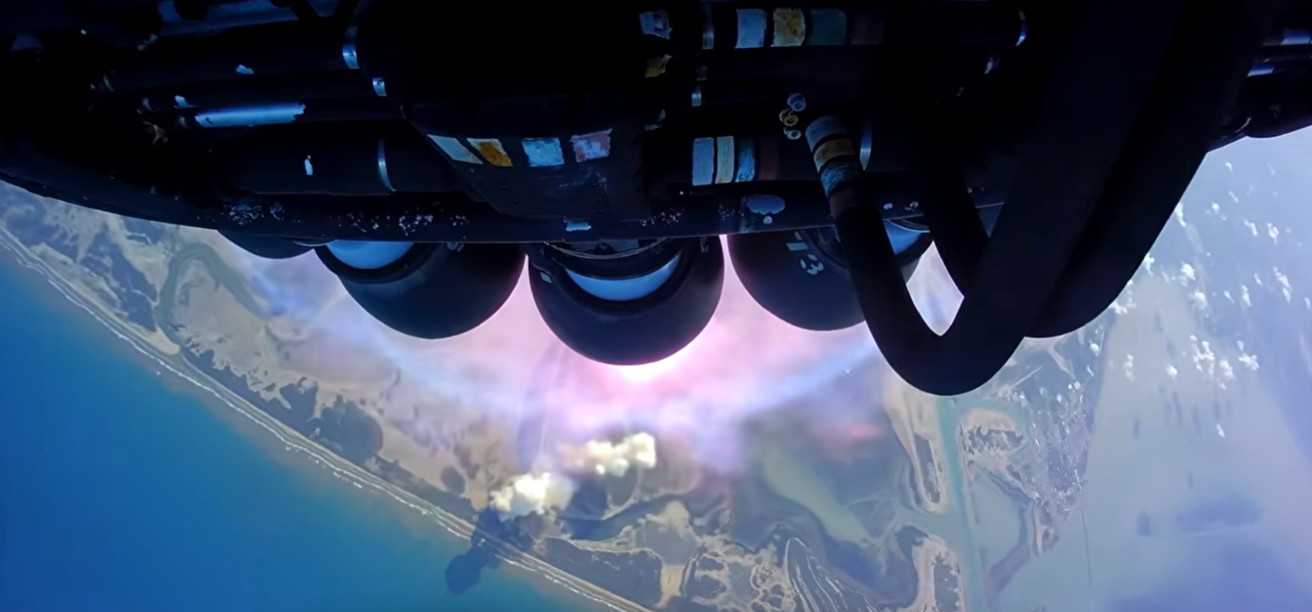
The booster’s initial performance was encouraging. It completed the flip and a five-engine boostback burn, a clear improvement over Flight 12. The landing burn, however, remained troublesome.
As Booster 20 approached the Gulf of Mexico, only a subset of the planned landing engines ignited. Public reports differed on the precise count, and SpaceX had not released a complete engine-by-engine account when this blog post was prepared. The broad result was clear: the booster descended too quickly and struck the water harder than intended.
The hard splashdown was a miss, but it did not erase the progress earlier in the return. Flight 13 showed that the flip and boostback sequence had improved while narrowing the remaining problem to the terminal landing burn and engine-relight performance. The next design review will begin with much more specific information than the team had after Flight 12.
Meanwhile, Ship 40 continued through a remarkably productive upper-stage test. Beginning about sixteen minutes after launch, Starship deployed all 20 Starlink V3 satellites. The satellites established communications through radio-frequency and laser links, and SpaceX reported contact with each one. They returned telemetry and imagery during the short time available before their planned atmospheric reentry.
This was not an operational satellite launch, since the payloads were never intended to reach lasting orbit. It was nevertheless an important demonstration. Starship successfully carried, released, and communicated with production spacecraft, exercising many of the functions required for future deployment missions. The test moved the program beyond simply proving that the vehicle could fly.
Nearly forty minutes into the mission, Ship 40 successfully relit one Raptor engine in space. The event was brief, but the capability is central to Starship’s future. The vehicle will need dependable restarts for orbit changes, rendezvous and docking, tanker operations, and missions to the Moon and Mars.
Reentry provided the most visually striking and perhaps the most consequential results.
Ship 40 maintained telemetry through much of the descent using Starlink communications while the modified thermal protection system endured peak heating and aerodynamic loading. Flight imagery showed considerably less visible tile damage than on several earlier missions. SpaceX had intentionally stressed the system to obtain better data on tile retention, attachment methods, and the aft-flap areas.
The ship then completed a controlled landing burn and made an intact splashdown in the Indian Ocean. SpaceX described it as Starship’s softest ocean landing to date, and the vehicle remained afloat after touchdown.
The reentry result mattered for more than the imagery. A reusable upper stage must survive repeated returns without extensive tile replacement or structural repair. Flight 13 did not prove that Starship is ready for rapid reuse, but it provided a much stronger data point for the thermal protection system and controlled landing sequence.
Taken together, the results were mixed but substantial. Super Heavy did not complete its planned soft splashdown. Ship 40, however, achieved nearly all of its planned objectives: a clean ascent, payload deployment, communications with all 20 satellites, an in-space engine relight, sustained reentry data, and an intact ocean landing.
The upper stage advanced significantly. The booster gave SpaceX a more focused issues to resolve as the program moves forward.
Looking Beyond Flight 13
Flight 13 matters because Starship’s development is tied to objectives far beyond a single test campaign.
For SpaceX, the immediate goals include deploying much larger Starlink satellites and developing a launch system whose booster and upper stage can both be recovered and flown again. The economic case for Starship depends heavily on that reusability. A hard booster splashdown therefore cannot be dismissed as unimportant. Reliable recovery must eventually become routine rather than dramatic.
At the same time, the upper-stage accomplishments addressed capabilities needed for future operations: carrying real payloads, restarting engines in space, maintaining communications during reentry, improving thermal protection, and controlling the ship through landing.
Those capabilities also matter to NASA.
NASA’s current Artemis architecture calls for Artemis III in 2027 to be a crewed demonstration mission in low Earth orbit rather than a lunar landing. Orion will practice rendezvous and docking with test versions of commercial human landing systems. SpaceX plans to use a Version 3 Starship test article fitted with a docking system, allowing NASA and SpaceX to evaluate communications, controllability, docking, and the behavior of the combined Orion-Starship stack. The Artemis III astronauts will remain aboard Orion during the Starship portion of the test.
NASA now plans the first crewed lunar landing of the Artemis campaign for Artemis IV in 2028. Before astronauts can descend to the surface, SpaceX must also complete an uncrewed Starship Human Landing System demonstration at the Moon. That mission will require capabilities far beyond those attempted on Flight 13, including repeated launches, long-duration operations, orbital propellant transfer, rendezvous and docking, and a lunar landing.
Flight 13 did not demonstrate that full architecture. It did, however, provide useful evidence about the Version 3 vehicle that SpaceX intends to use as the basis for its Artemis III test article and future Starship HLS development.
This is where the Engineering Design Process becomes more than a classroom concept. No single flight will prove Starship ready for all of its intended missions. Progress will come through a sequence of tests, each designed to reduce uncertainty in a particular part of the system. A simple success-or-failure label cannot does not apply to tests like Flight 13. The mission succeeded in some areas, fell short in another, and produced the data needed to determine what comes next.
That was the point I hoped the students at the University of South Florida would understand when we discussed the Engineering Design Process.
In the classroom, the process appeared as boxes connected by arrows. Flight 13 showed what those arrows represent: test data reviewed late into the night, assumptions challenged, hardware changed, software revised, and another vehicle prepared for flight.
The launch was the most visible part of the process. The engineering work that follows will determine the value of the mission.
And somewhere at Starbase, Flight 14 is already being shaped by what Flight 13 taught the team.










1 thought on “Starship Flight 13: Engineering in Action”
Great post Burt! Excellent perspective.