National Space Society

NSS Co-Sponsors Space Elevator Academic Challenge 2026

isec logo blog

Share:

Facebook
X
Pinterest
LinkedIn

The International Space Elevator Consortium (ISEC), in conjunction with the National Space Society (NSS), is conducting a student academic challenge contest regarding how space elevators could be used with artificial intelligence for planetary defense.

First prize is $2000, second prize $1,000, and third prize $500. The contest is for individual students or teams of up to four students from around the world (high school or university). The contest will be in three phases as described below. The first phase is to submit an abstract by October 15, 2025.

Space Elevators

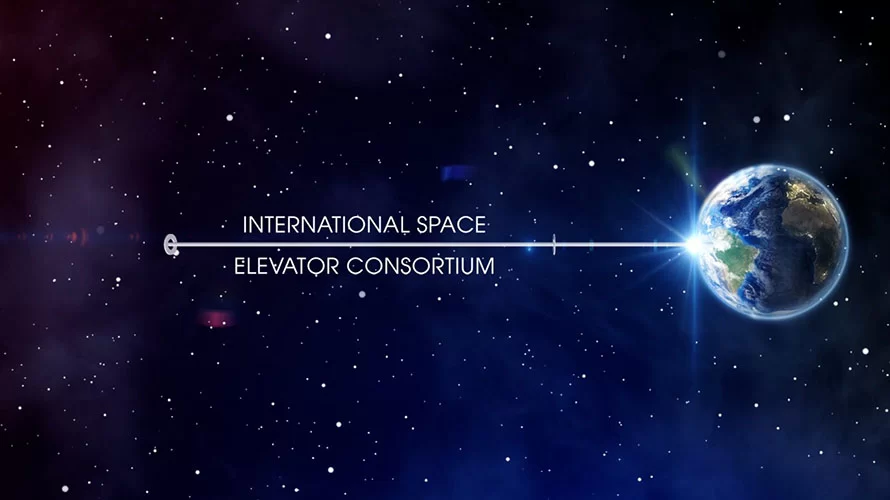
A space elevator consists of a tether some 100,000 km long suspended between the Earth and a counterweight (Apex Anchor). The identification of a suitably strong material (single crystal graphene super laminate) to build a space elevator could possibly make it a reality in your lifetime. If it could be built, a space elevator could raise 170,000 metric tons to space every year, the equivalent of 8500 Falcon Heavy launches, and with no atmospheric pollution—a “green road to space.” Space elevators could enable such massive movement of cargo to GEO and beyond in a safe, environmentally friendly, daily and routine way, at lower cost than rockets – thus transforming the approach for humanity to escape Earth’s gravity.  For information about space elevators and their capability visit isec.org.

The Challenge

The challenge encourages you to expand your imagination by exploring the use of AI technologies towards a particular mission using a space elevator for planetary defense.

The Contest

All participants will be provided with access to large numbers of papers about the space elevator.

Phase 1 submissions (an abstract) must be submitted by October 15, 2025. Phase 2 submissions by those selected in Phase 1 will consist of a 15-page paper due January 15, 2026. Phase 3 submissions by those selected in Phase 2 will consist of an audio/video MP4 presentation due February 15, 2026.

First Prize is $2000, Second Prize is $1000, and Third Prize is $500 in each of these two categories. Prize money will be equally divided among team members. Winning submissions will be published on the ISEC YouTube channel and other social media. Winners will be invited to present their paper at the National Space Society’s International Space Development Conference as well as the ISEC Conference in 2026.

For detailed rules and guidelines for the contest see https://www.isec.org/academic-challenge.

The International Space Elevator Consortium (ISEC) promotes the development, construction and operation of a space elevator infrastructure as a revolutionary and efficient way to space for all humanity. ISEC is an affiliate of the National Space Society.

Share:

Facebook
X
Pinterest
LinkedIn
Picture of By National Space Society

By National Space Society

Leave a Comment

Don't Miss a Beat!

Be the first to know when new articles are posted!

Search
Categories

Follow Us On Social Media

JOIN THE
GREATEST ADVENTURE

Give The Gift Of Space: Membership For Friends and Family

Book Review

HOTOLSkylon

Book Review: HOTOL & Skylon: The Story of Britain’s Spaceplanes

In HOTOL & Skylon: The Story of Britain’s Spaceplanes, Rob Coppinger covers the story of both in great detail, with the reminiscences of many who played integral roles in these ambitious programs. The book shines when it captures the enthusiasm and excitement of those involved, and there are extensive quotes from many who devoted years of work on these projects.

Read More »
Out of This World

Book Review: Out of This World

Anyone seeking a short but comprehensive introduction to human spaceflight would do well to start with this book. It reviews its history, highlights the accomplishments and tragedies, and describes the equipment used. It also looks at living in space, what space travelers experience, and how they work.

Read More »
desigining farms in space

Book Review: Designing Farms in Space

Meyer’s academic textbook is loaded with numerous photographs, diagrams, charts, and graphs. There are chapters on subjects such as farm machines, animal and fungi production, plant and algae production, and space menus. The farming techniques outlined in the book can be applied to lunar, Martian, or rotating space settlements.

Read More »
Archives


Hilton McLean Tysons Corner, McLean, Virginia
June 4 - 7, 2026

Recent Blog Posts

In HOTOL & Skylon: The Story of Britain's Spaceplanes, Rob Coppinger covers the story of both in great detail, with the reminiscences of many who...

The National Space Society (NSS) welcomes the U.S. Administration’s proposal to establish a United States Space Academy, a NASA-led institution meant to prepare the next...

By Burt Dicht NSS Space Coast Correspondent Today’s successful launch of the Nancy Grace Roman Space Telescope will help answer two key questions: How does...

By Robin Scott National Space Society of North Texas (NSS-NT) President Ken Ruffin, shown above holding the 2026 NSS Chapter of the Year Award, acknowledged...

The National Space Society (NSS) welcomes the release of the National Space Transportation Policy, a comprehensive directive establishing the United States’ strategic framework for launch,...

In this NSS Space Forum, astronaut and former U.S. Navy test pilot Susan Kilrain joins us to discuss her new book, Slaying Snakes in the...
Anyone seeking a short but comprehensive introduction to human spaceflight would do well to start with this book. It reviews its history, highlights the accomplishments...
The Space Coast has extraordinary assets and an opportunity to continue its preeminence as a spaceport while becoming a destination for a new generation of...
adastra magazine

Your Doorway to New Worlds