National Space Society

NASA's Gravity Probe B Confirms Einstein's Theory

Share:

Facebook
X
Pinterest
LinkedIn

NASA’s Gravity Probe B (GP-B) mission has confirmed two key predictions derived from Albert Einstein’s general theory of relativity, which the spacecraft was designed to test.

The experiment, launched in 2004, used four ultra-precise gyroscopes to measure the hypothesized geodetic effect, the warping of space and time around a gravitational body, and frame-dragging, the amount a spinning object pulls space and time with it as it rotates.

GP-B determined both effects with unprecedented precision by pointing at a single star, IM Pegasi, while in a polar orbit around Earth. If gravity did not affect space and time, GP-B’s gyroscopes would point in the same direction forever while in orbit. But in confirmation of Einstein’s theories, the gyroscopes experienced measurable, minute changes in the direction of their spin, while Earth’s gravity pulled at them.

“Imagine the Earth as if it were immersed in honey. As the planet rotates, the honey around it would swirl, and it’s the same with space and time,” said Francis Everitt, GP-B principal investigator at Stanford University. “GP-B confirmed two of the most profound predictions of Einstein’s universe, having far-reaching implications across astrophysics research. Likewise, the decades of technological innovation behind the mission will have a lasting legacy on Earth and in space.”

GP-B is one of the longest running projects in NASA history, with agency involvement starting in the fall of 1963 with initial funding to develop a relativity gyroscope experiment. Subsequent decades of development led to groundbreaking technologies to control environmental disturbances on spacecraft, such as aerodynamic drag, magnetic fields and thermal variations. The mission’s star tracker and gyroscopes were the most precise ever designed and produced.

“The mission results will have a long-term impact on the work of theoretical physicists,” said Bill Danchi, senior astrophysicist and program scientist at NASA Headquarters in Washington. “Every future challenge to Einstein’s theories of general relativity will have to seek more precise measurements than the remarkable work GP-B accomplished.”

GP-B completed its data collection operations and was decommissioned in December 2010.

More information:

NASA – Gravity Probe B: The Relativity Mission
Stanford – Gravity Probe B: Testing Einstein’s Universe
NASA Press Conference on YouTube (50 minutes)

Share:

Facebook
X
Pinterest
LinkedIn
Picture of By National Space Society

By National Space Society

Leave a Comment

Don't Miss a Beat!

Be the first to know when new articles are posted!

Search
Categories

Follow Us On Social Media

JOIN THE
GREATEST ADVENTURE

Give The Gift Of Space: Membership For Friends and Family

Book Review

Out of This World

Book Review: Out of This World

Anyone seeking a short but comprehensive introduction to human spaceflight would do well to start with this book. It reviews its history, highlights the accomplishments and tragedies, and describes the equipment used. It also looks at living in space, what space travelers experience, and how they work.

Read More »
desigining farms in space

Book Review: Designing Farms in Space

Meyer’s academic textbook is loaded with numerous photographs, diagrams, charts, and graphs. There are chapters on subjects such as farm machines, animal and fungi production, plant and algae production, and space menus. The farming techniques outlined in the book can be applied to lunar, Martian, or rotating space settlements.

Read More »
Archives


Hilton McLean Tysons Corner, McLean, Virginia
June 4 - 7, 2026

Recent Blog Posts

In this NSS Space Forum, astronaut and former U.S. Navy test pilot Susan Kilrain joins us to discuss her new book, Slaying Snakes in the...
Anyone seeking a short but comprehensive introduction to human spaceflight would do well to start with this book. It reviews its history, highlights the accomplishments...
The Space Coast has extraordinary assets and an opportunity to continue its preeminence as a spaceport while becoming a destination for a new generation of...

The National Space Society (NSS) enthusiastically welcomes NASA’s proposed PROMISE lunar lander, a bold step forward in expanding scientific access, mobility, and capability across the...

This bold song was painstakingly composed to capture the true essence of that call, "Ad Astra," and covers the future progress of humankind as it...
Back in 1966, Luna 9 became the first spacecraft to soft-land on the Moon. Apogee Books has provided an English-language NASA translation of a detailed...

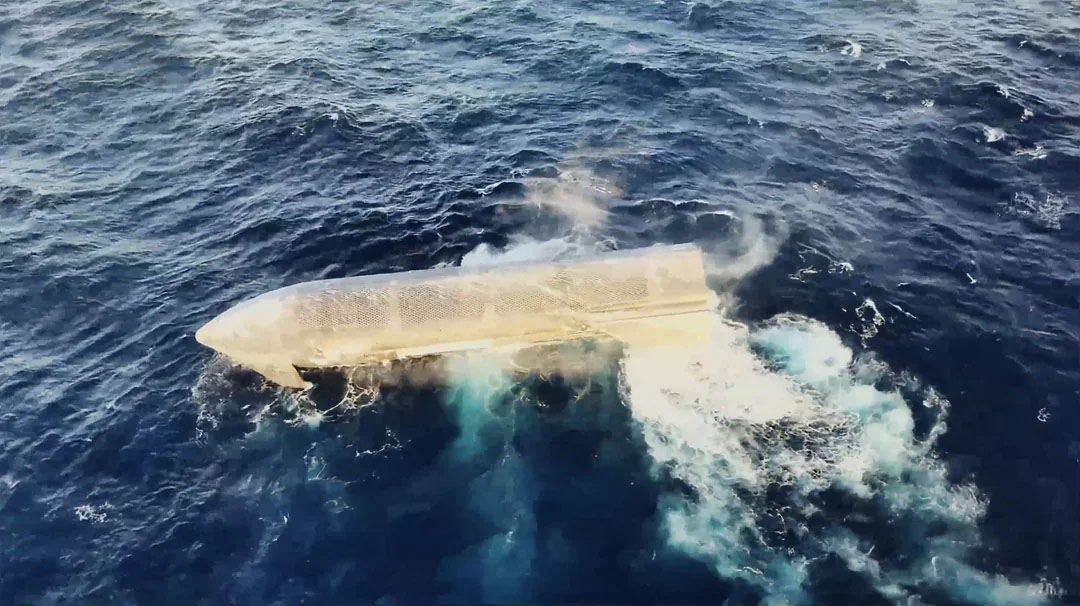
By Burt Dicht NSS Space Coast Correspondent Image: Starship 13 after “landing” in the Indian Ocean. Last week I had the opportunity to speak to...

On July 20, 2026, 151 people gathered for a special brunch at Space220 in EPCOT at Walt Disney World to celebrate National Space Exploration Day,...
adastra magazine

Your Doorway to New Worlds