The Wilkinson Microwave Anisotropy Probe

Share:

Facebook
X
Pinterest
LinkedIn

WMAP
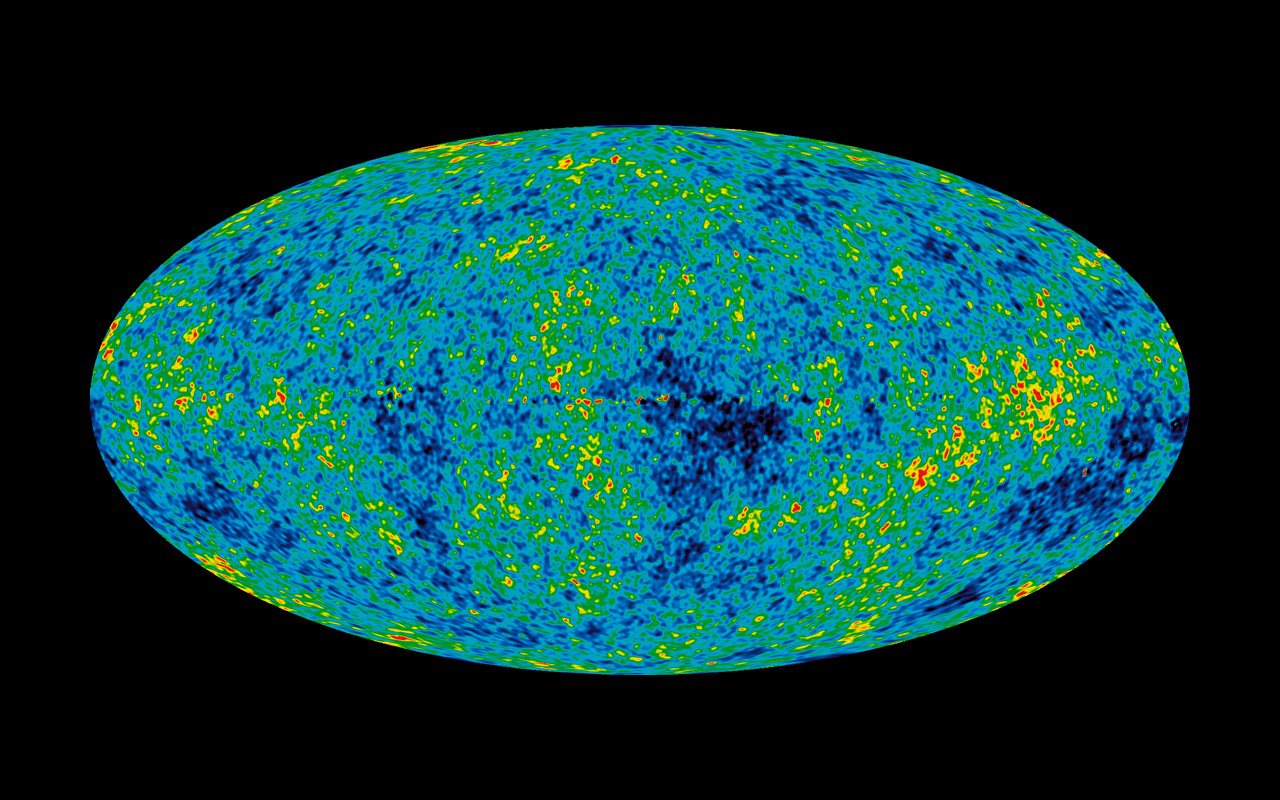
Completed Microwave Map of the Universe
Image Credit: NASA
Scientists announced this week that the mission of the Wilkinson Microwave Anisotropy Probe (WMAP) has been completed. The last set of observations were downloaded on 20 August 2010, and researchers are compiling the final results. The satellite was placed in a permanent parking orbit around the sun on 8 September 2010.

WMAP was launched on 30 June 2001 and placed into an orbit around SEL-2, the second Sun-Earth Lagrange point. SEL-2 lies 1,500,000 kilometers beyond the Earth on a line from the Sun to the Earth. WMAP was the first spacecraft to occupy this location. SEL-2 is extremely cold, shaded from the Sun’s activity by the Earth’s shadow and ideal as an astronomical location in space. In 2009, the Herschel Space Observatory and Planck space observatory took up residence at SEL-2. They will be joined in 2014 or 2015 by the James Webb Space Telescope.

First detected in 1964, the cosmic microwave background (CMB) radiation (television “snow” – before cable), is the remnants of the extremely hot radiation from the big-bang, now cooled to almost absolute zero after 13.73 billions years of the expansion of the universe. It is a pattern frozen in place when the cosmos was only 380,000 years old.

WMAP COBE was the successor to NASA’s Cosmic Background Explorer (COBE), which was launched on 18 November 1989 and produced the first map of the microwave radiation. Note the great increase in resolution between the COBE map at the right, and the WMAP result above.

The Planck observatory is currently making high resolution measurements of both the total intensity and polarization of the primordial CMB anisotropies that were first observed by COBE and WMAP.

The observations made by WMAP are the most accurate to date and have allowed scientists to rule out several “inflation” models about what happened in the first trillionths of a second during the birth of the cosmos, while supplying support for several other models:

  • The age of the universe is 13.73 billion years old to within 1% (0.12 billion years)
  • Ordinary matter (atoms) makes up only 4.6% of the universe (to within 0.1%)
  • Dark matter (not made up of atoms) makes up 23.3% (to within 1.3%)
  • Dark energy makes up 72.1% of the universe (to within 1.5%)

Dark energy is the force driving the galaxies in the universe apart at an ever increasing rate. At some point in the future, inhabitants of the Milky Way will not be able to see any other objects in the sky. These entities will conclude that they are at the center of the universe, and will have no information about the big bang and the creation of the cosmos as we know it today.

Share:

Facebook
X
Pinterest
LinkedIn
Picture of By National Space Society

By National Space Society

Leave a Comment

Don't Miss a Beat!

Be the first to know when new articles are posted!

Search
Categories

Follow Us On Social Media

JOIN THE
GREATEST ADVENTURE

Give The Gift Of Space: Membership For Friends and Family

Book Review

desigining farms in space

Book Review: Designing Farms in Space

Meyer’s academic textbook is loaded with numerous photographs, diagrams, charts, and graphs. There are chapters on subjects such as farm machines, animal and fungi production, plant and algae production, and space menus. The farming techniques outlined in the book can be applied to lunar, Martian, or rotating space settlements.

Read More »
Archives


Hilton McLean Tysons Corner, McLean, Virginia
June 4 - 7, 2026

Recent Blog Posts

Meyer’s academic textbook is loaded with numerous photographs, diagrams, charts, and graphs. There are chapters on subjects such as farm machines, animal and fungi production,...
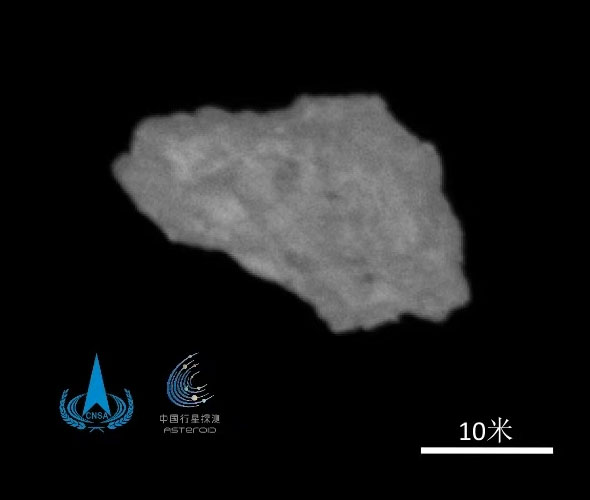
The Tianwen-2 spacecraft at asteroid 469219 Kamoʻoalewa is reportedly positioned to begin the most critical phase of its deep-space mission, preparing to sample the asteroid....
NSS continued its commitment to developing the next generation of space leaders through two programs created specifically for university students and early-career professionals: Speed Mentoring...
The National Space Society’s annual International Space Development Conference concluded on June 7 and was widely praised by attendees, with one of the best domestic...
Apogee Books has reissued its volume on Surveyor for the program’s 60th anniversary. The book is a wonder, containing a veritable treasure trove of documents...
Each year, the “NSS 30 Under 30” program will honor 30 individuals under the age of 30 who are making meaningful contributions across the full...

The National Space Society invites you to the next Space Forum Thursday, June 18, 2026, 8:00 pm to 9:15 pm EST NOTE NEW TIME! The...

For the first time, the space elevator track at ISDC expanded to two sessions: the morning dedicated to powering the space elevator and the afternoon...

Your Doorway to New Worlds