National Space Society

NSS Recognizes China for its Successful Rendezvous with Asteroid Kamo’oalewa

asteroid kamooalewa CNSA

Share:

Facebook
X
Pinterest
LinkedIn
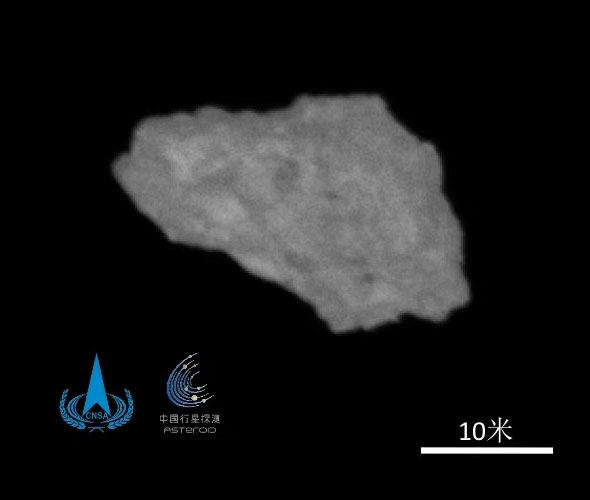
The Tianwen-2 spacecraft at asteroid 469219 Kamoʻoalewa is reportedly positioned to begin the most critical phase of its deep-space mission, preparing to sample the asteroid.

Tianwen-2 Spacecraft is Scheduled to Return Samples of the “Mini-Moon” to Earth in 2027

The National Space Society (NSS) commends the China National Space Administration (CNSA) on the announcement of the successful arrival of its Tianwen-2 spacecraft at asteroid 469219 Kamoʻoalewa. The spacecraft launched on May 28, 2025, and is reportedly positioned to begin the most critical phase of its deep-space mission—preparing to sample the asteroid. If China is successful in this, and in returning the sample to Earth, it would be the third nation to do so after Japan (Hayabusa 1 in 2010 and Hayabusa 2 in 2020) and the United States (OSIRIS-Rex in 2023).

Kamoʻoalewa measures between 130 to 330 feet (40 to 100 meters) across and its name means “oscillating celestial object” in Hawaiian. Depending on the precise measurements obtained by Tianwen-2, it could officially become the smallest asteroid ever visited by a spacecraft.

Though often referred to as a “mini-moon,” Kamoʻoalewa is not a true satellite of Earth. Instead, it is a quasi-satellite—one of only seven known objects that orbit the Sun while remaining locked in perfect synchronization with Earth’s orbit. Some astronomers have hypothesized that Kamoʻoalewa may actually be an ancient fragment of Earth’s own Moon, blasted into space during a massive impact long ago.

“We welcome China into the family of nations to rendezvous with, study, and sample asteroids,” said Dale Skran, NSS COO and SVP. “Besides the intense scientific interest, this is another step toward utilizing the rich resources of accessible asteroids to boost the human settlement of the Earth-Moon system and beyond. This type of exploration also helps us to plan the protection of Earth from larger rogue asteroid impacts.”

Over the next nine months, Tianwen-2 will map the asteroid in high resolution to identify a secure landing site. It will then employ a touch-and-go sampling system and an advanced anchor-and-attach mechanism featuring surface drills to collect about 3.5 ounces (100 grams) of surface material. If successful, the spacecraft will depart the asteroid in April 2027, with its return capsule projected to land on Earth the following November. Meanwhile, Tianwen-2 will execute a gravity-assist maneuver to slingshot across the solar system toward its secondary target, comet 311P/PANSTARRS, where it is expected to arrive in January 2035.

Share:

Facebook
X
Pinterest
LinkedIn
Picture of By National Space Society

By National Space Society

1 thought on “NSS Recognizes China for its Successful Rendezvous with Asteroid Kamo’oalewa”

  1. Yes. Great news! Imagine! Baby steps the future unfolds🚶‍♀️ 🚶‍♀️ 🚶‍♀️ expanding our reach in the galaxy unlocking the secrets and resources ♡

    Reply

Leave a Comment

Don't Miss a Beat!

Be the first to know when new articles are posted!

Search
Categories

Follow Us On Social Media

JOIN THE
GREATEST ADVENTURE

Give The Gift Of Space: Membership For Friends and Family

Book Review

Lunacy

Lunacy: A Book Review Essay

This long essay defends the NSS Vision against those who, like the author of the book being reviewed, think “we shouldn’t colonize Mars or the Moon, or even vacation there.” Ben Bramble, an Australian philosopher who teaches at Australian National University, has penned a YAASS (Yet Another Anti-Space-Settlement) book. These books are multiplying like flies, so space settlement advocates must be gaining ground to generate such an abundant response.

Read More »
HOTOLSkylon

Book Review: HOTOL & Skylon: The Story of Britain’s Spaceplanes

In HOTOL & Skylon: The Story of Britain’s Spaceplanes, Rob Coppinger covers the story of both in great detail, with the reminiscences of many who played integral roles in these ambitious programs. The book shines when it captures the enthusiasm and excitement of those involved, and there are extensive quotes from many who devoted years of work on these projects.

Read More »
Archives


Hilton McLean Tysons Corner, McLean, Virginia
June 4 - 7, 2026

Recent Blog Posts

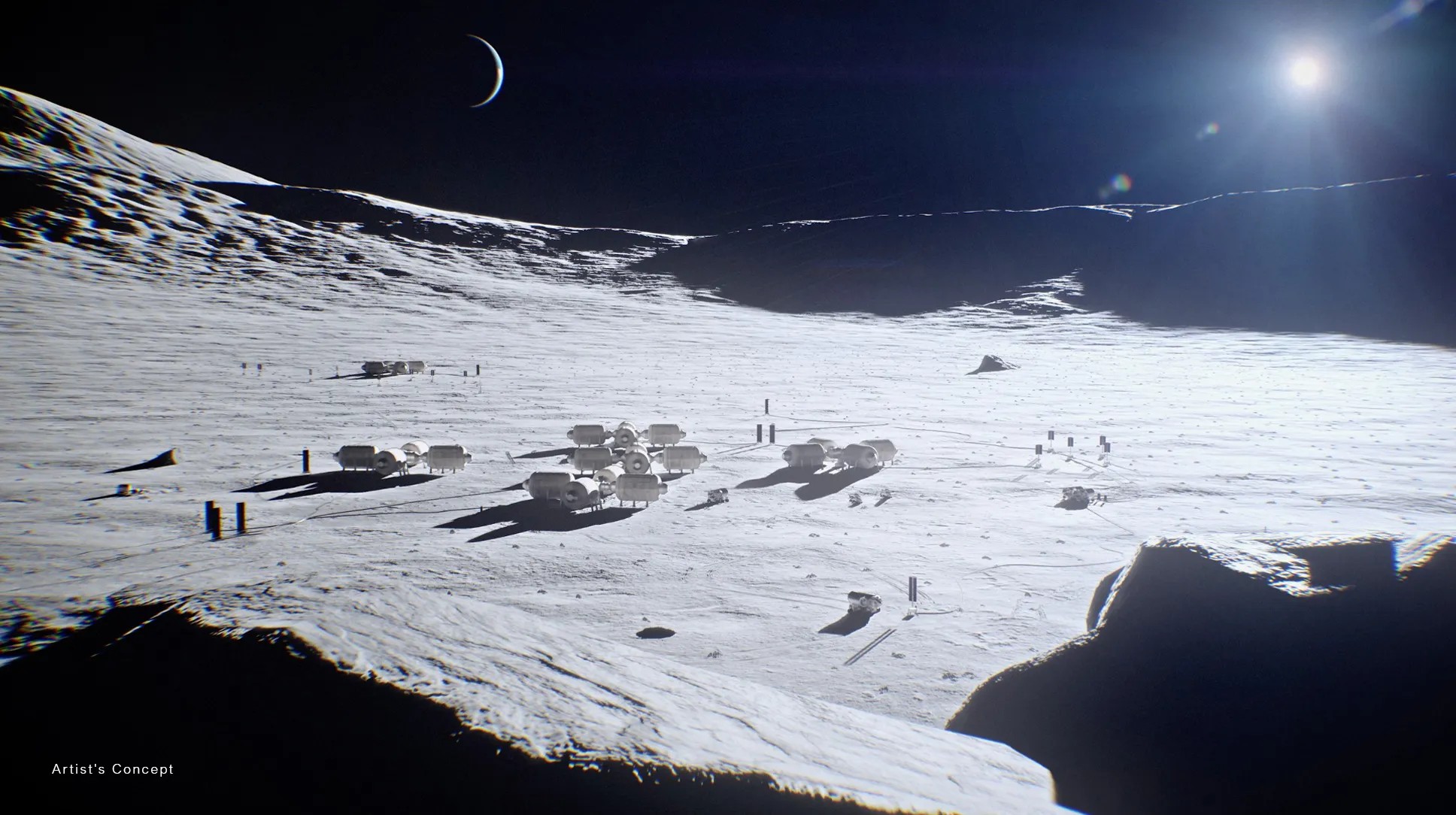
The National Space Society (NSS) applauds NASA’s latest Moon Base awards and mission announcements, which represent a significant step forward in building the infrastructure, transportation...

This Space Available By Emily Carney Astronaut Susan Still’s (now Kilrain) aerospace career is a catalog of incredible accomplishments: with an impeccable academic and military...

By Burt Dicht NSS Space Coast Correspondent Image: Artist’s concept of living and working at Moon Base, courtesy NASA “We are building the Moon Base...

NSS is pleased to share this inspiring story of how a 17-year-old from Venezuela discovers asteroids. By Miguel Rojas It was the kind of night...

Category: Nonfiction Reviewed by: Clifford R. McMurray Title: Eyes to the Stars: A Memoir for the Space Shuttle Generation Author: Steven A. Hawley, PhD Format:...

Isaacman and NASA Associate Administrator Amit Kshatriya outlined the changes NASA is making to accelerate the Artemis program. Artemis Program Manager Jeremy Parsons followed with...
While most meteorites come from asteroids, a small number originate from the Moon or Mars. Powerful impacts can eject surface rocks into space, where they...
The National Space Society is proud to host the annual Space Settlement Summit at the campus of the University of Central Florida on October 25...
adastra magazine

Your Doorway to New Worlds