
By Burt Dicht
NSS Managing Director of Membership
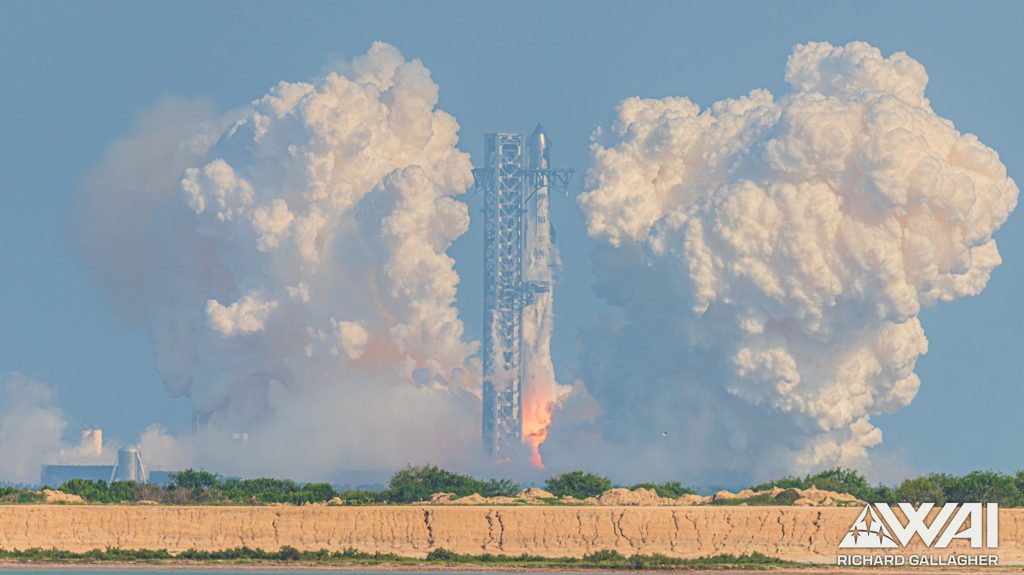
Image: Starship V3 liftoff captured by space photographer Richard Gallagher (rpg-photography.com)
Yesterday evening, May 22, at 6:30 p.m. EDT, Starship Flight 12 thundered away from Pad 2 at Starbase on the Texas Gulf Coast, marking the first flight of SpaceX’s significantly upgraded Starship Version 3 vehicle. Standing 408 feet tall, the world’s largest and most powerful launch system rose from the launch pad in spectacular fashion, beginning a mission designed not only to test hardware but also to gather the data needed to support future generations of the vehicle.
From the moment the vehicle left the launch pad, it was clear that this was not simply a launch; it was a flying test laboratory. Flight 12 incorporated numerous upgrades and experiments intended to improve performance, reliability, and reusability while expanding SpaceX’s understanding of how the vehicle behaves throughout an entire mission profile.
The launch itself was spectacular. Starship seemed to leap from the pad, climbing skyward with remarkable acceleration despite its immense size. For those who have followed the program from its earliest integrated flight tests, it was another reminder of how the system continues to evolve. The transition from those early developmental flights to today’s increasingly sophisticated missions illustrates a development philosophy built around flying, learning, and improving.
Super Heavy experienced two notable anomalies during the mission. One of the 33 first-stage Raptor engines shut down during ascent, and later the booster failed to complete its boostback burn—an engine relight required to reverse the booster’s trajectory for a controlled descent. The result was an uncontrolled splashdown in the Gulf of Mexico rather than the precision landing SpaceX had planned. While the booster was not recovered, the event provided engineers with valuable information about boostback burn reliability, data that will help inform future improvements as SpaceX works toward routine booster catch operations at Starbase.
One of the six vacuum-optimized Raptor engines on Starship 39 experienced a failure during flight. However, the remaining engines compensated as designed, allowing the mission to continue and accomplish its primary objectives.
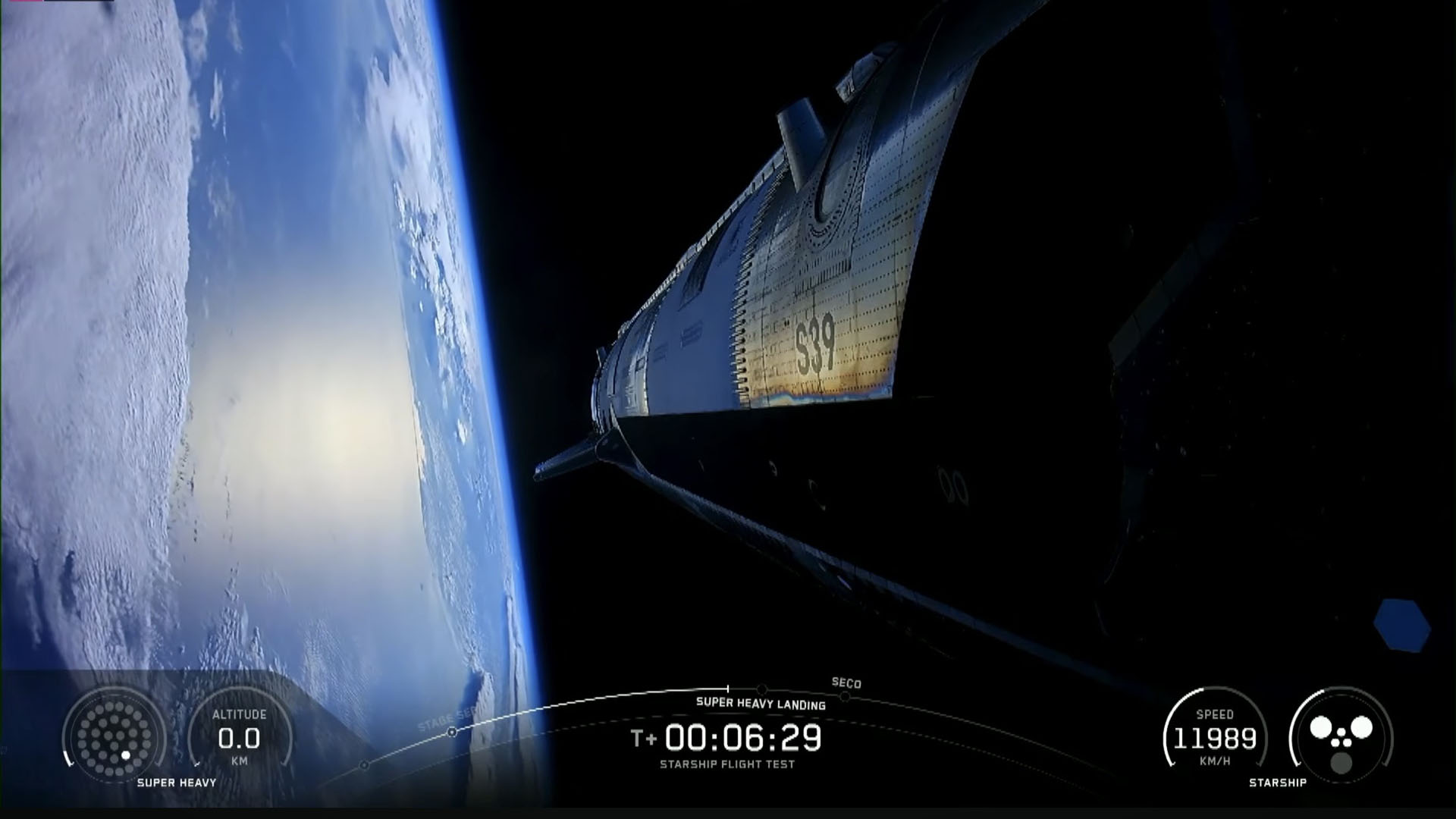
The mission successfully achieved several major objectives. Starship deployed all twenty-two Starlink mass simulators, including two specially equipped inspector payloads, dubbed “Dodger Dogs” by SpaceX during the mission webcast. Fitted with cameras, these payloads were designed to gather imagery of Starship and its thermal protection system during flight. The successful deployment of all payloads demonstrated another important capability for a vehicle that is ultimately intended to serve as both a transportation system and a satellite deployment platform.
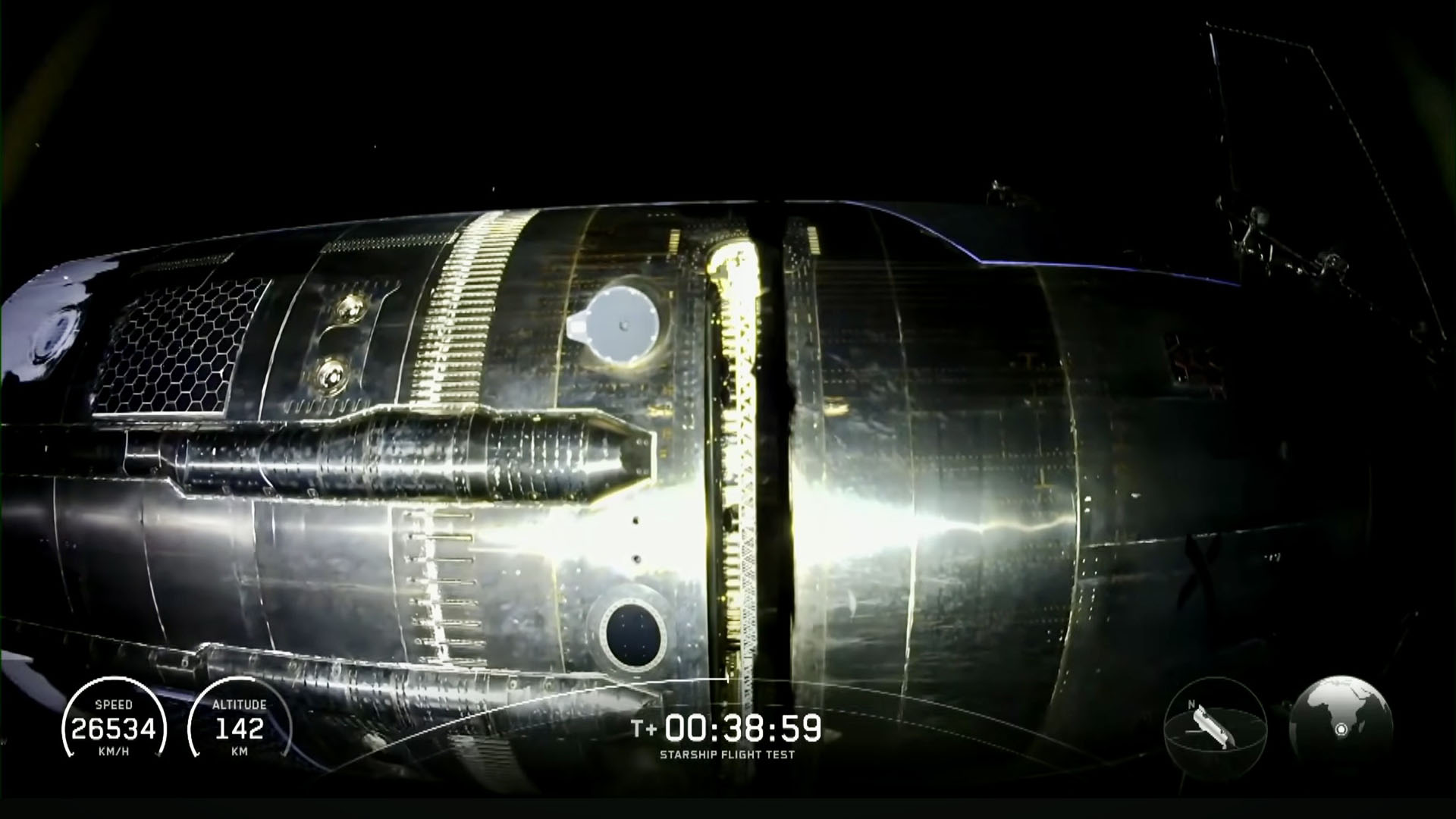
The loss of one engine on Starship 39 also had a downstream effect: SpaceX made the decision to abort the planned in-space Raptor relight, as the vehicle’s trajectory was no longer within the parameters required for a nominal relight attempt. While SpaceX confirmed the trajectory remained within pre-analyzed bounds, the relight was called off as a precautionary measure. These are precisely the type of decisions and data points that test flights are designed to uncover and inform. Engineers now have real flight data that can be analyzed, understood, and used to improve future vehicles.
As an engineer, one aspect of the SpaceX program that has always impressed me is its disciplined approach to flight testing. The company does not view a test flight simply as a demonstration of capability. Each mission is designed to answer questions, validate assumptions, identify weaknesses, and gather data. The goal is not perfection on every flight; the goal is learning. Every anomaly becomes an opportunity to improve the design, refine procedures, and increase reliability.
The “Pez Dispenser” in Action
One of the mission’s most interesting engineering achievements was the successful operation of Starship’s satellite deployment system, nicknamed the “Pez Dispenser” by SpaceX engineers.
Rather than opening a large payload bay door like the Space Shuttle, Starship deploys satellites through a narrow rectangular slot located in the nose section of the vehicle. Inside the payload compartment, satellites are stacked vertically and held in place by a retention structure. When deployment begins, an active mechanism pushes each satellite through the opening one at a time, much like candy emerging from a Pez dispenser.
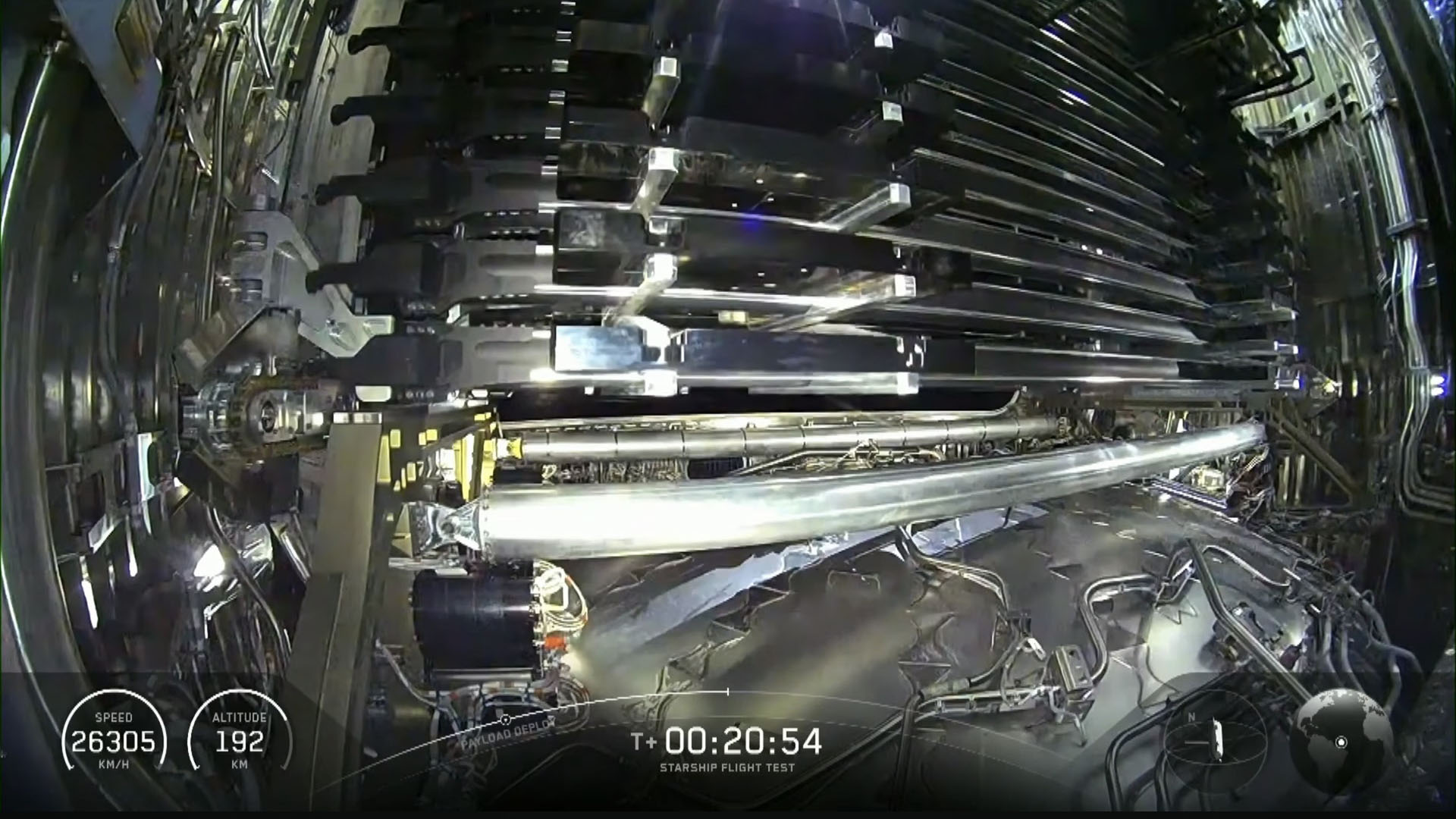
The design is more than a clever deployment mechanism. By using a relatively small opening instead of large clamshell doors, Starship can maintain much of the structural strength provided by internal pressure, allowing engineers to keep the vehicle lighter while maximizing payload capacity. It is an elegant example of how thoughtful engineering can solve multiple problems simultaneously.
The successful deployment of all twenty-two simulators demonstrated that the system is maturing and moving closer to operational use. Future Starship missions will deploy large constellations of Starlink satellites and other payloads using this same approach.
Testing the Road to Rapid Reusability
While payload deployment was a major accomplishment, much of Flight 12’s value came during reentry. SpaceX intentionally subjected Ship 39 to a demanding reentry profile while conducting a variety of thermal protection system experiments. Engineers modified portions of the heat shield and tested alternative tile configurations to better understand how the system performs under real flight conditions. Some tiles were intentionally altered or removed to study heating effects and validate inspection techniques. The resulting data will help refine future designs and support the company’s goal of making Starship rapidly reusable.
Among the most fascinating moments of the mission were the live views transmitted from a camera mounted directly on Starship during reentry. Relayed through the Starlink network, the footage provided stunning imagery as the vehicle encountered the extreme environment of atmospheric entry. Plasma streamed around the spacecraft while temperatures and aerodynamic loads increased dramatically.
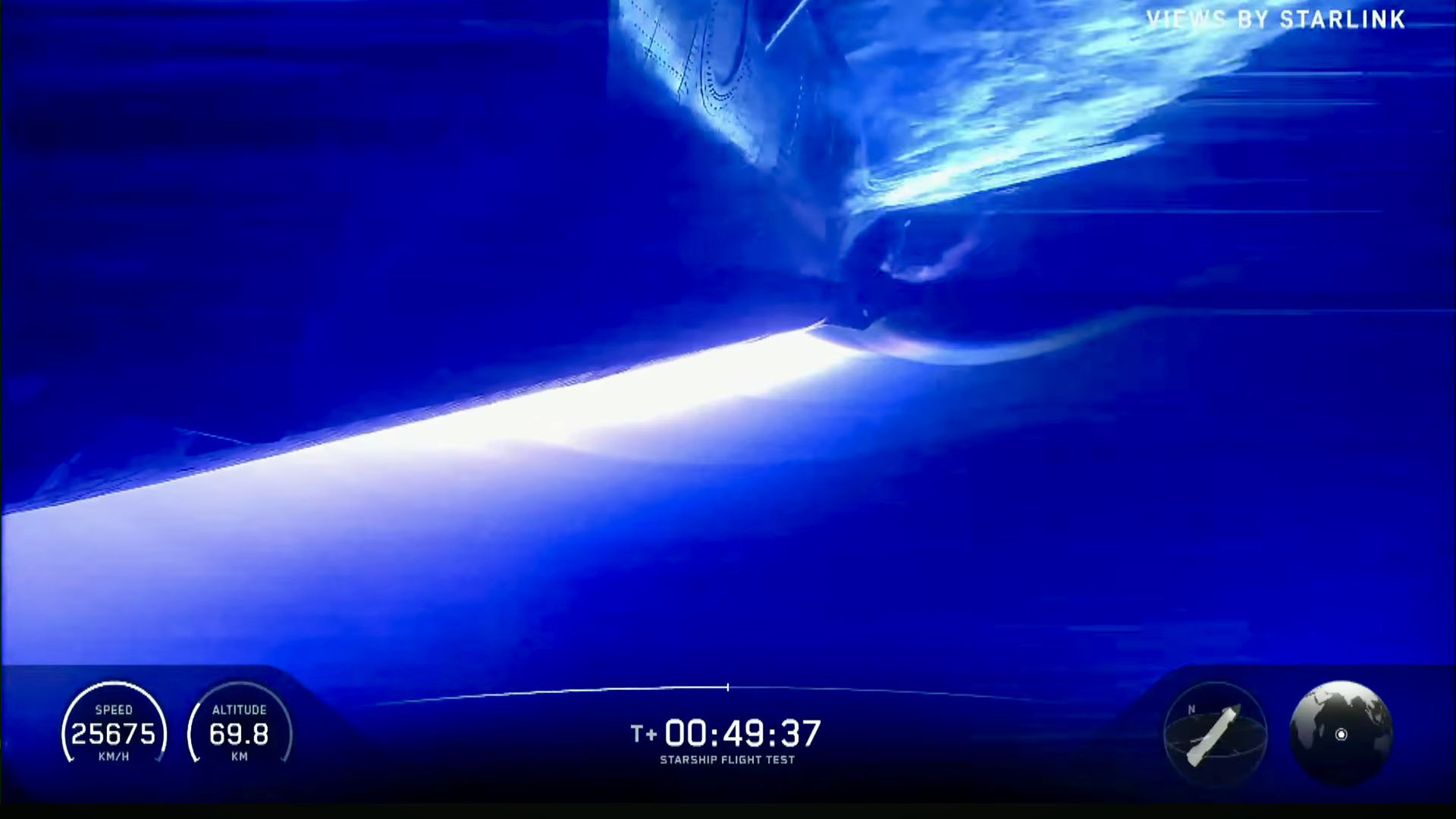
For viewers, the video was spectacular. For engineers, it was invaluable. Historically, spacecraft have often experienced communications blackouts during reentry as ionized gases interfere with radio transmissions. The ability to relay imagery and telemetry through much of the descent provides engineers with information that previously could not be observed directly. The footage offered one of the clearest visual demonstrations yet of the challenges involved in returning a large reusable spacecraft safely to Earth.
The flight profile also included maneuvers intended to gather data relevant to a future Return-to-Launch-Site (RTLS) capability. Ultimately, SpaceX envisions Starship returning directly to Starbase where it can be inspected, refueled, and prepared for another mission with minimal turnaround time. Achieving that objective requires a detailed understanding of vehicle behavior throughout reentry and descent, and Flight 12 provided another valuable set of data points toward that goal.
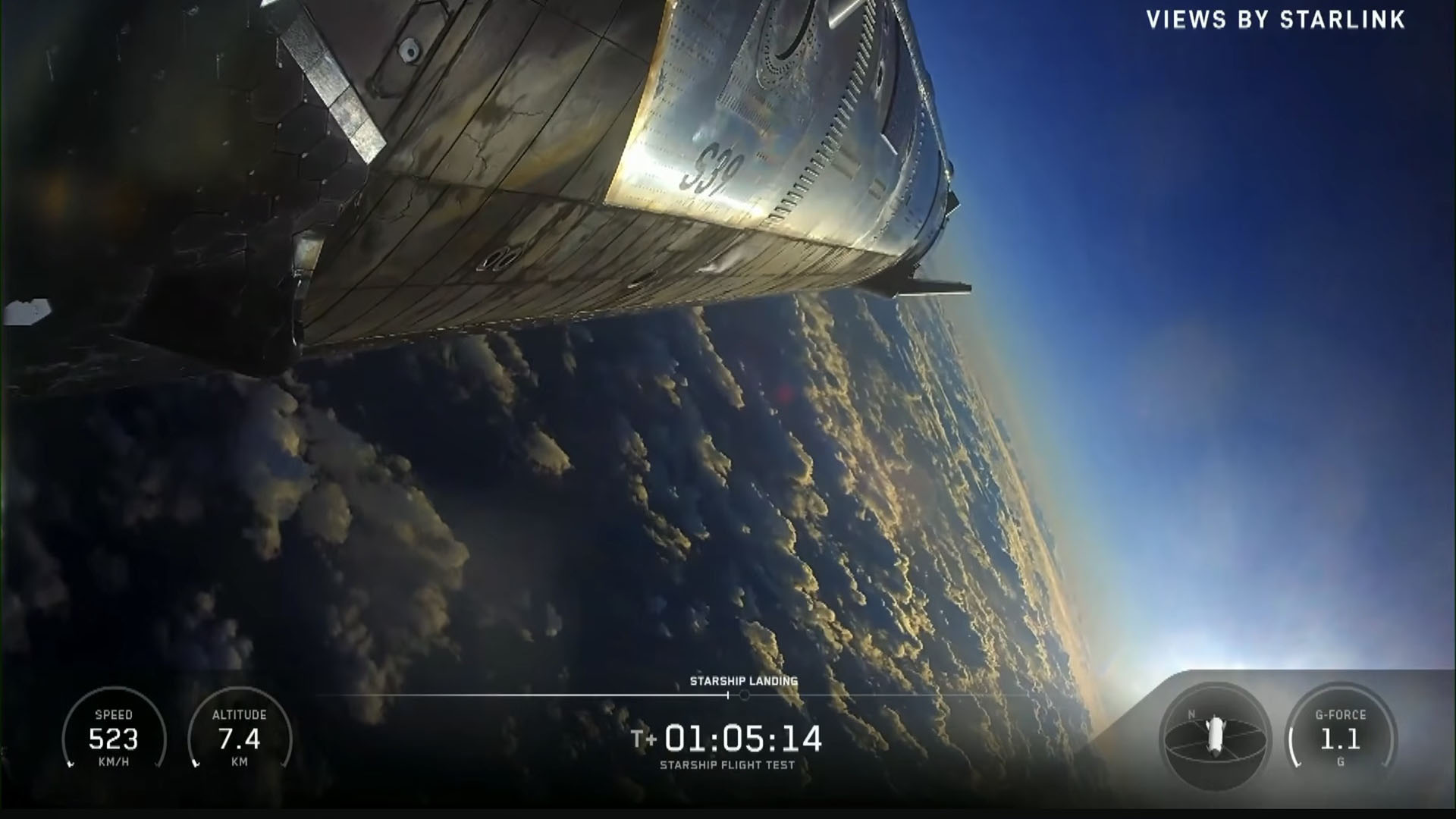
After completing its mission objectives, Ship 39 reached its planned splashdown zone in the Indian Ocean approximately one hour and six minutes after liftoff, concluding a flight that successfully demonstrated satellite deployment, engine-out resilience, thermal protection testing, high-speed communications, and advanced reentry operations.
Looking Beyond Flight 12
As the first flight of Starship Version 3, Flight 12 served as an early validation of a substantially modified vehicle that will form the foundation for future development. Unlike an operational mission, the value of a flight test is measured not only by what worked, but by what was learned. Every deployment, engine firing, sensor reading, and image returned during reentry contributes to a better understanding of how Starship performs in real flight conditions and helps shape future designs.
As I watched Flight 12 unfold, I found myself paying less attention to the milestones that succeeded and more attention to the data being collected. The engine shutdown, the aborted relight attempt, the modified heat shield tests, the deployment of the inspection payloads, and the reentry imagery all tell engineers something valuable about the vehicle. In aerospace, knowledge is often the most important payload, and Flight 12 returned a great deal of it. Those lessons will help shape the next Starship flights and move the program closer to routine reusability, lunar missions under NASA’s Artemis program, and SpaceX’s long-term goal of a city on Mars.







1 thought on “Starship Flight 12: Testing, Learning, and Moving Forward”
Great post Burt! Personally, given all the changes in both vehicles, this was an amazing test flight.