By Jennifer Rothblatt
NSS Director of Operations
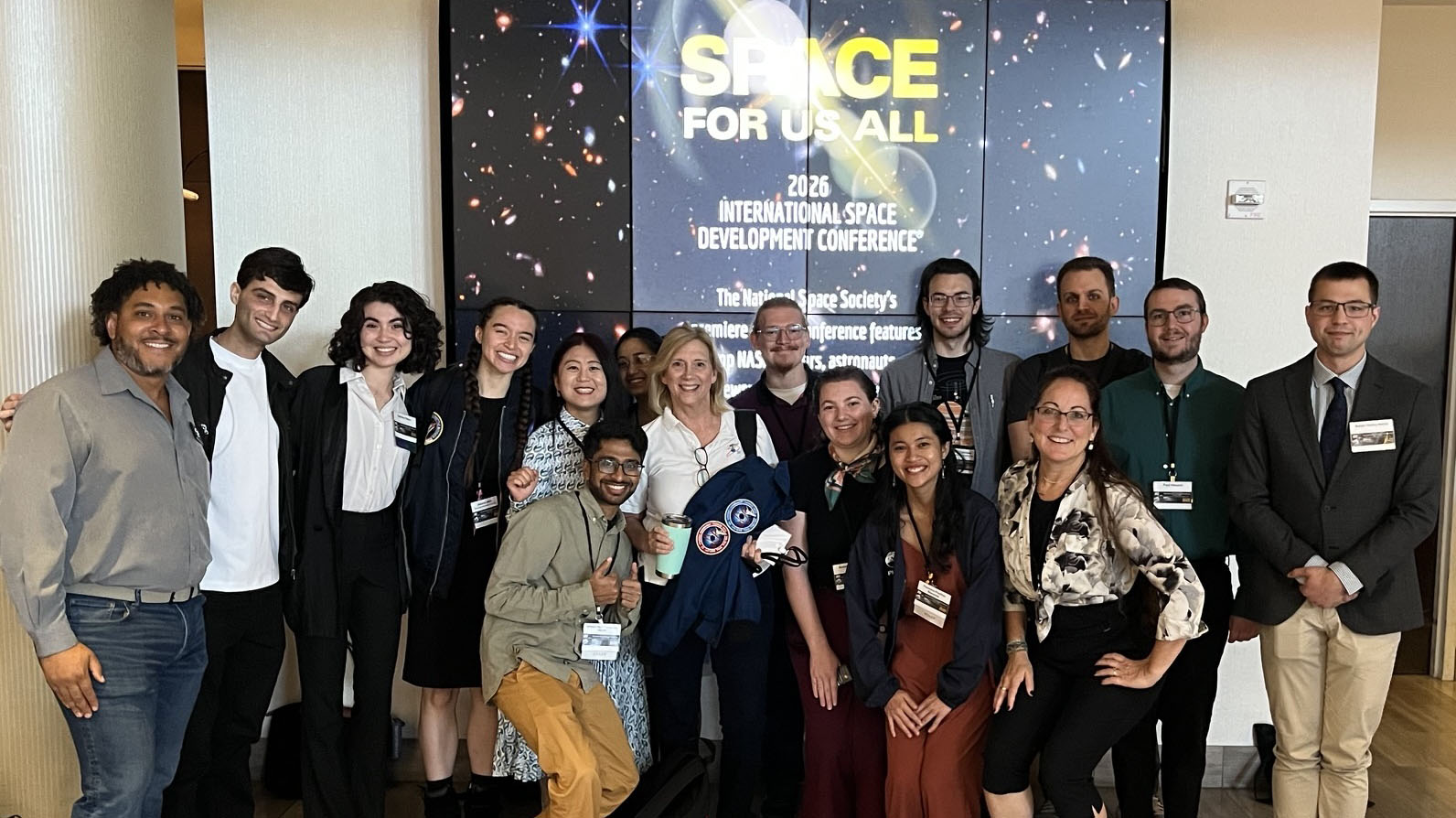
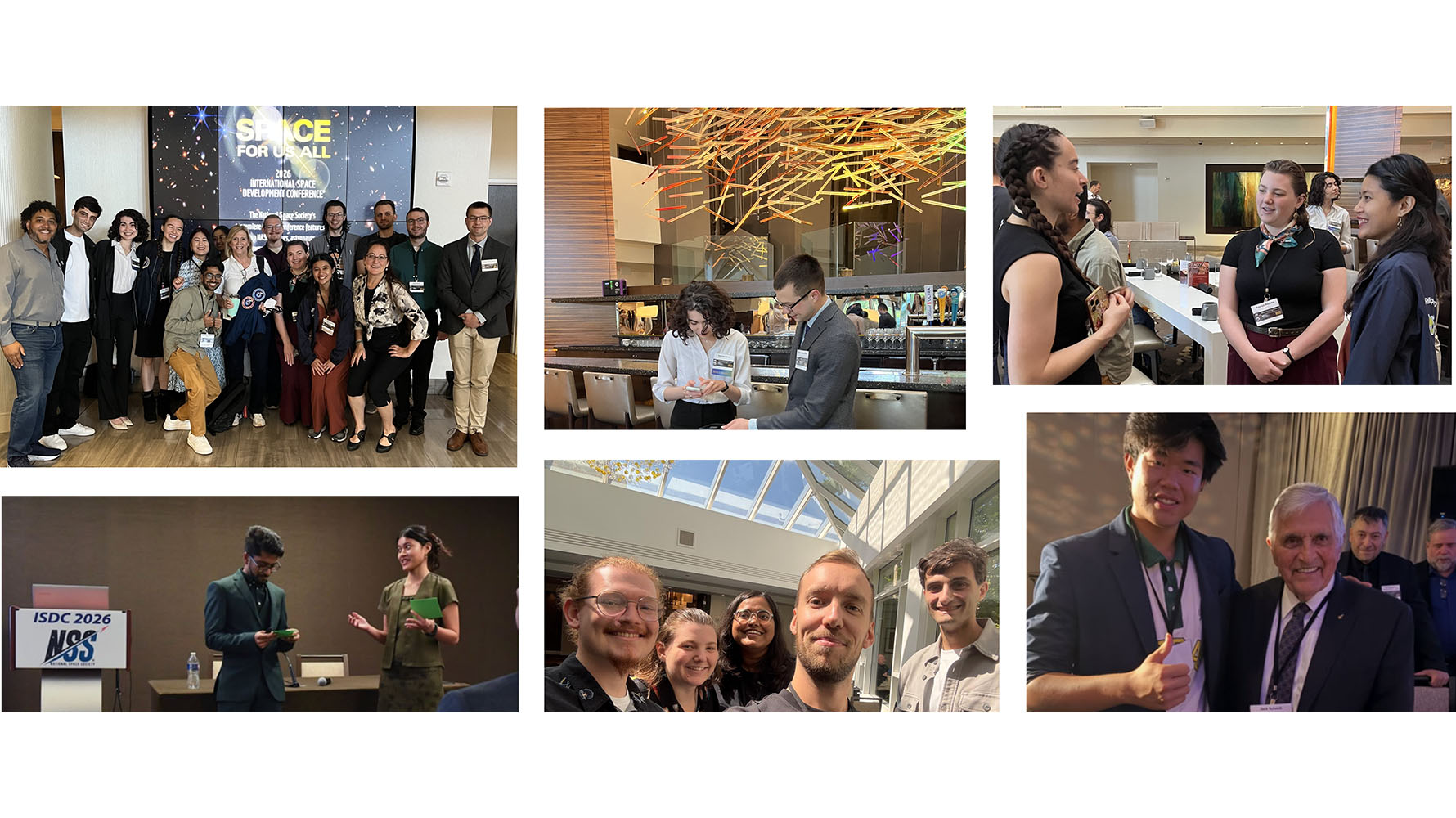
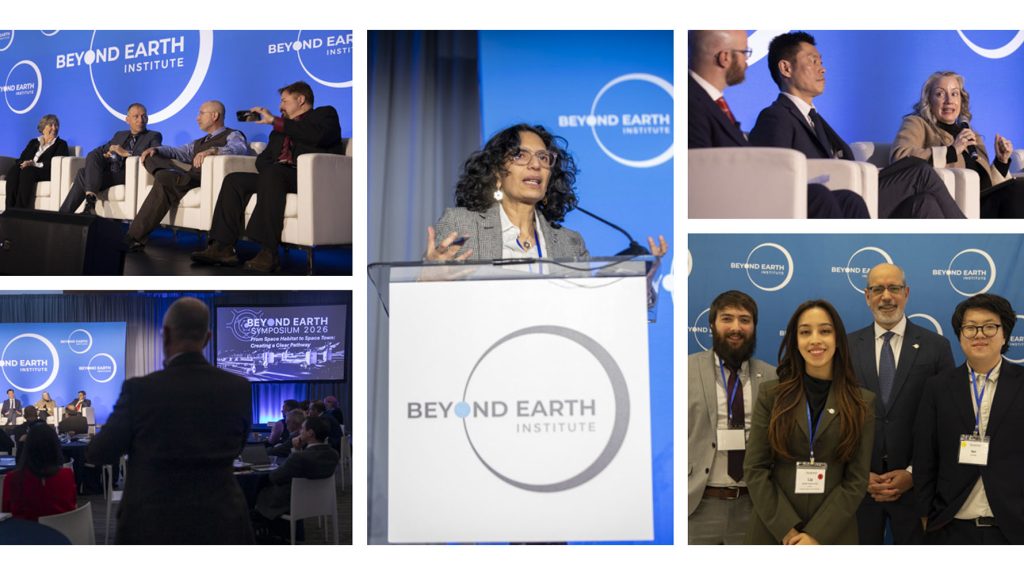
On February 24–25, 2026, the Beyond Earth Institute hosted the Beyond Earth Symposium at the Washington College of Law at American University, Washington. Regarded as one of the leading policy forums focused on human expansion into the solar system, this year’s theme — From Space Habitat to Space Town: Creating a Clear Pathway — reflects a shift in mindset. The Master of Ceremony was Steve Wolfe (an NSS member), and NSS had a solid turnout at the event. Participants included Sean Graham, Greg Autry, Macey Schiff, Martine Rothblatt, Gabriel Rothblatt, and Jennifer Rothblatt, to name a few.
Beyond the Flags-and-Footprints Moment
In the keynote session, Bhavya Lal, a former Associate Administrator for Technology, Policy and Strategy for NASA, reframed the meaning of a lunar landing.
“What does it mean to land on the Moon?” she asked. “You don’t look at the first footprints—you look at what happened next.”
Her argument was clear: history does not remember who arrived first as much as it remembers who built enduring systems. The Apollo program delivered an extraordinary geopolitical moment, but it did not establish sustained infrastructure.
The lesson for today is profound. If the United States approaches the Moon as a race — particularly in the face of rising ambitions from China — it risks repeating the pattern of symbolic victory without structural permanence.
A “race” produces moments. Settlement requires systems.
Lal emphasized that the more consequential question is not who lands first, but who brings the infrastructure — power systems, logistics chains, governance models, and commercial frameworks capable of supporting continuity. That infrastructure will determine who shapes the norms, economy, and long-term trajectory of lunar development.
Race vs. Architecture
The panel discussion surfaced a productive tension. Some argued that race framing focuses national will and accelerates decision-making. Others warned that race logic can distort priorities, prioritizing speed over sustainability. Legacy contracting structures and bureaucratic inertia, several speakers noted, have historically slowed innovation.
This raises a central policy challenge:
What is the right infrastructure model?
Will a thriving lunar economy be truly commercial — driven by private capital, risk-taking, and market forces? Or is it an evolved form of government contracting, where commercial actors remain heavily dependent on public funding and policy guarantees?
This distinction matters. If the goal is permanent habitation, then governance structures, property norms, supply chains, and capital flows must mature beyond demonstration projects. A sustainable lunar presence requires predictable regulatory frameworks and investment confidence measured in decades, not fiscal years.
The LEO Economy as a Test Case
These same questions surfaced in the panel on ensuring a thriving low-Earth orbit economy, moderated by Tejpaul Bhatia, CEO of Axiom Space. As the International Space Station approaches retirement, NASA’s transition strategy places increasing responsibility on private stations and commercial research platforms. But uncertainty remains.
Panelists including representatives from VAST, Max Space, and Rhodium Scientific discussed the lingering ambiguities around demand, financing, and regulatory clarity. Without clearer long-term signals, capital formation becomes cautious, and caution can stall momentum.
The LEO transition is effectively a proving ground. If policymakers cannot establish a stable economic framework in near-Earth orbit, extending that model to the Moon becomes significantly harder.
Leadership Beyond NASA
Throughout the symposium, former senior officials and industry leaders, including voices from NASA, SpaceNews, the University of Central Florida, and the American Foreign Policy Council, reinforced a recurring theme: leadership in space will be determined by institutional adaptability and the right infrastructure.