Abstract
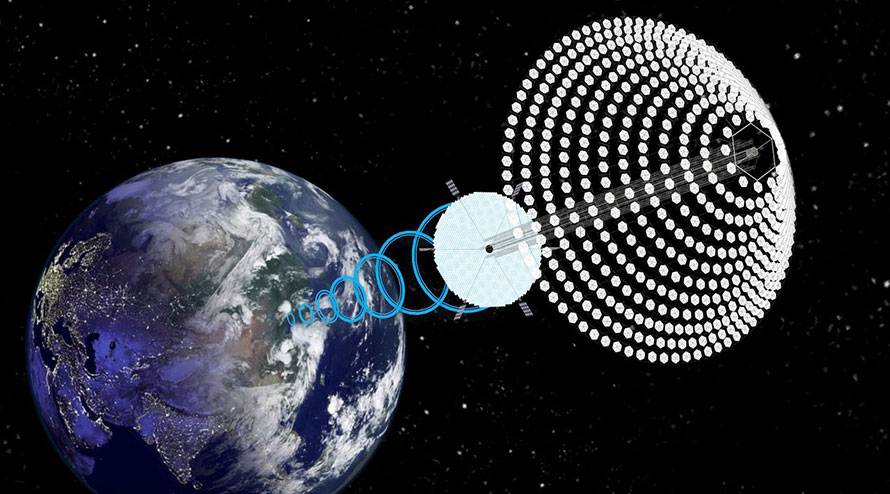
The National Space Society (NSS) proposes a public/private partnership approach to develop and demonstrate space solar power at a sufficiently high level of technical maturity that commercial energy providers can subsequently build initial operational systems for high-energy-cost environments such as remote locations (islands, mining facilities, military encampments, etc.), emergency settings (e.g., evacuation camps) and others. The outlines of the partnership are based on the successful Commercial Orbital Transportation Services program that helped develop the SpaceX Falcon 9 launcher/Dragon capsule and the Orbital Sciences Corp. Antares launcher and Cygnus spacecraft. The Space Solar Power Demo development described here features minimal NASA oversight, milestone-driven fixed-price pay-outs, minimal exit criteria, substantial commercial partner funding commitments, non-traditional contracts (e.g., Space Act Agreements with NASA), commercial partner choice of energy market and energy consumer, enabling system development (e.g., space robotics), and at least two winners.









3 thoughts on “NSS Position Paper: A Public/Private COTS-Type Program to Develop Space Solar Power”
Gerard O’Neill’s group sponsored a study in the mid-1980s which found that 99% of the bulk mass of a solar power satellite can come from the Moon, saving 97% in fabrication costs vs. Earth-launched materials. The key resources are lunar metals and water, which was discovered at the lunar poles in 2009.
One of the most significant benefits of the Artemis lunar mission can be the kickstart of the space solar power industry. SSP can extend coal, oil, & gas reserves and permanently solve the climate/energy problem on the ground.
If SpaceX Starships fly, Artemis can inaugurate simple lunar ISRU for the paving of concrete landing pads at the lunar south pole and at an equatorial location for these ships, which can transport cargo, house workers, and rotate crews.
HR 5666 should be adjusted for an emphasis on lunar prospecting and development with competitive commercial participation.
Eventually, a multinational SSP consortium led by the United States may be the smart way to go. Nations who participate in SSP can be the chief energy exporters ahead, and the dominant space and terrestrial powers of the 21st century.
Terrible idea. We should spend money on advanced nuclear liquid fuel reactors instead.
So who/which entity or office might pull this together and get the ball rolling? Yes, seems to make sense to have “expanded Government representation” with NASA, DOD, DOE,and Commerce. But what office today might undertake the early organizing for a possible program? AFRL?
Also, the expanded representation would seem to increase likelihood of “At least two commercial partners (CPs)”, and not just Northrup-Grumman. However, if a CP’s ability to put their “own skin in the game”, perhaps to the tune a couple hundred million dollars, is a criteria for acceptance in the program, that would seem to possibly eliminate smaller entities with potentially very valid designs, perhaps such as International Electric Company’s CASSIOPeiA design. Hopefully there would be a role in this for smaller firms too.