 |
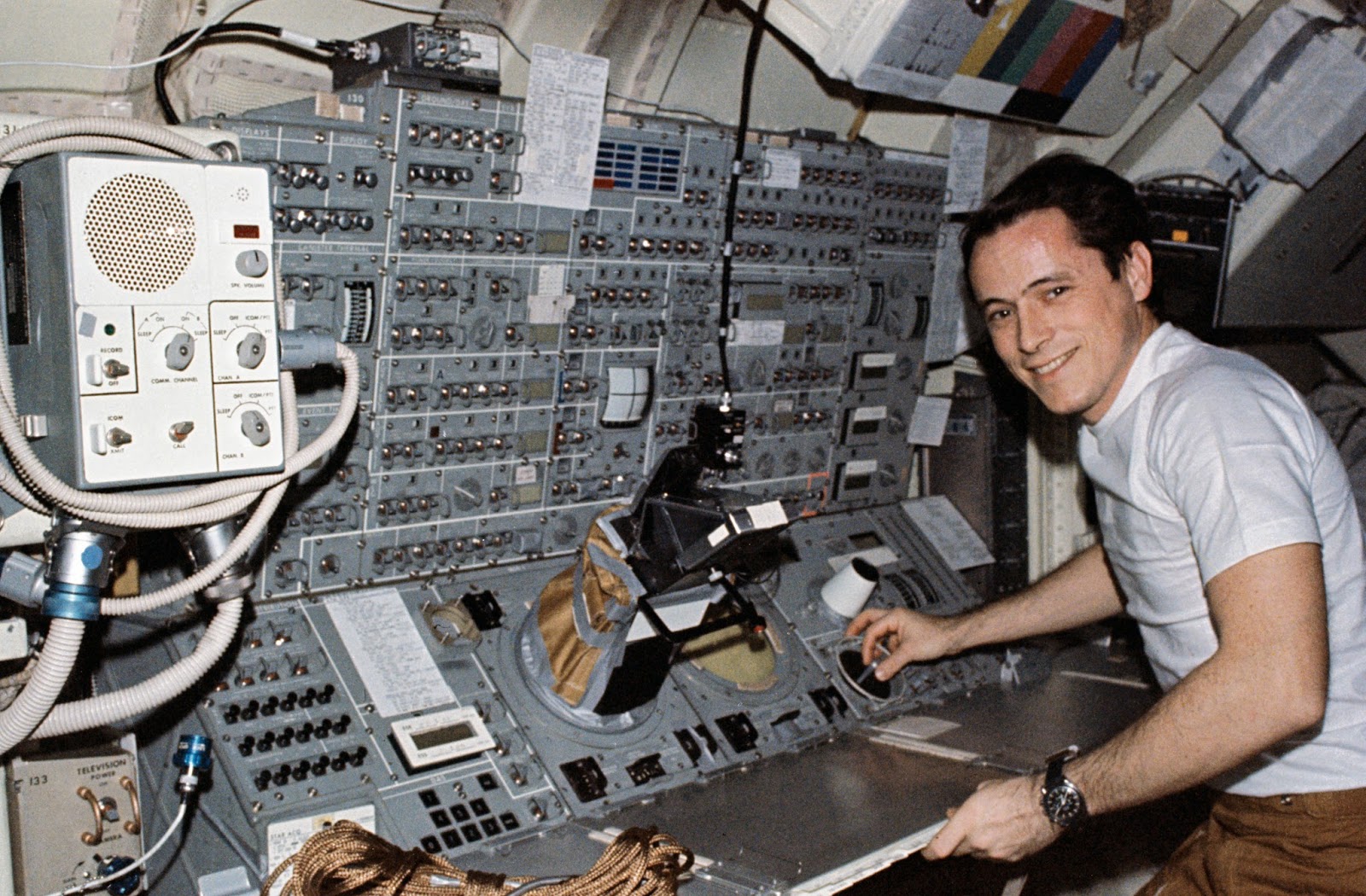
| From Dec. 5, 1973: “Scientist-astronaut Edward G. Gibson, Skylab 4 science pilot, stands at the Apollo Telescope Mount (ATM) console in the Multiple Docking Adapter (MDA) of the Skylab space station cluster in Earth orbit.” The computer interface is at lower left, above the cables. Photo Credit: NASA |
Skylab occupies a difficult spot in space history. One thing you hear too much when you’re a Skylab fan is how the first U.S. space station didn’t have any applications or purposes beyond its three crewed missions. This fallacy can be shot down on many levels, but one area that doesn’t get enough attention is how Skylab revolutionized the use of computer systems aboard spacecraft, and how its systems led to the development of the world’s most sophisticated flying machine, the Space Shuttle.
Skylab’s Honey Badger of a Computer System
Welcome to spaceflight’s first digital control system that possessed redundancy. According to IBM, “The onboard computers…were models of IBM’s System/4Pi, a computer series designed for the special weight and environmental requirements of aerospace applications. They were built at IBM’s facility in Owego [NY] and fitted and programmed for the mission in Huntsville [Alabama]. Each of the IBM computers aboard Skylab weighed 100 pounds and measured 19 by 7.3 by 31.8 inches. They were capable of handling more than 100 signals to Skylab attitude control equipment.”
Skylab’s computer system was called the Apollo Telescope Mount Digital Computer (ATMDC). According to the 1987 NASA publication Computers in Spaceflight: The NASA Experience, “[T]wo of these computers were a part of the Skylab Attitude and Pointing Control System (APCS), which consisted of a number of other components, such as an interface unit, magnetic tape memory, control moment gyros, the thruster attitude control system, sun sensors, a star tracker, and nine rate gyros.”
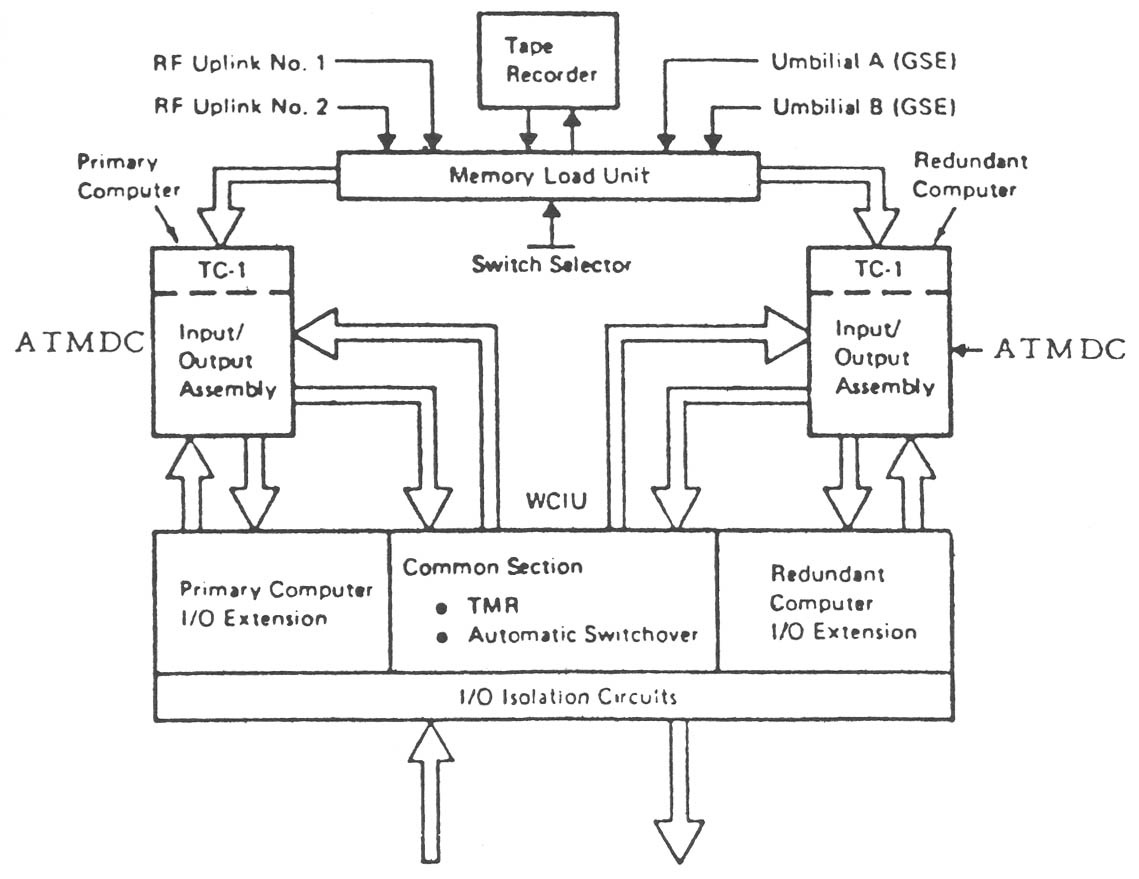 |
| “A block diagram of the Skylab Computer System with the dual ATMDCs, tape memory, and common section shown. (From IBM, Skylab Operation Assessment, ATMDC, 1974)” Image Credit: Computers in Spaceflight: The NASA Experience, 1987 (accessed via NASA History’s website) |
The computer system helped orient Skylab; most of the time it operated in “solar inertial” (SI) to guarantee maximum exposure to the Sun for the station’s solar experiments. One thing you may have noticed in the diagram pictured is that there is a primary computer and a backup “redundant” computer. In case a deviancy was detected with the primary computer, it could automatically “switchover” to the redundant secondary computer. The astronauts and the ground also had the capability to switch computers if needed.
The system’s “keyboard” or interface for astronauts was located at the Apollo Telescope Mount console, located in the Multiple Docking Adapter section of the cluster. IBM also supplied a memory load unit (MLU), which “was able to refresh computer programs in the event of electrical interference disrupting the computers’ memories.” The MLU provided further redundancy.
The setup was so robust, it even survived a long “blackout” period following the end of Skylab’s last crewed mission. The final Skylab crew left the space station in February 1974. Over four years later, on March 11, 1978, engineers were able to power up the long-dormant ATMDC. Computers in Spaceflight recounted how, incredibly, the system awoke from its long nap, having thankfully missed disco and bell bottoms:
“The software resumed the program cycle whe
re it had left off four years and 30 days earlier. As far as the computer was concerned, it had suffered a temporary power transient!”
Skylab’s “reactivation” mission continued, uncrewed, until its reentry in mid-1979. During this time, software engineers were able to devise modes to help stabilize and, ultimately, deorbit the spacecraft. In over 600 days of operations, the ATMDC system experienced NO failures.
From Skylab to Shuttle
Whilecrews were surveying the Earth, the Sun, and two spidersaboard Skylab, NASA was already hard at work developing the Space Shuttle. According to space historian Dennis Jenkins, “The success of the APCS aboard Skylab helped set the stage for a major expansion of the computer’s role in manned space flight.” In order to ensure the success of the most complex flying machine ever built, built-in redundancy would be key. Computers would need to control many phases of shuttle flights.
The shuttle’s five General Purpose Computers (GPCs) were IBM AP-101Bs, variants of Skylab’s 4Pi computers. IBM’s website about the history of computers in spaceflight stated, “Five IBM computers — four of which were arranged in a redundant configuration, with a fifth computer acting as a backup unit — allowed early Shuttle missions to continue even if multiple failures were experienced. The computers cross-checked each other more than 500 times a second.” While the software written for the Space Shuttle would certainly be different, Skylab (and its innovative redundant computers) had laid the groundworkfor the United States’ next major human-helmed space effort.
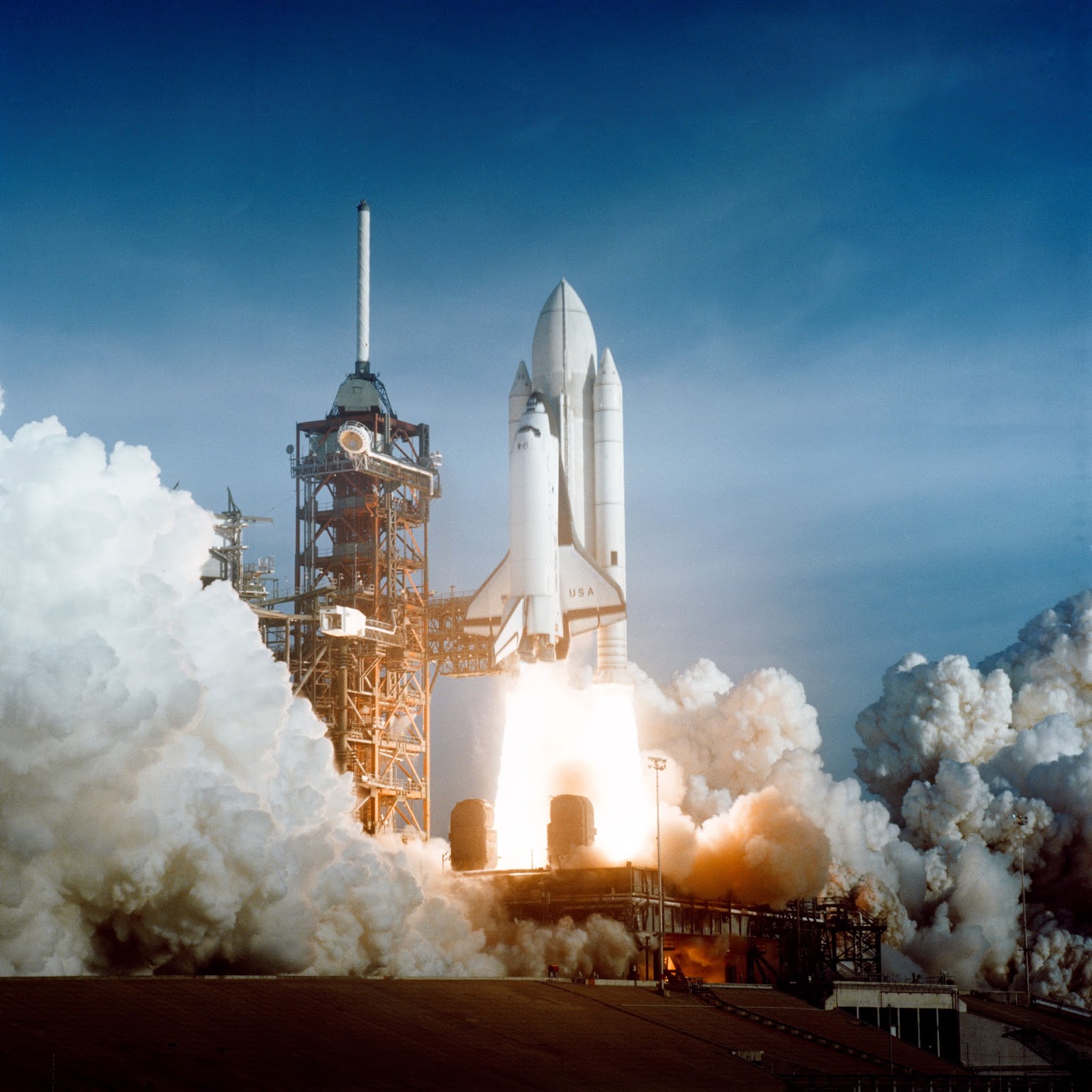 |
| And the clock is running: Columbia lifts off, marking the beginning of the Space Shuttle era (STS-1, April 12, 1981). Skylab’s redundant computers would have a huge impact on the Space Shuttle’s computer hardware. Photo Credit: NASA |
1. “IBM and the Space Shuttle.” IBM website: http://www-03.ibm.com/ibm/history/exhibits/space/space_shuttle.html
2. “IBM and Skylab.” IBM website: http://www-03.ibm.com/ibm/history/exhibits/space/space_skylab.html
3. Jenkins, D. R. (2012). Space shuttle: The history of the national space transportation system, the first 100 missions. Cape Canaveral, FL: Published by author.
4. Tomayko, J. (1987). Computers in spaceflight: the NASA experience.Washington, D.C.: National Aeronautics and Space Administration.
Emily Carney is a writer, space enthusiast, and creator of the This Space Available space blog, published since 2010. In January 2019, Emily’s This Space Available blog was incorporated into the National Space Society’s blog. The content of Emily’s blog can be accessed via the This Space Available blog category.
Note: The views expressed in This Space Available are those of the author and should not be considered as representing the positions or views of the National Space Society.