Story and photos by Burt Dicht
NSS Managing Director of Membership
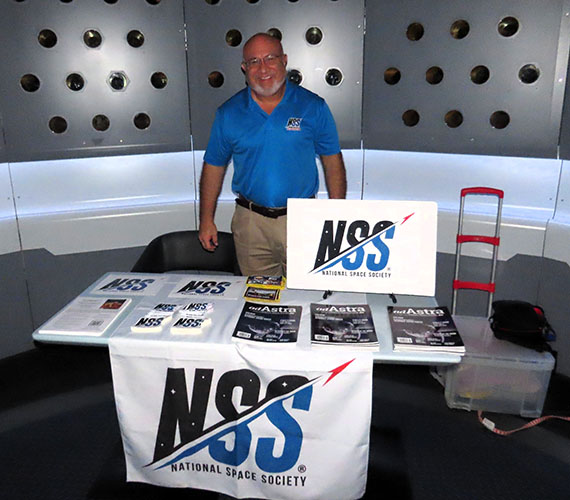
Above: Burt Dicht getting the NSS table ready before the guests arrive
On July 20, 1969, humanity first set foot on another world. Fifty-seven years later, that achievement continues to inspire new generations to look beyond the horizon.
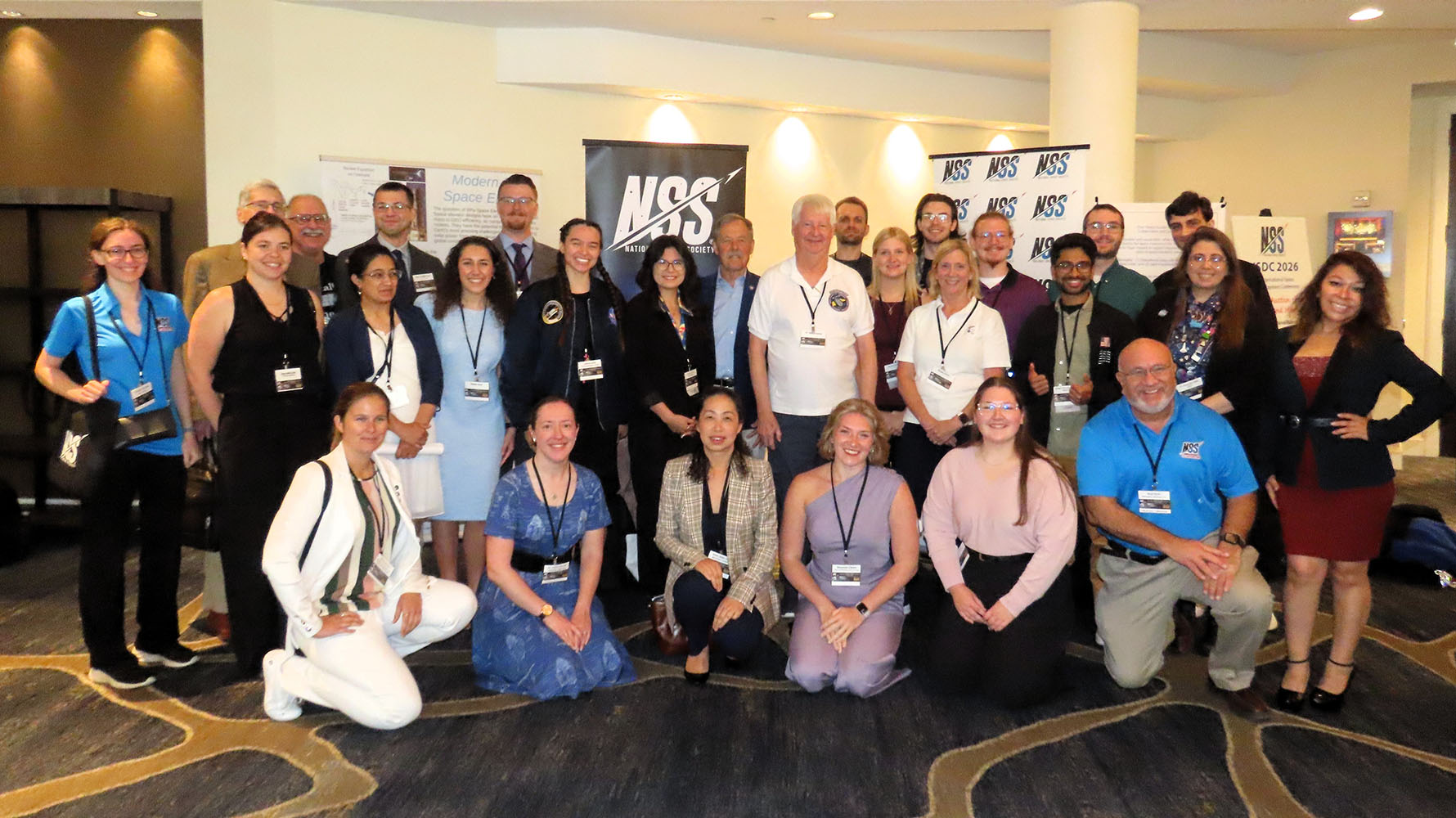
On July 20, 2026, 151 people gathered for a special brunch at Space220 in EPCOT at Walt Disney World to celebrate National Space Exploration Day. The annual observance commemorates the Apollo 11 Moon landing while encouraging young people to pursue careers in science, engineering, technology, and space exploration.
For the second consecutive year, the National Space Society (NSS) served as a sponsor of the event which was hosted by the Blue Community Consortium and Causeway. The audience reflected today’s space community, with NSS members joined by students from the University of Central Florida, Florida Polytechnic University, and the University of South Florida, members of the U.S. Space Force, educators, families, and younger students interested in STEM.
The program opened with welcoming remarks from Doug Heske, CEO of Newday Impact, and Dave Randle, CEO of the Blue Community Consortium. Randle reflected on the history of National Space Exploration Day and the efforts of his father, who was instrumental in establishing the observance to honor the Apollo 11 Moon landing and inspire future generations.
Before the panel discussion, Tonia Lovejoy, Director of Friends of Virgin Islands National Park, introduced attendees to Project Tektite, the pioneering underwater habitat program sponsored by NASA, the U.S. Navy, General Electric, the Department of the Interior, and other partners. Often described as America’s first national “scientists-in-the-sea” program, Project Tektite demonstrated that many of the challenges of living beneath the ocean closely parallel those of living in space. Lovejoy also shared a preview of an upcoming documentary that explores the program’s legacy and the enduring connection between deep-sea and deep-space exploration.
The centerpiece of the program was a panel discussion moderated by Robert Katz, CEO of the World Innovation Network. Rather than delivering formal presentations, the panelists responded to questions submitted by students and younger attendees. The format created an engaging conversation that explored how space exploration touches many aspects of our lives, from environmental stewardship and archaeology to entrepreneurship, medicine, and scientific research.
Barbara Belvisi, founder and CEO of Interstellar Lab, discussed the importance of preserving Earth’s biodiversity and her company’s work developing automated biopods that could one day help carry that diversity into space as humanity expands beyond Earth.
Dr. Sarah Barber, Professor of Anthropology at the University of Central Florida and a researcher with the National Center for Integrated Coastal Research, described the Cape Canaveral Archaeological Mitigation Project. Conducted in collaboration with the U.S. Space Force, the project documents and preserves archaeological sites at Cape Canaveral Space Force Station before they are affected by continued growth of America’s launch infrastructure.
Space entrepreneur Stephan Reckie, Executive Director of GEN Space and co-founder of Angelus Funding, emphasized the importance of investing in emerging space companies and the technologies they are developing. While public attention often centers on well-known billionaire entrepreneurs, he pointed out that many space startups are funded by everyday investors who believe in the promise of the growing space economy.
Dr. Gretchen Green, physician and Blue Origin astronaut who flew on the NS-32 mission, shared how attending Space Camp as a young girl sparked a dream of traveling to space. That dream eventually became reality, and today she is using the experience to demonstrate how research conducted in space can improve life on Earth. Joining her on the panel was her daughter, Julia Lantos, now a high school student who is already contributing to her mother’s research. Together, they offered a unique perspective on how a passion for exploration can span generations.
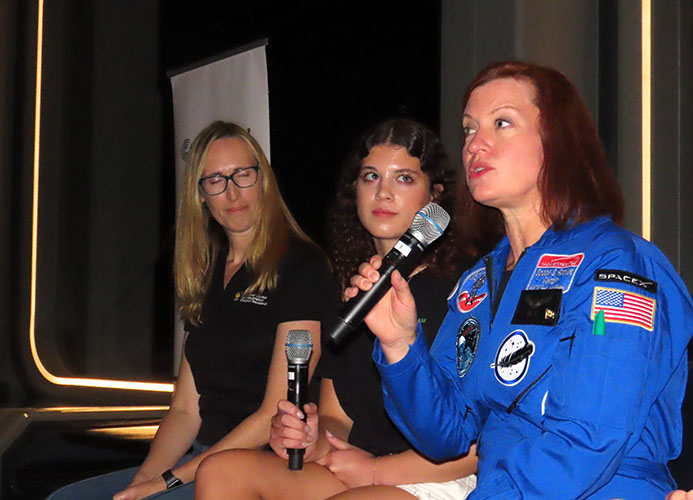
Although each panelist came from a different background, a common theme emerged. Whether discussing biodiversity, cultural preservation, entrepreneurship, scientific research, or commercial spaceflight, each demonstrated that exploring space also benefits life here on Earth.
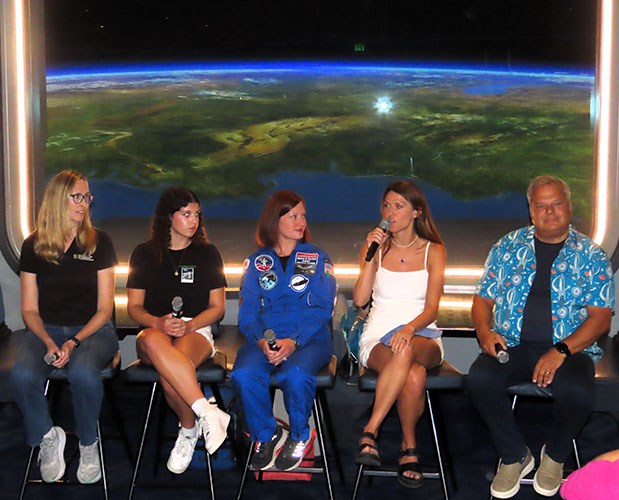
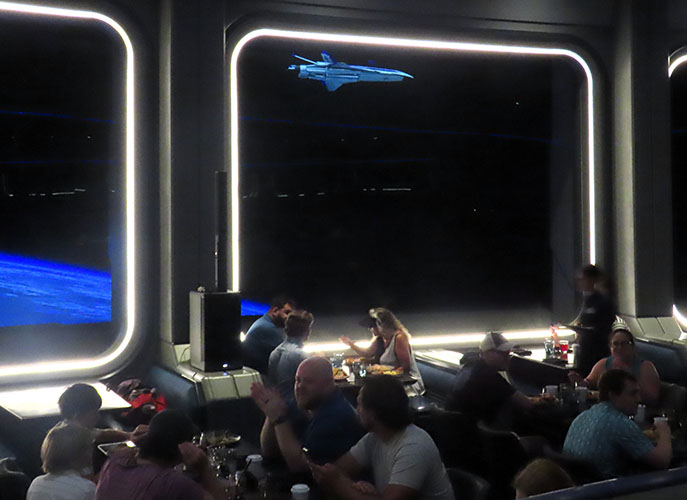
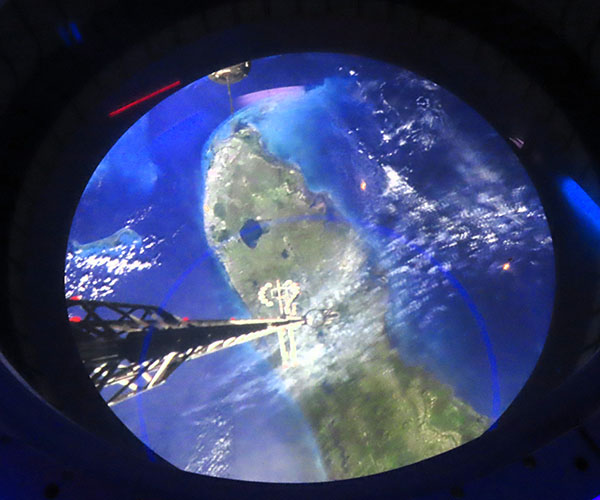
The setting made that message even more meaningful. Located in EPCOT at Walt Disney World, Space220 begins with a simulated space elevator ride to a space station orbiting 220 miles above Earth. Throughout the meal, guests looked through panoramic windows at Earth suspended against the blackness of space. The view of our planet’s thin atmosphere leaves little doubt that Earth is both beautiful and finite. It is easy to understand why Buckminster Fuller described our planet as “Spaceship Earth.”
As I looked around the room, I realized the audience represented two very different perspectives on Apollo. There were attendees like me who are part of the Apollo generation—people who remember watching humanity’s first steps on the Moon unfold in real time. But for most of those in attendance, especially the university and high school students, Apollo 11 is history rather than memory.
That is what made the celebration special. It was not simply a commemoration of an event that took place 57 years ago. The questions posed by students and younger attendees naturally connected Apollo’s legacy to the future they hope to create. They heard from entrepreneurs, scientists, researchers, conservationists, and someone who had experienced spaceflight firsthand, each offering a different perspective on how exploration continues to improve life on Earth while expanding our horizons beyond it.
For those of us who lived through Apollo, National Space Exploration Day is an opportunity to remember one of history’s greatest achievements. For the next generation, it is an invitation to build on that legacy and write the next chapter of human exploration.
That is exactly why National Space Exploration Day was established, and why the National Space Society is proud to support this annual celebration.