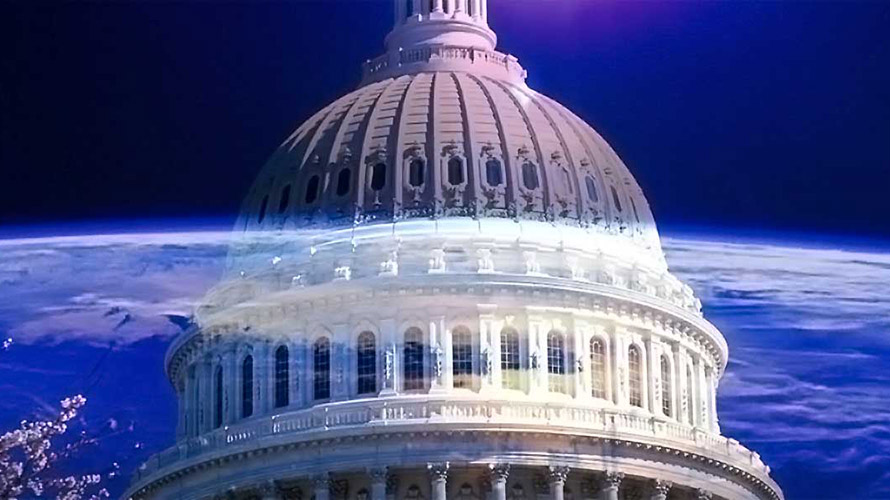
The National Space Society (NSS) today announced that it is delivering a letter to Congress and the Administration addressing concerns and recommendations regarding NASA’s draft Request for Proposal for the Commercial LEO Destination (CLD) Program. The letter, co-authored with the Space Frontier Foundation (SFF), calls for changes to ensure the program fulfills its promise of a sustainable, competitive, and commercially driven low Earth orbit economy.
As NASA transitions from the International Space Station era toward commercially owned and operated destinations in low Earth orbit, the NSS believes the agency has taken important steps toward fostering a sustainable marketplace. The organizations see an opportunity to help the current draft more fully deliver the outcome that the Administration, Congress, NASA, and industry all seek, and the NSS offers these recommendations in support of the customer-oriented approach NASA has laid out for CLD, one built on innovation, competition, cost savings, and commercial independence.
“The CLD program’s long-term success depends on a genuine marketplace, one with multiple stations, diverse architectures, and room for commercial innovation to flourish,” said Grant Henriksen, Chair of the NSS Policy Committee. “Our recommendations are intended to help ensure NASA acts as an anchor customer and collaborative partner, rather than a regulator or controller, while preserving the flexibility essential to a dynamic commercial marketplace.”
Key Recommendations
Clarify Requirements and Standards Baseline. The NSS and SFF urge NASA to align CLD requirements with proven commercial practices by avoiding overly prescriptive safety and compliance frameworks where commercial standards can achieve the same objectives. The letter highlights lessons learned from the Commercial Crew Program and recommends establishing a requirements baseline focused on genuine crew and vehicle safety while preserving opportunities for innovation.
Define Appropriate Government Insight. The draft RFP grants NASA broad oversight and approval authority. The letter recommends narrowing this authority so that it remains focused on crew safety and the protection of government assets, and refining the provisions on government insight, oversight, and data access so the operational model reflects a true commercial services relationship, distinct from the government-operated approach NASA has used for the ISS.
Clarify Regulatory Roles. The letter notes that portions of the draft RFP, if unrevised, could position NASA in a quasi-regulatory role beyond what Congress envisioned. Embedding compliance frameworks and oversight mechanisms more suited to a regulator than a customer could add duplication and compliance burden for commercial providers. The NSS believes NASA’s role is best fulfilled as an anchor customer and strategic partner working alongside the agencies that already hold statutory regulatory authority.
Support a Diverse Commercial Marketplace. The NSS and SFF encourage balanced access for NASA payloads and facilities so that commercial and international customers are not unintentionally disadvantaged. A durable commercial marketplace depends upon providers serving multiple customers with confidence that government priorities remain appropriately bounded. The letter encourages NASA to define its operational footprint and priority claims more narrowly.
Encourage Sustainable Commercial Pricing. The proposed pricing structure should encourage competition and commercial investment rather than defaulting to the lowest available price. The letter recommends replacing the rigid most-favored-customer provision with pricing that reflects the differing costs and risks associated with serving NASA and other customers. Such an approach would better support the diverse customer base that commercially owned space stations will require.
A Shared Vision for America’s Orbital Future
The NSS and SFF reaffirm their commitment to a future in which commercial space stations become the foundation of continued U.S. leadership in low Earth orbit. Both organizations believe NASA’s role should increasingly evolve toward that of an anchor customer within a vibrant commercial marketplace rather than the dominant operator of that marketplace.
The organizations encourage NASA to continue working closely with industry and other stakeholders as it refines the CLD RFP before final release. Constructive dialogue during the procurement process will help ensure the program achieves its strategic objectives while encouraging long-term commercial success.
At a time of increasing global competition, thoughtfully calibrated contracting and oversight practices can help attract the private investment and innovation needed to sustain America’s long-term leadership in low Earth orbit. The NSS and SFF believe getting that balance right will accelerate the development of commercially sustainable capabilities that serve both national interests and the emerging space economy.
“The CLD program is a critical step toward building a thriving commercial economy in low Earth orbit,” said Karlton Johnson, NSS CEO. “By maintaining competition, encouraging innovation, and avoiding unnecessary regulatory burdens, NASA can help create a sustainable marketplace that serves government, commercial, scientific, and public interests alike.”
The National Space Society and the Space Frontier Foundation appreciate the opportunity to provide these recommendations and look forward to continued collaboration with NASA, the Administration, Congress, industry, and other stakeholders to ensure the Commercial LEO Destination Program fulfills its promise of establishing a strong, competitive, and enduring American presence in low Earth orbit.