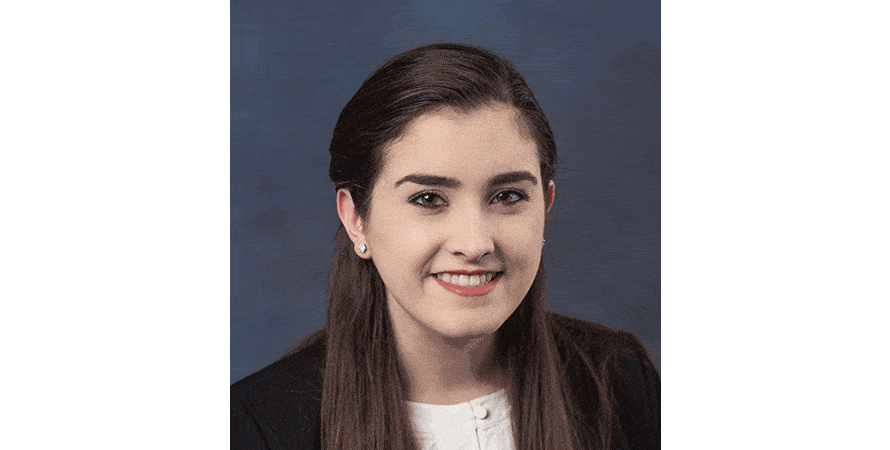
By Bailey Cunningham, NSS Legal Fellow
Humans are at the brink of a new era of space exploration. We are bound only by our imagination, ingenuity—and cost. As NSS Vice President of Space Development Greg Autry pointed out in an article in Forbes, “Launch cost has always been the primary constraint in the space business. If access to space weren’t so expensive we’d have an astounding amount of entrepreneurial activity in Low Earth Orbit (LEO) and beyond.” Expenses could be drastically reduced through the utilization of the private sector and reusable vehicles. However, NASA must first have full support from Congress.
Could reusability be the key to finally achieving affordable access to space? In theory, if there is a reliable vehicle that can be refurbished and reused, the cost per launch decreases, as opposed to constructing a new launch vehicle each time and discarding it. However, reusability has not always delivered lower costs. The reusable Space Shuttle was intended to decrease launch costs, but it ultimately ended up being considerably more expensive than expendable launch vehicles. Although the space sector worked towards reusable systems for many years, the majority of launch vehicles remained expendable.
Until recently. In 2017, SpaceX revolutionized the industry by successfully relaunching the first stage of Falcon 9. Since that historic launch, SpaceX has reused boosters for over 40 missions. In regards to costs, SpaceX’s Elon Musk has shared data which indicate that the costs of reusing a booster can be recouped after just two flights and surpassed after three. SpaceX’s current fleet remains only partially reusable, but SpaceX is currently developing the Starship/Superheavy, which will be a fully reusable rocket.
The NSS position paper “Now is the Time: A Paradigm Shift in Access to Space,” called on the Administration, Congress, and NASA to fully utilize reusable launch vehicles. Since this position paper was written, SpaceX has not been the sole entity to embrace reusability. Blue Origin has been testing a reusable rocket, the New Shepard, and has successfully launched the vehicle a record seven times. NASA has endorsed the use of reusable vehicles and the notion of a sustainable return to the Moon. Specifically, NASA has embedded a significant amount of reusability into its Artemis Plan, and has agreed to SpaceX reusing the Crew Dragon spacecraft beginning with Crew 2 as soon as 2021, as well as reusing the Falcon 9 first stages used to boost Crew Dragon to orbit.
While there is quite a bit of work still needed to ensure affordable access to space, excellent progress has been made in just a few years. Moving forward, Congressional funding will be vital to the success of NASA’s Artemis Program. With the support of the Administration, NASA has requested a 12% increase in its budget in order to begin construction of commercially procured crewed lunar landers and ensure a timely human return to the lunar surface. If the United States intends to return to the Moon by 2024, Congress must act swiftly. The new fiscal year began on October 1, and the Senate has not yet issued its appropriations bill. Thus far, Congress has only passed a resolution that will keep the government funded until December 11. When Congress eventually reaches an agreement, the appropriations bill must include full funding of NASA’s budget.
To learn more about reusability, please see the NSS position paper “Now is the Time: A Paradigm Shift in Access to Space.”
==================
About NSS Legal Fellow Bailey Cunningham
Bailey Cunningham is a third-year law student at Florida State University. Prior to law school, Bailey attended the University of South Florida for her undergraduate degree, where she majored in Political Science and minored in both Astronomy and Intelligence Studies. At FSU Law, Bailey is an Executive Editor for Business Review, and the Vice President of Space for the Aviation and Space Law Society. Outside of school, Bailey volunteers with For All Moonkind and serves as the Space Law Project Manager. Through this organization, Bailey has presented at the United Nations Scientific and Technical Subcommittee of the Committee on the Peaceful Uses of Outer Space on the importance of preservation and sustainable practices in returning to the Moon. Bailey also serves as the Vice-Chair for the NSS International Committee, and has represented NSS at a multi-stakeholder hearing hosted by UN-Women on the empowerment of women and girls.