By Burt Dicht
NSS Managing Director of Membership
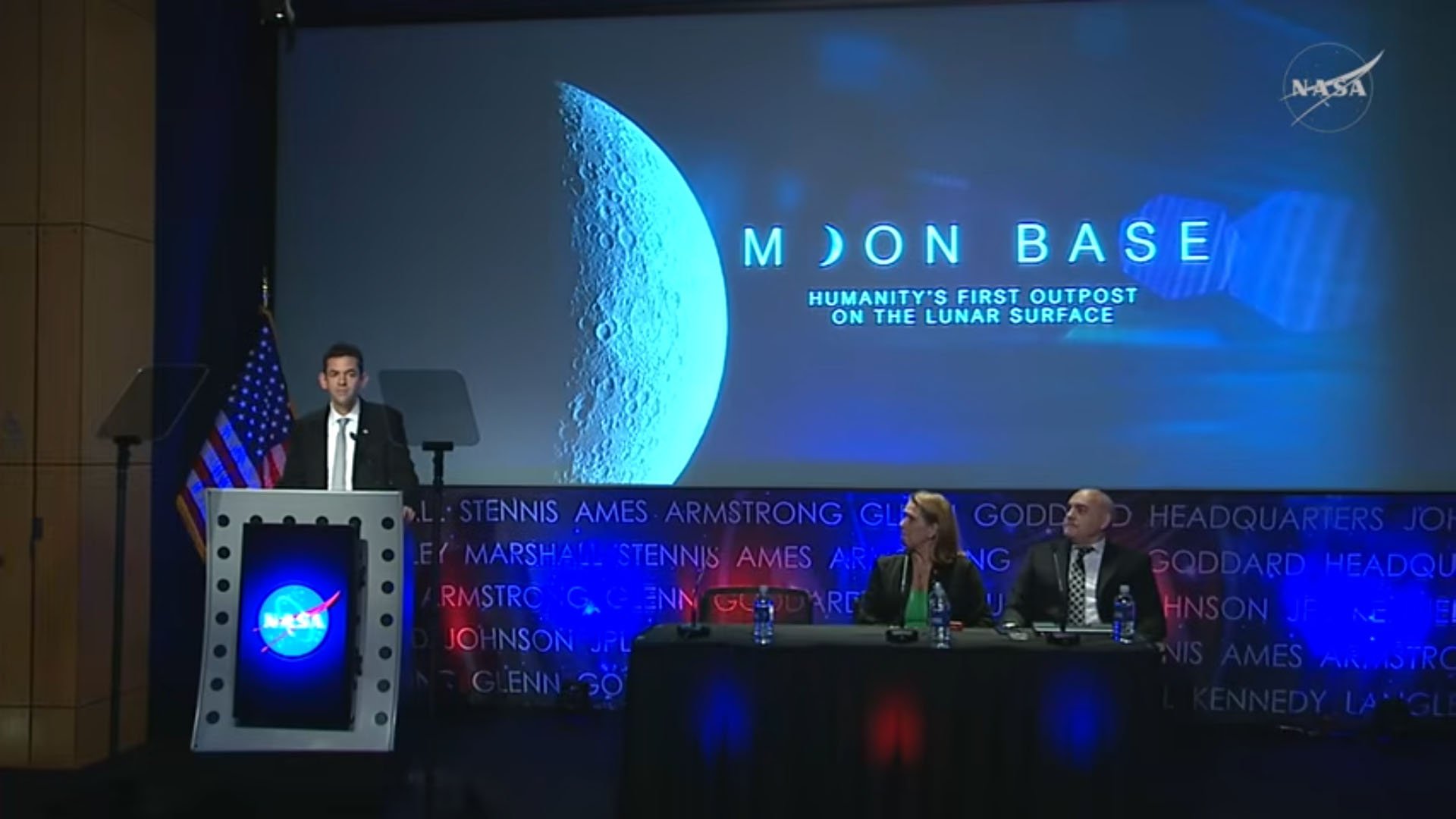
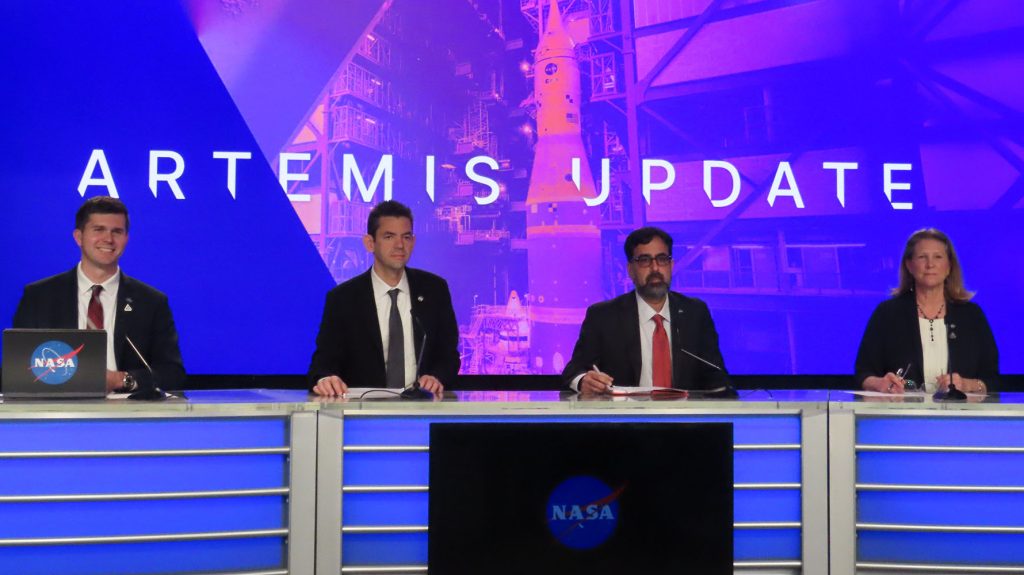
What began as a technical update on Artemis II quickly evolved into something much larger at today’s press conference at Kennedy Space Center (photo above by Burt Dicht).
NASA Administrator Jared Isaacman opened the briefing not with details about last week’s helium flow issue, but with a candid assessment of the Artemis program itself and a vision for reshaping its path forward.
The press conference, which also included Associate Administrator Amit Kshatriya and Lori Glaze, Acting Associate Administrator for the Exploration Systems Development Mission Directorate, was originally expected to address the rollback of Artemis II to the Vehicle Assembly Building (VAB). Instead, it became a broader discussion about mission cadence, workforce readiness, and the long-term sustainability of NASA’s return-to-the-Moon architecture.
Isaacman pointed to recurring technical challenges across Artemis missions, noting that Artemis I experienced hydrogen leaks and helium system issues, and Artemis II has encountered similar hydrogen leaks and helium flow concerns following its recent wet dress rehearsal.
He attributed part of the challenge to launch cadence.
When missions fly only once every three years, critical operational skills can erode. He described these essential launch and processing capabilities as a form of “muscle memory,” emphasizing that maintaining core competencies requires a steady operational rhythm.
A multi-year cadence, he said, is not a sustainable pathway to returning humans to the Moon.
Isaacman also emphasized that sustaining a lunar exploration program requires not only hardware and launch cadence, but the preservation of institutional knowledge. He indicated that part of the effort will include expanding NASA’s civil servant workforce to ensure the agency retains the instructional depth and technical continuity needed to support a sustained return to the Moon.
Rethinking the Mission Sequence
Isaacman drew a historical analogy, suggesting that the current Artemis sequence resembles attempting to leap from a lunar flyby directly to a landing mission.
He compared this to skipping from Apollo 8 straight to Apollo 11.
Under the revised approach:
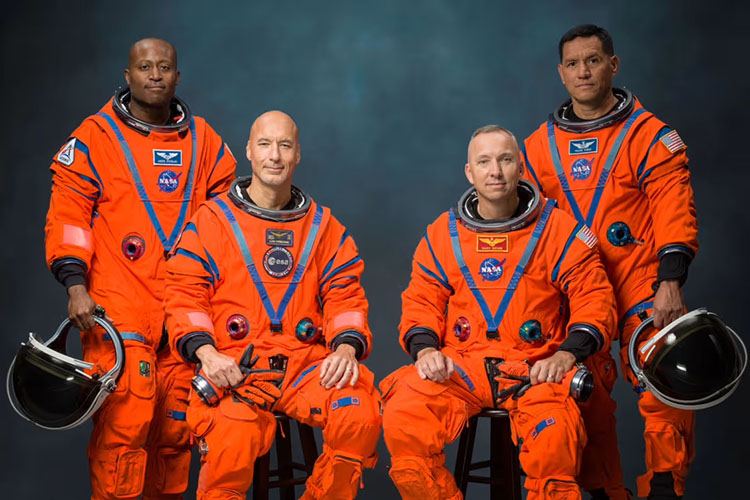
- Artemis II remains the crewed lunar flyby mission.
- Artemis III would shift to an Earth-orbit mission targeted for 2027, which would rendezvous with one or both Human Landing System vehicles, as well as test spacesuits and lunar surface systems.
- Artemis IV, targeted for 2028, would continue system buildup and attempt the first lunar landing under the revised architecture.
- Artemis V, a possible mission targeted for late 2028.
The objective is to reduce launch intervals from more than three years to roughly ten months, with a long-term goal of achieving even shorter spacing between missions. A faster cadence would strengthen workforce proficiency, operational efficiency, and mission reliability.
Isaacman also emphasized the importance of standardizing SLS configurations. Treating each rocket as a unique engineering exercise, he suggested, is not sustainable for a program intended to support regular deep-space operations.
He indicated that NASA’s industry partners support accelerating the program and that discussions with congressional leadership have been encouraging.
It was also announced that NASA was abandoning plans to upgrade the SLS after Artemis 3.
Artemis II Rollback: Access and Assurance
While the strategic discussion dominated the briefing, Artemis II operations remain the immediate focus.
Glaze confirmed that the rocket was rolled back to the VAB after data revealed a helium flow problem in the Interim Cryogenic Propulsion Stage (ICPS), the SLS upper stage.
During last week’s wet dress rehearsal, teams successfully fueled the vehicle, practiced Orion closeout procedures, and conducted terminal countdown operations to approximately T-29 seconds. However, post-test data indicated a helium system issue that required further inspection.
Unlike the core stage, the upper stage cannot be fully accessed at the launch pad. The VAB provides the platforms and access necessary to diagnose and resolve the problem.
Engineers will inspect and repair the helium system and verify performance before returning the vehicle to the pad.
While Artemis II is in the VAB, teams will also replace the Flight Termination System batteries, which must remain fully charged. Lori Glaze also noted that technicians will replace the seal for the liquid oxygen (LOX) interface as part of preventative maintenance. Both seals in the liquid hydrogen quick-disconnect interfaces were replaced between the first and second wet dress rehearsals, contributing to improved performance during the wet dress rehearsal (WDR-2). Teams will also provide additional training opportunities for the capsule closeout team to further refine launch-day procedures.
NASA estimates approximately two weeks of work before the vehicle returns to the pad, followed by about two additional weeks of launch preparations. Current planning points toward a launch no earlier than early April.
Wet Dress Rehearsal Demonstrated Progress
The rollback follows what NASA described as a successful wet dress rehearsal. During the test, SLS was loaded with more than 700,000 gallons of liquid hydrogen and liquid oxygen, and the launch team executed countdown operations after resolving issues identified in the first rehearsal.
Technicians replaced hydrogen quick-disconnect seals, installed a new hydrogen filter, and refined fueling procedures. During the second rehearsal, hydrogen concentrations remained within safety limits, and terminal countdown demonstrations confirmed readiness of launch systems and procedures.
Three Artemis II crew members observed the rehearsal from the firing room, underscoring the mission’s transition from preparation to reality.
Cadence, Engagement, and the Public
During the question-and-answer session, I asked Administrator Isaacman whether a more frequent launch cadence could also strengthen public engagement, noting that multi-year gaps between missions can allow public attention to drift. He agreed, observing that once Artemis II flies it will capture significant public interest, and a steadier tempo of missions will help sustain enthusiasm and engagement with the nation’s human spaceflight efforts.
Today’s briefing made clear that Artemis II is not only a mission preparing for launch, but part of a broader evolution in how NASA intends to sustain human exploration beyond low Earth orbit.
The immediate task is to resolve the helium flow issue and prepare Artemis II for flight. Beyond that, NASA appears poised to shift toward a cadence-driven, sustainability-focused exploration strategy.
If implemented as described, the changes outlined today could shape the tempo and architecture of human spaceflight for the next decade.
For now, Artemis II continues its deliberate march toward launch — one careful, methodical step at a time.