At the Rationale and Goals of the U.S. Civil Space Program meeting Neil DeGrasse Tyson said NASA should get out of Low Earth Orbit (LEO). His main argument was that NASA should not be doing the routine; NASA should be doing space exploration. It is very tempting to agree with him since in my opinion the Space Shuttle and the Space Station were major steps backward, which will lead no where, which suck up all available funds and block actual space exploration and development. But if NASA gets out of LEO there is a problem.
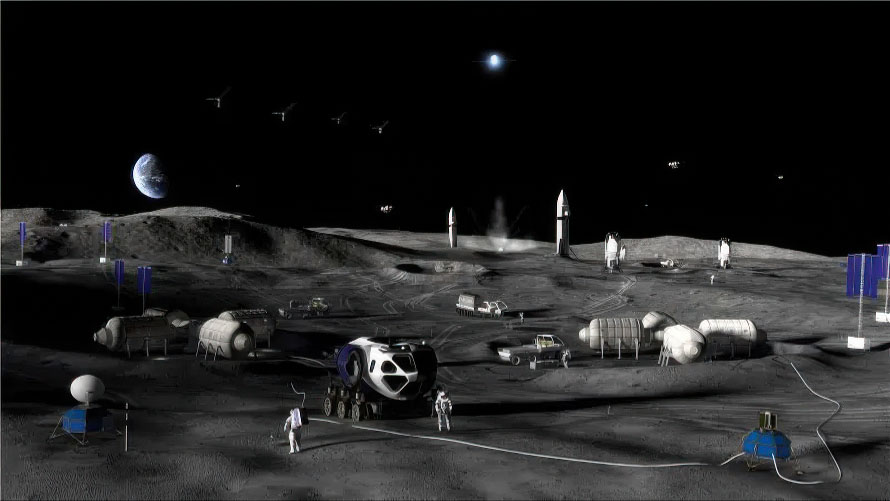
The problem with NASA leaving LEO and concentrating only on space exploration is then who does the space development? Many will say private industry. But in truth, there is very little private space industry in human space flight. Most plans for future private human space flight anticipate demand from the government. That leaves a vacuum in space development.
If the government is footing the bill for space development which part of the government should be in charge of developing space? The one with the most experience. Which government agency has the most experience in space? NASA.
That begs the question, is there any space development to be done in Low Earth Orbit? I have to admit I have never bought into Werner Von Braun’s vision of lots of space infrastructure illustrated so beautifully in the Movie 2001. Shuttles, and space stations etc. are expensive to maintain and of limited utility. Sure it is said to be efficient in terms of energy. But in space with the right technology, energy is cheap. Hardware is expensive and probably always will be.
What kind of space development needs to be done in LEO? The answer is the construction of working technology demonstrations of Solar Power Satellites. The government needs to do the initial technological demonstration of Space Solar Power otherwise there may never be a business case for solar power from space. Either the Department of Energy or NASA should demonstrate Space Solar Power. So if NASA is doing anything in Low Earth Orbit it ought to be to develop Space Solar Power. If NASA is not interested in Space Solar Power or Space Development, then Neil DeGrasse Tyson is right NASA should get out of Low Earth Orbit.




4 thoughts on “Should NASA Get Out of Low Earth Orbit?”
I don’t think so…but i Do agree with traveling further into space…a Deep Space exploration vehicle is what we need!!! powered by some Twin Ion Engines!!!lol (Can be a possibility)
guys…with the ISS running on solar power now…we mustn’t worry…Think about it…Free water and Energy…Tesla’s dream!!!
I am curious to see what is going to be stationed on Kibo and what this recently installed combustion chamber has to give us.
Peace and Love
Hi Karen – have you heard anything about whether the Space Studies Board will post the comments they received from the public? Tyson’s opinion here seems to be a more radical version of what I sent in (that government should focus on things the commercial sector can’t do).
focus on things such as…???
Dr. Tyson was suggesting that NASA concentrate on human exploration of the Moon, Mars and then keep going.
He didn’t seem to think they should do development and he didn’t put a high value on science as part of exploration, which suprised me.
I think that there is a long way between exploration and commercial development and government needs to do that. One way to do that usefully is to allow real scientist to do there own research insitu in space. That would do two very usefull things, stop the war between human and robotic space flight immediately and force the government to put some usefull infrastructure in space for actually doing things, which follow on commerical firms could use. NASA could also pay commerical firms to take care of the needs of the scientists.