Category: Nonfiction
Reviewed by: Casey Suire
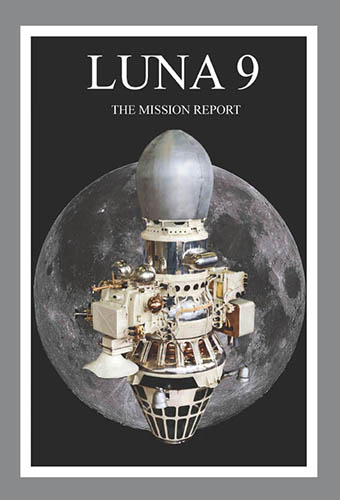
Title: Luna 9: The Mission Report
Editor: Robert Godwin
Format: Paperback
Pages: 128
Publisher: Apogee Books
Date: May 2026
Retail price: $22.95
ISBN: 978-1989044292
Find this book
Back in 1966, Luna 9 became the first spacecraft to soft-land on the Moon. Recently, two teams of researchers, both using data from NASA’s Lunar Reconnaissance Orbiter, believe they located the old Soviet lunar probe. Curiously, each team came up with different results.
To celebrate the 60th anniversary of Luna 9, Robert Godwin’s Apogee Books has released an English-language report of the mission. The original report was released by the USSR Academy of Sciences in 1966 and later translated by the NASA Goddard Space Flight Center. Apogee Books has published dozens of titles on spaceflight. This includes mission reports from several early robotic and crewed spaceflights. These mission reports, including Luna 9, are always very informative reads. You’re not a real space history enthusiast unless you have a collection of Apogee titles on your bookshelf.
Luna 9 was originally developed by Sergei Korolev’s OKB-1 (now RSC Energia) design bureau. However, the project was later transferred to the Lavochkin design bureau. Unfortunately, Korolev, the legendary Soviet Chief Designer, died just weeks before Luna 9 landed on the Moon.
Like all Apogee mission report books, the Luna 9 report is loaded with technical details. In addition to text, this title is filled with many tables, graphs, lunar maps, calculations, and photographs. The book is divided into three parts. The first section covers the design of the Luna 9 spacecraft; the mission’s lunar trajectory is also detailed.
The second part is titled “Results of the Study of Lunar Panoramas.” Luna 9 landed in the Moon’s Ocean of Storms region. This section describes the landing site. Notably, there is a lot of mathematics, especially trigonometry, in this part of the book. Some readers will likely skip over the calculations. They’re more likely to read the part about lunar surface details, such as craterlets and “stones.”
The third and final section of the Luna 9 mission report is a collection of photographs from the landing area. These were the first images taken from the lunar surface. While groundbreaking sixty years ago, many of these grainy black and white pictures are difficult to make out. In the next few years, hopefully, Artemis crews will send back much sharper images and videos of the lunar surface. Nevertheless, Luna 9’s photos are still historic.
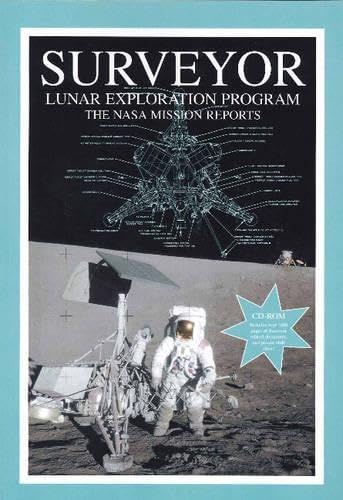
In addition to learning about Luna 9, there are two reasons why today’s space buffs should read this book. First, there are the current plans by America and China to construct a crewed lunar base. In the 1960s, robotic spacecraft like the Soviet Union’s Luna and the USA’s Ranger and Surveyor missions paved the way for humans on the Moon. Today, the same thing is happening. Robotic lunar landers from the likes of Intuitive Machines, Firefly, Astrobotic, and Blue Origin are supporting Artemis. China has the Chang’e program.
The second reason is to remember how impressive the Soviet space program was decades ago. Today, Russia is a declining space power. However, in the past, the Soviet space effort was a powerhouse led by the likes of Sergei Korolev, Valentin Glushko, and Vladimir Chelomei. While the United States won the big prize in the Space Race, most early space achievements came from the Soviet Union. This includes the pioneering voyage of Luna 9.
© 2026 Casey Suire