 |
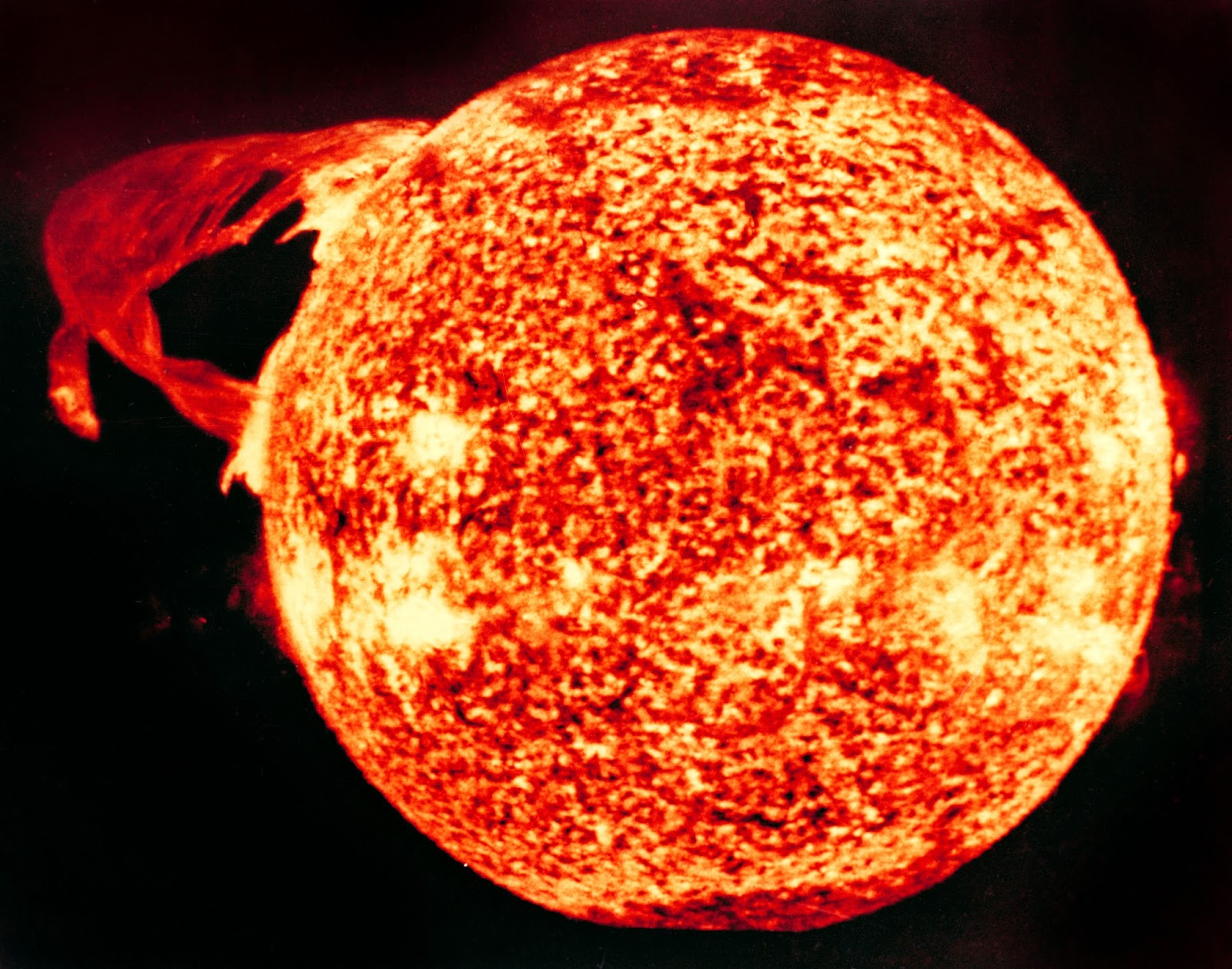
| From NASA: “This photograph of the sun, taken on Dec. 19, 1973, during the third and final manned Skylab mission (Skylab 4), shows one of the most spectacular solar flares ever recorded, spanning more than 588,000 kilometers (365,000 miles) across the solar surface.” |
Although its images are largely superseded by ones obtained by modern solar observatories (such as NASA’s Solar Dynamics Observatory), America’s first space station, Skylab, returned some pretty terrific images of our closest star for its time, and had a pretty superbad, human-helmed solar observatory, the first ever (and only, as far as I know) of its kind.
A 1979 NASA publication, appropriately entitled A New Sun: The Solar Results From Skylab, underscored the historic nature of Skylab’s solar experiments on page 47:
The Apollo Telescope Mount [or ATM, named because of its association with the Apollo Applications Program] was this country’s first full-scale, manned astronomical observatory in space. Many unmanned astronomical spacecraft had preceded it, including the highly sophisticated and successful Explorer, Mariner, Pioneer, Orbiting Astronomical Observatory, and Orbiting Solar Observatory (OSO) spacecraft. The manned Mercury, Gemini, and Apollo missions carried astronomical apparatus, which was employed with good results by astronauts, but none of these instruments approached the size and overall capability of the battery of solar telescopes that made up the ATM. [Note: another OSO spacecraft was launched post-Skylab, in 1975; it remained operational through late 1978.]
According to A New Sun, the “smiley-faced” ATM consisted not just of one, but eight separate solar experiments, operating with X-ray, ultraviolet, and hydrogen-alpha capabilities (in addition, there was also a white light coronagraph, which provided high-resolution views of the Sun’s corona).
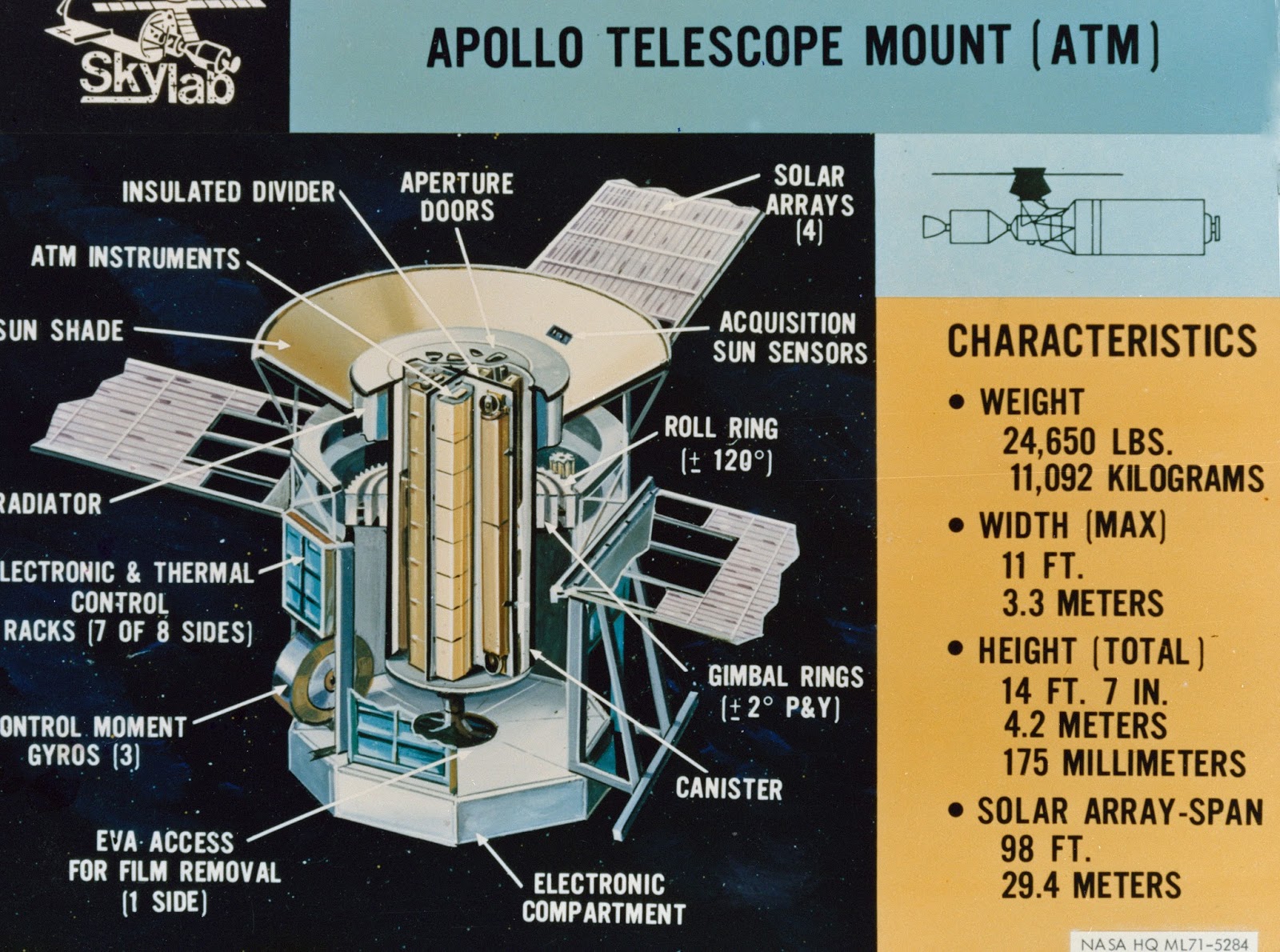 |
| From NASA, 1971 diagram: “An artist’s concept illustrating a cutaway view of the Skylab Apollo Telescope Mount (ATM). The ATM is one of the five major components of the Skylab 1 space station cluster which were launched into Earth orbit. This view includes a list of ATM characteristics to the right of the view.” |
To give the reader a sense of how big this thing was, A New Sun provided a comparison/contrast between the OSO spacecraft and Skylab:
The largest solar instruments on the pre-Skylab OSOs were about one meter long, weighed less than 25 kg [55 lbs], and worked with power budgets of a few watts… Total spacecraft weight was about 275 kg [606 lbs], of which was about half was allotted to solar instruments. Skylab, by comparison, was bigger than a boxcar and weighed over 90,000 kg [almost 200,000 lbs]. The ATM experiment canister, which housed the eight principal solar telescopes, was three meters long and over two meters in diameter – as large as any modern solar observatory spar on Earth, and it was pointed at the Sun with an accuracy and steadiness that equaled the performance of an observatory telescope on the ground.
The ATM even had its own power source – its four unmissable solar power vanes, and A New Sun mentioned the full-sized solar instruments “had virtually no power restrictions.”
One concession for those used to the world of instant, digital photography… the ATM had bulky film magazines which were retrieved by its astronauts during EVAs. But how much film was onboard, and how did it get onto Skylab? The book states, “Some ATM cameras held film for 16,000 pictures or ‘frames’; others advanced film in strips and weighed, on Earth, equivalent to 40 kg [around 89 lbs].”
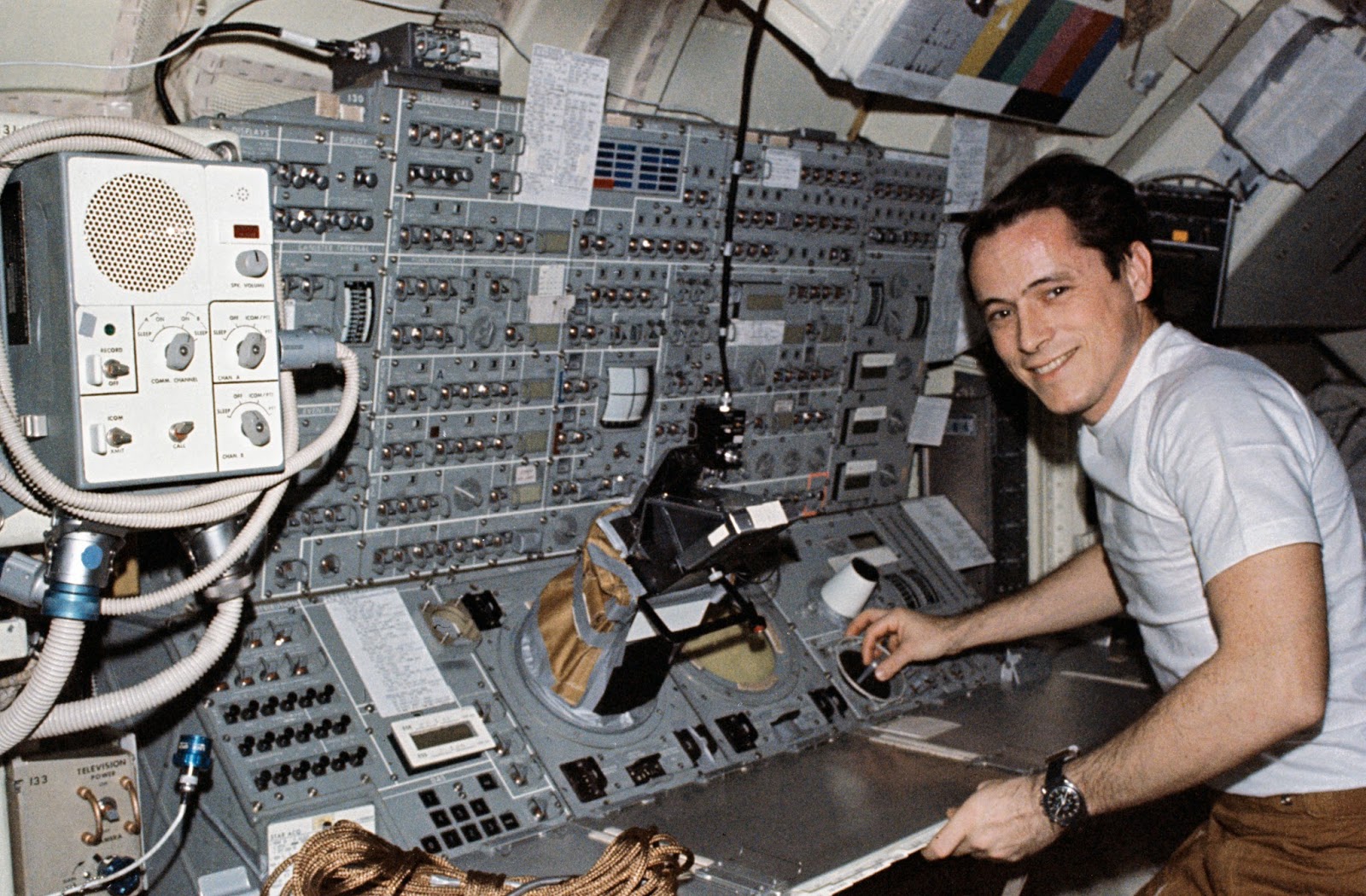 |
| From NASA, Dec. 1973 photo: “Scientist-astronaut Edward G. Gibson, Skylab 4 science pilot, stands at the Apollo Telescope Mount (ATM) console in the Multiple Docking Adapter (MDA) of the Skylab space station cluster in Earth orbit. This picture was taken with a hand-held 35mm Nikon camera.” |
Also remember back in 1973-74, there were zero cargo ships going to space stations, no Dragons, no Cygnuses, etc. Skylab arrived in orbit in May 1973 fully loaded with most of its medical, Earth-observing, and solar-observing experiments (despite missing a solar panel and a micrometeroid shield, but that’s a story for another time). Again, from A New Sun: “Film magazines adequate for the entire Skylab mission were stored in lockers in the Skylab Orbital Workshop when it was launched to start the mission on May 14, 1973. Extra magazines were added to the final extended mission and were transported in a crowded command module at the time of launch in November [1973].” Film canisters (nearly 30 total during the program) were returned to Earth aboard the Apollo command modules coming back from the space station, and were quickly pursued by hungry solar scientists.
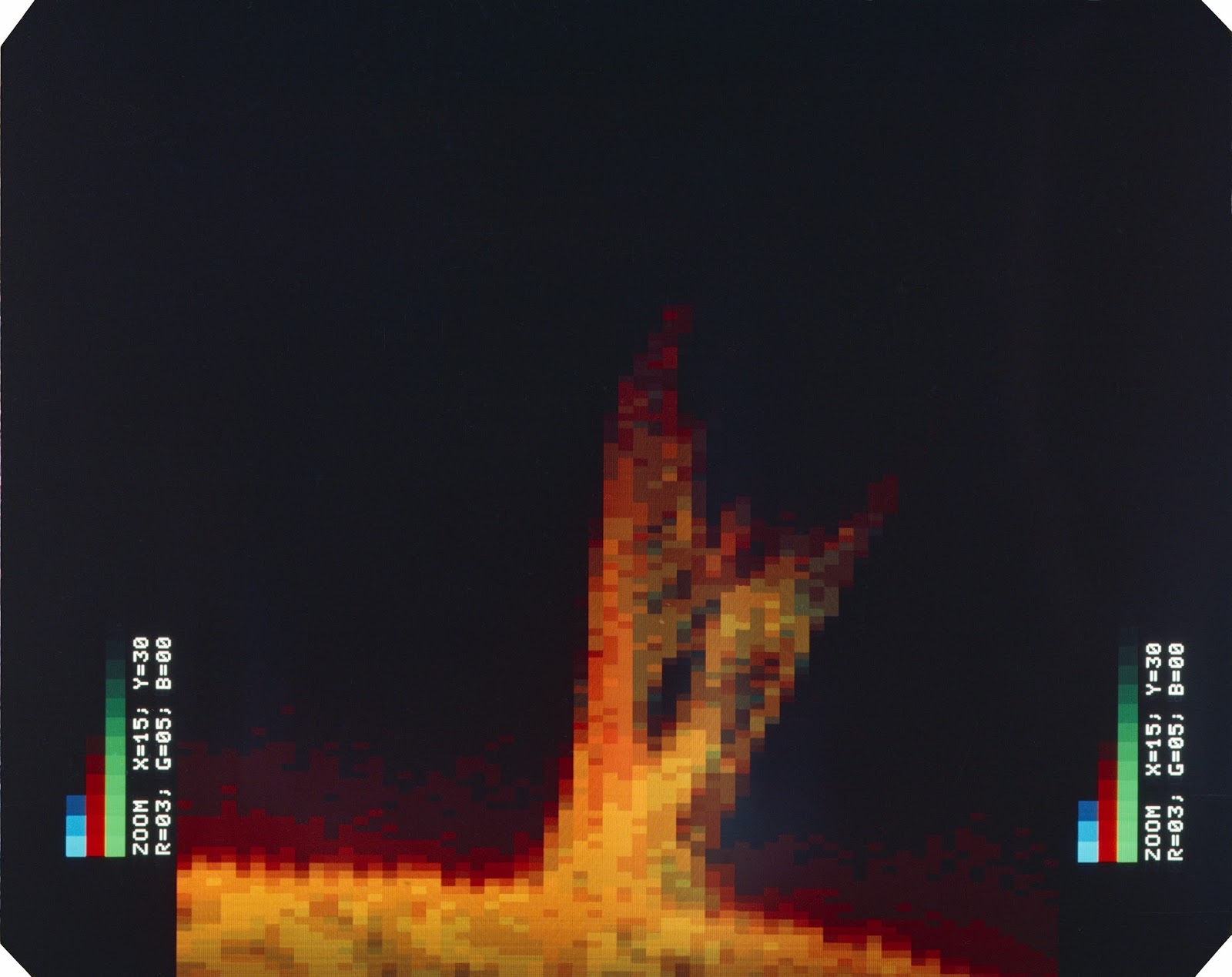 |
| From NASA: “Graphical representation of an ultraviolet photograph depicting a solar flare.” From the Skylab 4 mission, 1974. |
Astronaut Ed Gibson, Skylab 4’s science pilot, had already done plenty of work in the field of solar physics, and perhaps was best-suited for solar observation duty. But he gave plenty of credit to those on the ground, who assisted with getting what were then the best images of the Sun ever obtained.
In an October 1974 National Geographic piece, he wrote, “The flight crews were only the visible part of an enormous, behind-the-scenes effort. More than 200 scientists and engineers monitored and helped plan daily operations of the instruments. Some 150 solar observers in 17 countries coordinated their efforts with ours, multiplying the data.” Together, those on the ground and those in orbit captured details and “flares” never before seen. Gibson added, “Skylab marshaled the largest single effort to observe the Sun in the history of man.” Skylab, for many, was like seeing the Sun turned on, for the first time.
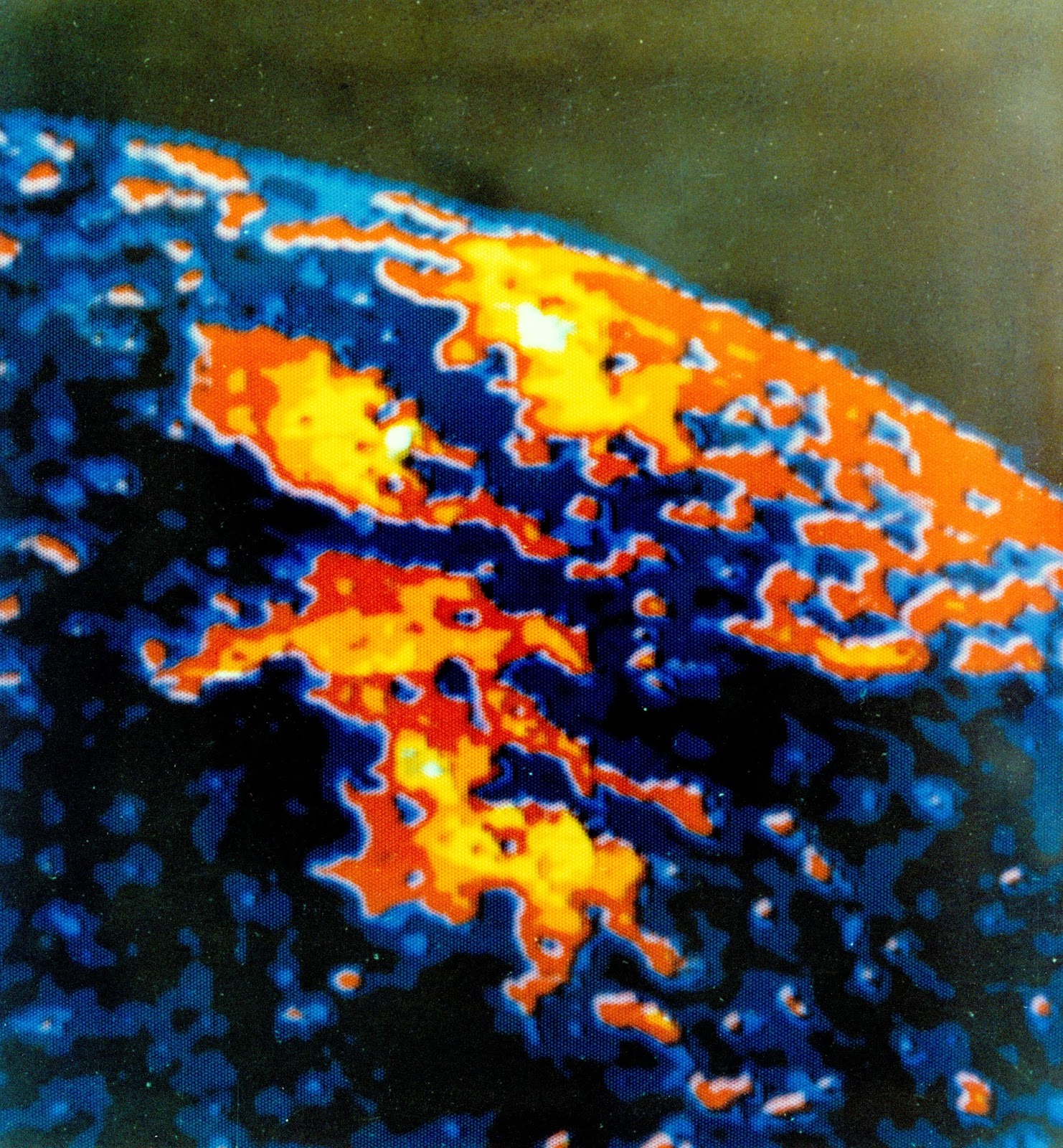 |
| From NASA, image released in 1974: “Sun photographed by Apollo Telescope Mount through spectroheliometer at a wavelength of 625.3 angstroms. The black areas are the surface of the sun; the reds, yellows and whites are the corona some 70,000 kilometers above the surface.” |
Emily Carney is a writer, space enthusiast, and creator of the This Space Available space blog, published since 2010. In January 2019, Emily’s This Space Available blog was incorporated into the National Space Society’s blog. The content of Emily’s blog can be accessed via the This Space Available blog category.
Note: The views expressed in This Space Available are those of the author and should not be considered as representing the positions or views of the National Space Society.