National Space Society
Astrobotic lunar lander

Share:

Facebook
X
Pinterest
LinkedIn

A Small Announcement May Have Large Consequences for Space Development

The National Space Society (NSS) enthusiastically supports NASA’s September 10 announcement to purchase Moon rocks from commercial companies. As part of its Artemis lunar program, NASA will pay a participating company to collect a small amount of Moon soil or rocks from any location on the lunar surface, and to provide image-based proof of the sample to NASA along with data identifying the collection location.

The samples do not need to be returned to Earth; they merely need to be placed in a container and left on the Moon. NASA will purchase the samples for between $15,000 and $25,000, and the company will conduct an “in place” transfer of ownership of the lunar material to NASA. As part of its Commercial Lunar Payload Services (CLPS) program, NASA has enlisted various companies to develop small robotic lunar landers. Two of the companies, Astrobotic and Intuitive Machines, plan to make the first lunar landings with their spacecraft in 2021 and could be the first two companies to complete the transaction. NASA requires that all such collections be carried out with full transparency and in compliance with the Outer Space Treaty of 1967.

NSS Chair of the Executive Committee Dale Skran observed, “We should not misconstrue the small sample quantities and dollar amounts—this is a brilliant move by NASA that sets a precedent with far-reaching consequences. Economic sustainability in space cannot be achieved without leveraging private companies, and even these small transactions between NASA and commercial enterprise can potentially lead to a lunar marketplace open to all countries and benefiting everyone on Earth. Learning how to utilize on-site resources for civil and commercial activities will enable the exploration of the Moon, Mars and beyond.”

NSS Executive Vice President Alfred Anzaldúa added, “NASA’s willingness to purchase on-site resources from private companies in connection with the Artemis program and Artemis Accords will position this policy on a path toward becoming norms and customary practice, which will then become the basis for future space law. What is being established is the ability for one party to mine a resource on the Moon, and then legally transfer for payment what is mined to another party on Earth, and in the future, elsewhere in the solar system.”

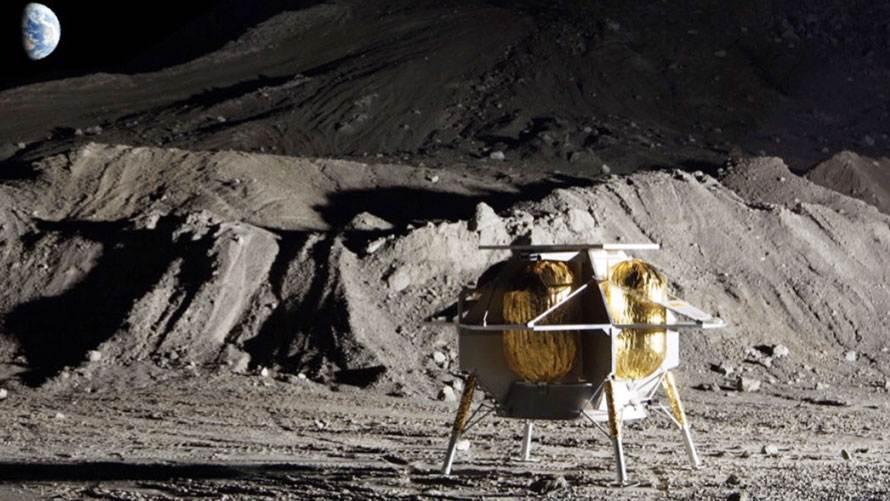
Image: New, commercial lunar landers such as this one from Astrobotic may allow for the sale of lunar samples to NASA as early as 2021. Credit: Astrobotic.

Share:

Facebook
X
Pinterest
LinkedIn
Picture of By National Space Society

By National Space Society

2 thoughts on “Why NASA Wants to Buy More Moon Rocks”

  1. Hopefully this NASA decision will lead to the startup of many new companies that will build their own small scale Lunar regolith sampling landers. This will pave the way for sustained Lunar mining operations in the mid to late 21st Century.

    Reply
  2. I hope NASA will require that all vehicles being sent to the Moon be fully sterilized to prevent contamination. I become concerned when money is involved, and the possibility of “short cuts” in construction.

    Reply

Leave a Comment

Don't Miss a Beat!

Be the first to know when new articles are posted!

Search
Categories

Follow Us On Social Media

JOIN THE
GREATEST ADVENTURE

Give The Gift Of Space: Membership For Friends and Family

Book Review

HOTOLSkylon

Book Review: HOTOL & Skylon: The Story of Britain’s Spaceplanes

In HOTOL & Skylon: The Story of Britain’s Spaceplanes, Rob Coppinger covers the story of both in great detail, with the reminiscences of many who played integral roles in these ambitious programs. The book shines when it captures the enthusiasm and excitement of those involved, and there are extensive quotes from many who devoted years of work on these projects.

Read More »
Out of This World

Book Review: Out of This World

Anyone seeking a short but comprehensive introduction to human spaceflight would do well to start with this book. It reviews its history, highlights the accomplishments and tragedies, and describes the equipment used. It also looks at living in space, what space travelers experience, and how they work.

Read More »
desigining farms in space

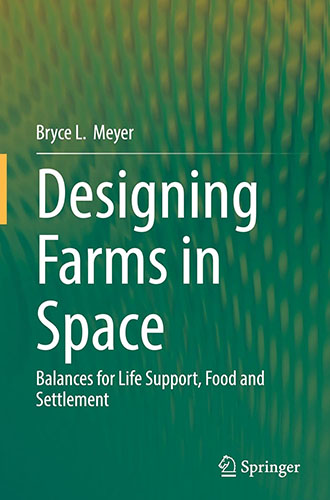
Book Review: Designing Farms in Space

Meyer’s academic textbook is loaded with numerous photographs, diagrams, charts, and graphs. There are chapters on subjects such as farm machines, animal and fungi production, plant and algae production, and space menus. The farming techniques outlined in the book can be applied to lunar, Martian, or rotating space settlements.

Read More »
Archives


Hilton McLean Tysons Corner, McLean, Virginia
June 4 - 7, 2026

Recent Blog Posts

In HOTOL & Skylon: The Story of Britain's Spaceplanes, Rob Coppinger covers the story of both in great detail, with the reminiscences of many who...

The National Space Society (NSS) welcomes the U.S. Administration’s proposal to establish a United States Space Academy, a NASA-led institution meant to prepare the next...

By Burt Dicht NSS Space Coast Correspondent Today’s successful launch of the Nancy Grace Roman Space Telescope will help answer two key questions: How does...

By Robin Scott National Space Society of North Texas (NSS-NT) President Ken Ruffin, shown above holding the 2026 NSS Chapter of the Year Award, acknowledged...

The National Space Society (NSS) welcomes the release of the National Space Transportation Policy, a comprehensive directive establishing the United States’ strategic framework for launch,...

In this NSS Space Forum, astronaut and former U.S. Navy test pilot Susan Kilrain joins us to discuss her new book, Slaying Snakes in the...
Anyone seeking a short but comprehensive introduction to human spaceflight would do well to start with this book. It reviews its history, highlights the accomplishments...
The Space Coast has extraordinary assets and an opportunity to continue its preeminence as a spaceport while becoming a destination for a new generation of...
adastra magazine

Your Doorway to New Worlds