

Opinion
By Burt Dicht
NSS Managing Director of Membership
Image: Artemis II and Full Moonrise, Feb. 1, 2026; photo by Burt Dicht
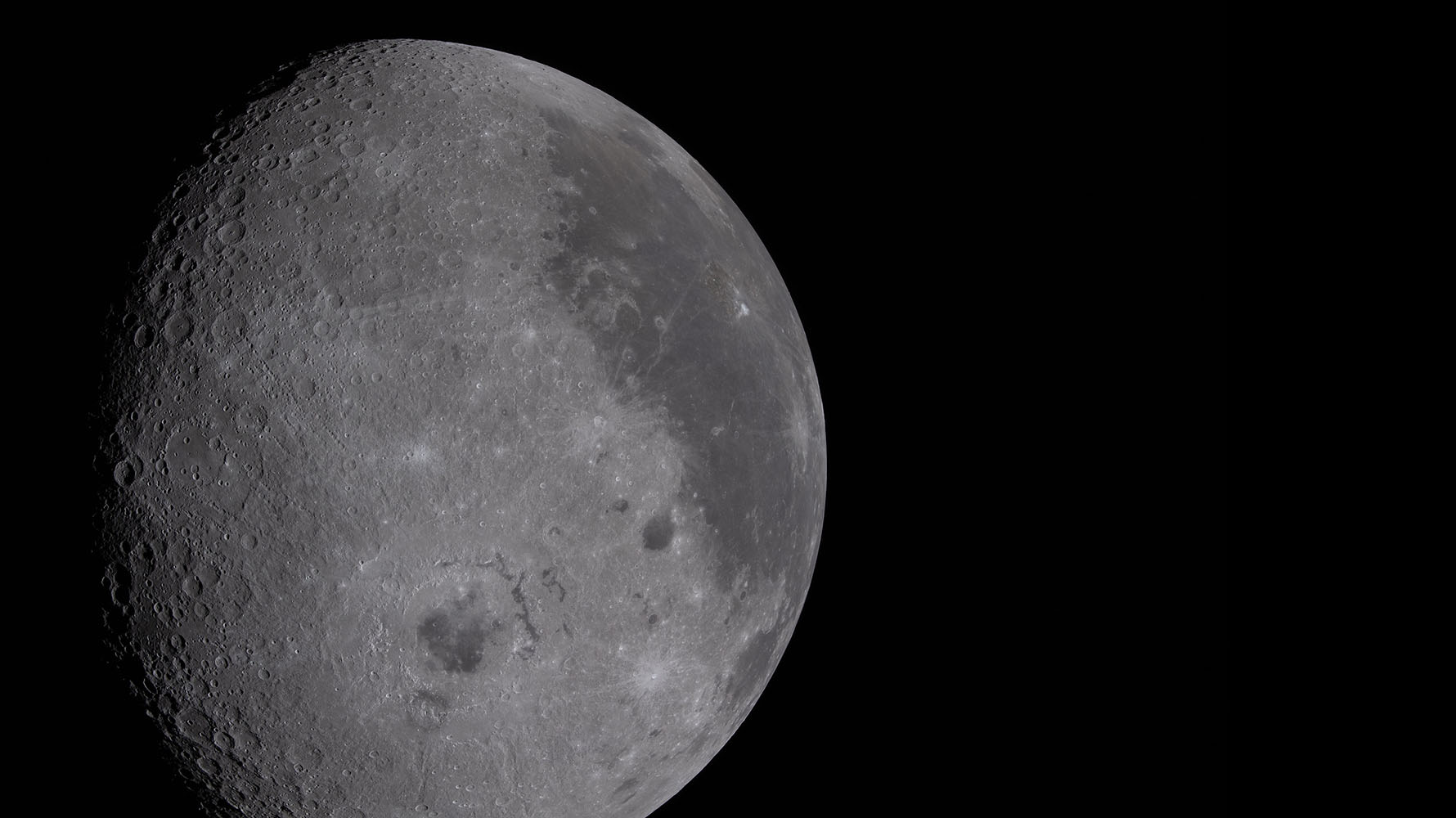
Last week, I found myself at Launch Complex 34, attending a ceremony honoring the Apollo 1 astronauts—Gus Grissom, Ed White, and Roger Chaffee. Standing there, you can still see the skeletal remains of the launch platform, preserved as a quiet reminder of how unforgiving spaceflight can be. As the ceremony unfolded, I looked up and saw the Moon shining brightly above us.
It was impossible not to feel the weight of that moment. We were standing in one time, remembering three men who lost their lives in another, all in service of a goal that reshaped human history. The Moon hanging overhead wasn’t symbolic—it was literal. Their sacrifice helped make it reachable.
That night, the past didn’t feel distant. It felt present.
Just a few days later, I stood in a very different place—looking out toward Launch Complex 39B. This time, there were no remnants or memorials. Artemis II sat on the pad—towering, quiet, and almost patient. During a moonrise photo opportunity, the spacecraft seemed to exist in conversation with the same Moon that had loomed over Pad 34 days earlier.
Majestic is the only word that fits!
There is something profoundly different about seeing a spacecraft on the pad versus watching one launch on a screen. When it is in your direct line of sight, you feel the continuity. Apollo is no longer just history. Artemis is no longer just a plan. The line between them becomes tangible.
Those two moments—standing at Pad 34 remembering lives lost and standing a few miles from Pad 39B watching Artemis II wait for its moment—have driven my excitement about this mission. Artemis II is no longer abstract to me. It feels real. It feels imminent. And yet, that only sharpens an important question.
Next month, if schedules hold, NASA’s Artemis II mission will carry four astronauts on a journey around the Moon. It will be the first time humans have traveled beyond low Earth orbit in more than half a century. By any historical measure, it is an extraordinary moment.
Here on the Space Coast—and within the broader space community—that reality is sinking in. Excitement is building. People are making plans to visit. Hotels are already booked. Conversations revolve around launch windows, the best viewing spots, and final preparations.
But beyond Florida, beyond the aerospace community, and beyond those who actively follow spaceflight, the reaction often feels muted. Many people don’t seem to know this mission is coming at all. I recently spoke with my older brother, who confirmed he had heard very little. And among those who do, the response is frequently understated. Oh—that’s nice. Then the conversation moves on.
It’s a sobering observation. Because if humanity is truly returning to the Moon for good, the most important question isn’t whether we can do it. It’s whether we still understand why it matters.
And to be clear, Artemis II is not being ignored. In recent weeks, the mission has been highlighted by Time magazine and profiled on 60 Minutes, while outlets such as PBS, CNN, The Washington Post, and others have framed it as a symbolic return to crewed deep-space exploration. That is substantial coverage by any modern standard. But it also underscores the difference between visibility and resonance. Apollo didn’t need explanation or context—it dominated the national consciousness. Artemis, even when covered thoughtfully by major media, still feels to many like one important story among many, rather than a defining national undertaking.

So why does this feel so obvious and urgent to some of us—and barely visible to others?
Part of the answer lies in perspective. Those of us on the Space Coast live with the infrastructure, the workforce, and the history of human spaceflight all around us. We see the launch vehicles. We meet the engineers. We understand what it takes to move a spacecraft from the drawing board to the launch pad and into space. For us, Artemis is personal.
For much of the country, it remains abstract.
Another part of the challenge is comparison. Apollo was audacious and unmistakably framed as a national imperative. We had to achieve President Kennedy’s goal before the end of the decade and beat the Soviets. For many, Artemis can feel like a sequel—something we assume should be easy because we’ve done it before. Of course we can go to the Moon. Why wouldn’t we?
But that assumption misses a critical truth. We did not simply pause our lunar capability—we dismantled it. Artemis is not a nostalgic return. It is about building something new, this time with a different purpose.
Apollo was a time-bound national effort, organized around a single geopolitical objective. Artemis is unfolding in a very different environment—one that requires endurance, adaptability, and collaboration over time rather than a single, decisive sprint. This time, the Moon is not just a destination. It is a foundation—for developing the technologies, partnerships, and approaches that a sustained human presence will require.
Artemis II is an especially curious mission. Artemis I had the drama of a massive uncrewed launch. Artemis III, assuming it proceeds as planned, will have the drama of humans returning to the lunar surface. Artemis II sits quietly in between—no landing, no flags, no iconic boot prints. But that doesn’t make it a footnote. It makes it the bridge.
Artemis II is the moment we move from testing hardware to committing people. It is NASA saying, “We believe this system is ready to carry human lives into deep space.” That is not incremental. That is consequential.
When four astronauts circle the Moon and return safely, they will demonstrate something humanity has not demonstrated in generations: that deep-space travel is once again a practiced capability, not a historical artifact.
Standing at Pad 34, remembering lives lost in pursuit of a goal, and then standing at Pad 39B watching Artemis II wait for its moment, I was struck by how rare this kind of continuity really is. Few civilizations attempt something this difficult. Fewer still sustain it across generations.
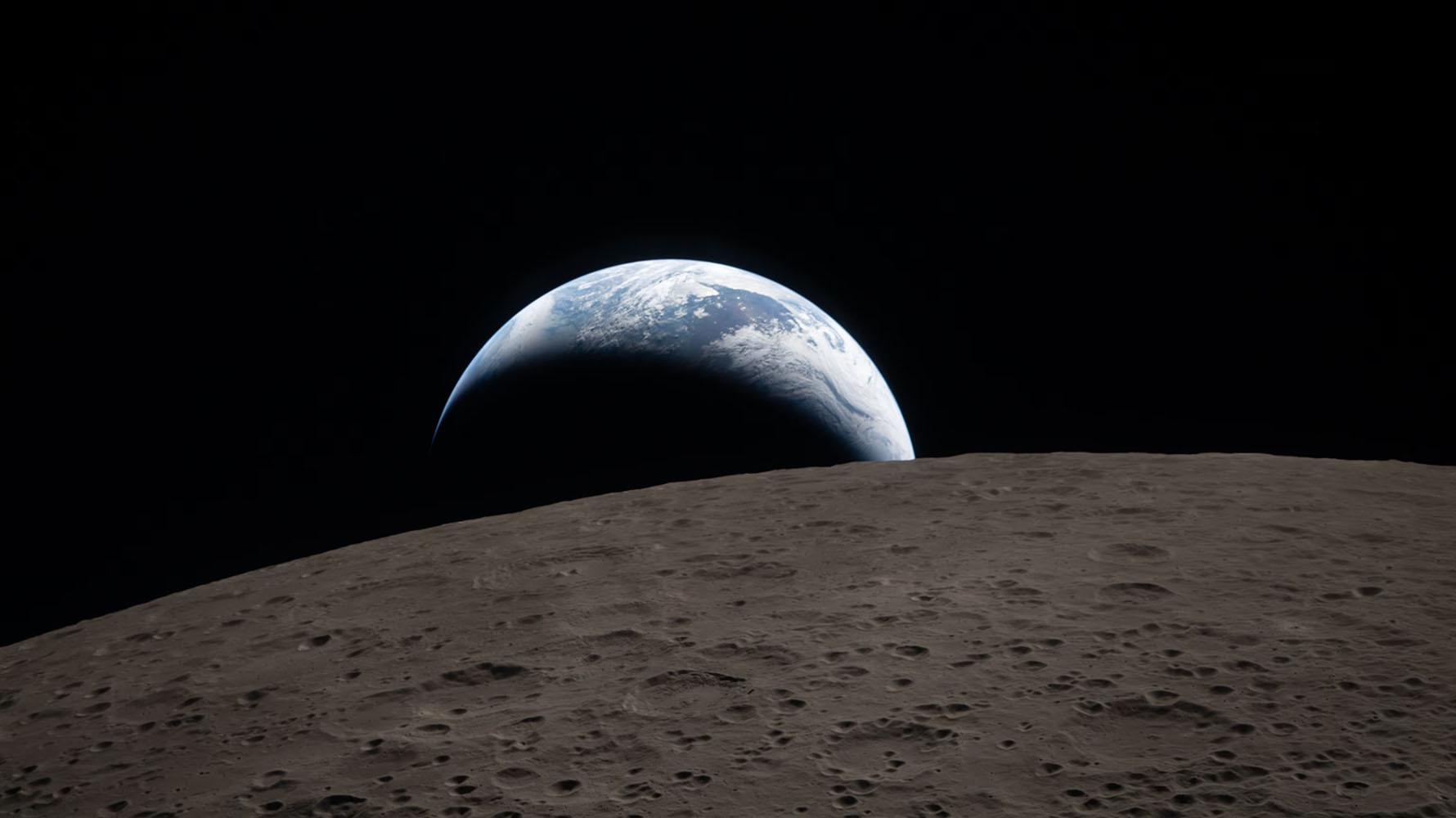
Four people will soon leave Earth’s neighborhood and travel to another world—not as a one-time spectacle, but as part of a deliberate effort to extend human presence beyond our home planet. That perspective once changed how humanity saw itself. It still can.

The challenge before us is not merely to watch Artemis II fly, but to bridge the gap between those who live inside the spaceflight world and those who do not. If becoming a space-faring civilization truly matters—something the National Space Society has long championed—then we have to do more than launch rockets. We have to tell the story well enough that the rest of the country comes along with us.
Artemis II is not the end of the journey. It is the point at which space becomes a shared public-private endeavor, with the potential to open the Moon—and beyond—to lasting human activity.







2 thoughts on “We’re Going Back to the Moon—So Why Does It Feel Like It’s Going Unnoticed?”
Very good essay and echoes a lot of my sentiment.
It’s interesting how we’re on the cusp of another era of lunar exploration, yet it doesn’t seem to be grabbing headlines the way it should. I appreciated how this article made that disconnect feel real and thoughtful, not dismissive, it made me reflect on how we absorb space news and why some stories just don’t stick.