By Burt Dicht
NSS Space Coast Correspondent
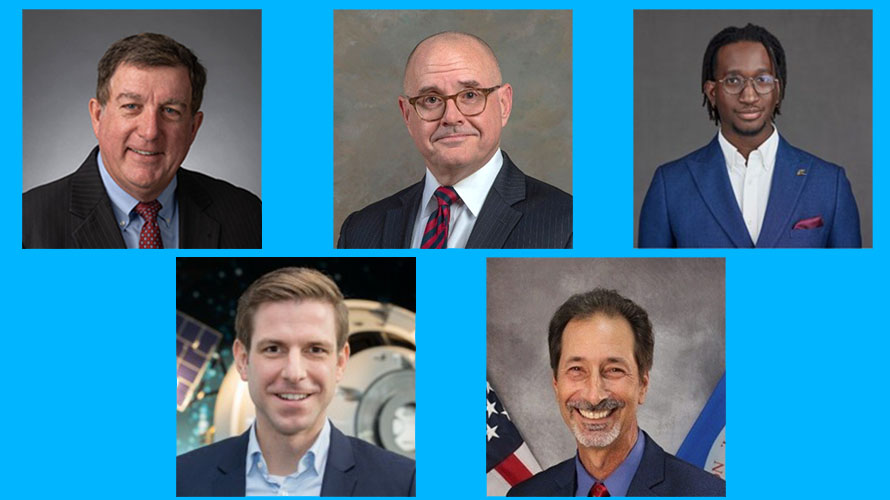
When NASA’s Apollo program sent humans to the Moon between 1969 and 1972, it took 400,000 engineers, scientists, technicians, and support personnel to make it happen. Theirs were largely anonymous contributions — the people behind the curtain of one of humanity’s greatest achievements. Today, as NASA’s Artemis program prepares to return astronauts to the lunar surface, tens of thousands of people across multiple countries are once again pouring their careers, their expertise, and their passion into that same dream. I spent time recently with five of them.
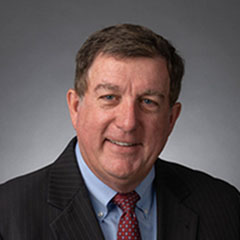
Kirk Shireman — Vice President, Lunar Exploration Campaign, Lockheed Martin
If you want to understand the scale of what it takes to build a spacecraft capable of carrying humans into deep space, start with Kirk Shireman. As the VP overseeing Lockheed Martin’s entire Orion program, he sits at the center of a very complex engineering effort. Lockheed Martin is NASA’s prime contractor for Orion, responsible for building the crew module, the crew module adapter, and the launch abort system. Working out of Littleton, Colorado, Lockheed Martin’s engineers have developed the only spacecraft currently capable of deep space human flight, with systems covering life support, navigation, communications, radiation shielding, and the world’s largest heat shield.
Shireman didn’t set out to build spacecraft. He went to engineering school wanting to design planes. After graduation, an opportunity with the Space Shuttle program changed his direction, and he never looked back. From the Shuttle he moved to the International Space Station, accumulating decades of human spaceflight experience before joining Lockheed Martin in 2020.
When Artemis II launches, Shireman will be at Kennedy Space Center’s Launch Control Center for liftoff, then head to Houston for the duration of the nearly ten-day mission, where a team of Lockheed Martin engineers will monitor the spacecraft from the Orion Mission Evaluation Room and from their facility in Colorado. He speaks about the responsibility plainly. The safety of the four astronauts aboard, and demonstrating the reliability of Orion, are the priorities — not just for Artemis II, but for every mission that follows.
For students and early-career engineers, his advice is straightforward: keep learning. And on the broader direction of the program, Shireman expressed full support for NASA Administrator Isaacman’s plans to increase launch cadence, a signal that Lockheed Martin is ready to deliver.
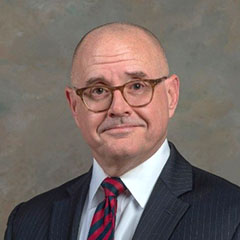
Kent Chojnacki — Deputy Manager, Human Landing System Program, NASA Marshall Space Flight Center
Getting to lunar orbit is only half the journey. Getting from orbit down to the surface and back up again is the job of the Human Landing System, and Kent Chojnacki is one of the people charged with making that happen. As deputy manager of NASA’s HLS Program at Marshall Space Flight Center in Huntsville, Alabama, he helps oversee the development of two commercial lunar landers: SpaceX’s Starship HLS and Blue Origin’s Blue Moon.
Chojnacki is quick to put the challenge in perspective. The Apollo Lunar Module was a capable vehicle for its time, but it was also limited. Today’s landers are designed for a different mission profile: extended stays on the lunar surface, the ability to carry significantly more payload down, and the capacity to return more cargo to lunar orbit. That expanded capability brings expanded complexity, and his teams are working through it every day.
Among the most significant new challenges is that before any astronaut sets foot on the Moon through Artemis, both the Starship HLS and Blue Moon will perform uncrewed lunar landings. That capability didn’t exist in the Apollo era and has had to be built from the ground up. His teams are also working through plans laid out by Administrator Isaacman for an Earth orbit rendezvous between Orion and one or both of the HLS vehicles, adding another layer of operational complexity to an already demanding program.
Chojnacki’s path to NASA began early. Space captured his interest as a child, and he pursued engineering to turn that into a career. He joined Marshall Space Flight Center in 2000, working across a range of programs including the Space Launch System, before stepping into his current HLS role in 2023. His advice to the next generation reflects both honesty and optimism: the space industry is growing, talent is needed across every discipline, and persistence matters.

Brandon Burroughs — Program Management/Advanced Development, Space Launch System, Boeing
Before Orion can fly, it needs something powerful enough to push it beyond Earth’s atmosphere and toward the Moon. That’s the job of the Space Launch System, and Boeing is a central partner in making it fly. Brandon Burroughs works in program management on SLS at Boeing, a role where his engineering background helps him work across technical teams and keep a large, complex program moving forward. He has been with Boeing for about ten years, but his interest in space goes back much further. From a young age, he knew this was the field he wanted to be in.
That commitment came into sharp focus on November 16, 2022, when Artemis I lifted off from Kennedy Space Center. Burroughs was there to witness it, and the feeling of watching something he had worked on rise from the launch pad stayed with him. It was the kind of moment that reminds you why the work matters.
For Artemis II, his role shifts to the post-launch phase, where he will be part of communications teams answering detailed questions about how the rocket performed during ascent. It is careful, technical work that rarely makes headlines, but it directly informs every mission that follows.
Beyond program management, Burroughs has found real purpose in outreach. Boeing and his leadership have actively encouraged him to engage with students and community groups, and he has embraced it. He has participated in Florida Space Day, university recruiting, and an AIAA SciTech Idea Challenge team pitching competition. “One of the biggest things Boeing and my leadership have done for my development is to encourage me to do industry-related outreach,” he said.
His advice for pre-university students is practical: build your foundations now. Focus on math, science, and STEM preparation before you reach college. And once you get there, persistence is what carries you through.
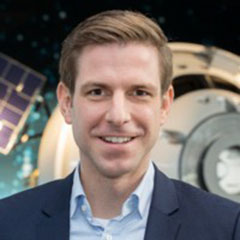
Kai Bergemann — Project Manager, Orion European Service Module, Airbus
The Orion spacecraft is, at its heart, an international collaboration. The crew module where the Artemis II astronauts will live for ten days was built by Lockheed Martin in Colorado. Attached to it, providing the power, propulsion, and life support that makes the journey possible, is a module built in Bremen, Germany. The European Service Module (ESM) was built by Airbus under contract to the European Space Agency (ESA), and Kai Bergemann is the project manager who has guided its development from design through assembly, testing, and operations.
The ESM does essential work. It propels and maneuvers Orion through space, generates power through its solar panels, supplies the crew with air and water, and keeps the spacecraft at a workable temperature. Kai oversees every dimension of that, which is demanding and, he says, deeply rewarding.
His path to space was shaped by his father, an aircraft mechanic who gave him an early interest in aviation engineering. When Kai joined Airbus, he expected to work in aviation. He ended up in space instead and never felt the need to look back. The engineering challenges are real, but what stands out most for Kai is the international dimension of the work. Building the ESM means coordinating across the many nations that make up ESA, alongside NASA and its American partners, spanning languages, cultures, and engineering traditions. Working together, he says, is how we accomplish things that none of us could do alone.
The ESM performed well during the uncrewed Artemis I mission. For Artemis II, Airbus engineers will be present in the Mission Evaluation Room at Johnson Space Center, working alongside NASA mission controllers as the first crew takes Orion on its lunar journey.
For students and early-career engineers, Kai’s advice is to stay curious and keep asking questions. And he adds something that might surprise people coming from an engineer: learn the business side of space too. Great missions require technical skill, but they also require an understanding of the broader world in which that work happens.
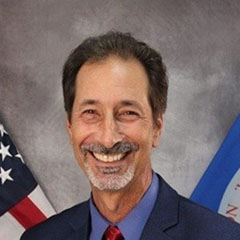
John Giles — Crawler Element Operations Manager, Exploration Ground Systems, NASA Kennedy Space Center
Every mission profile, every carefully engineered system described above, comes down to a moment that most people never think about getting the rocket to the launch pad. That is John Giles’s job.
John is the Engineering Operations Manager for NASA’s crawler-transporters and large transportation equipment within the Exploration Ground Systems program at Kennedy Space Center, not far from where he grew up. For a kid raised near Cape Canaveral, the space program was always on the horizon. Most of his career was spent on expendable rockets, but the pull of human spaceflight eventually led him to what was then the Constellation Project Office in 2009, now the EGS program.
The crawler-transporters John oversees are genuinely one of a kind. Built in 1965 to carry the Saturn V from the Vehicle Assembly Building to Launch Complex 39, they worked through Apollo, carried Space Shuttles to the pad for thirty years, and have since been upgraded to move the Space Launch System. They were never designed to last sixty years. That they are still operating is a credit to the team that maintains them, including contractor Amentum, which provides engineering, technical, and systems integration support.
A team of thirty people monitors and operates the crawlers during each transport. The 4.2-mile trip from the VAB to the launch pad takes roughly twelve hours, and it is a focused, dynamic environment throughout. There is no time during the crawl, John says, to reflect on what the moment means. The responsibility of delivering SLS and Orion safely to the pad demands full attention. It is only after the rocket is standing at the pad, secured and ready, that the team can step back and let themselves appreciate what they’ve just done.
John has never been bored. The satisfaction of contributing to Artemis is, he says, reward enough. His advice to students carries the practical wisdom of someone who has spent decades in an environment where problems don’t wait to be assigned. The space program, he says, is looking for doers. Don’t wait for someone to hand you a task. If you see a problem, take it on and solve it. That kind of initiative is what moves programs forward — and what will carry us back to the Moon.
What These Five People Told Me
I came away from these conversations struck by something that is hard to quantify but impossible to miss: the passion. Kirk Shireman, Kent Chojnacki, Brandon Burroughs, Kai Bergemann, and John Giles work in different organizations, on different systems, in different countries. Their day-to-day challenges look nothing alike. But they share something that came through clearly in every conversation: they know what they are part of, and it matters deeply to them.
Apollo needed 400,000 people. Artemis needs tens of thousands more, spread across agencies, contractors, and international partners, working on systems that didn’t exist a generation ago. Most of them will never be household names. But the next time a rocket rises from Kennedy Space Center and heads toward the Moon, it will carry the work of every one of them — including these five.









1 thought on “The Faces Behind Artemis: The People Taking Us Back to the Moon”
The Crawler is one of my favorite machines at NASA. Thanks for highlighting some of the systems and efforts of individuals that would help propel humanity back to the moon and onwards to the cosmos. I continue to pray that we reach the lunar surface by the end of this decade. -Dr. Sammy