On November 25, 2015, President Obama signed the landmark Commercial Space Launch Competitiveness Act (CSLCA). NSS congratulates President Obama and the Senate and House leadership for their hard work in hammering out a compromise between the previously passed House and Senate versions.
“It is hard to over-emphasize the importance of the CSLCA,” said Dale Skran, NSS Executive Vice President. “There are a lot of excellent provisions in this legislation, and we want to thank House Majority Leader McCarthy for guiding the final version to the President’s desk.”
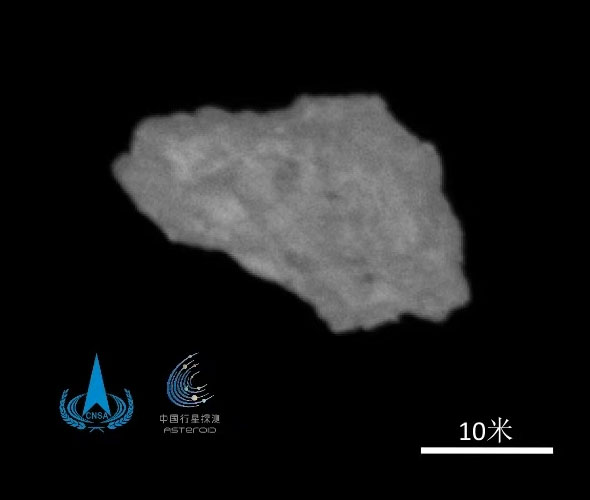
Perhaps the most historically significant part of the CSLCA calls for the establishment of a legal right for U.S. citizens to mine asteroids in a fashion consistent with international law, including the Outer Space Treaty. Milestone 18 of the NSS Space Settlement Roadmap calls for the exploration, utilization, and settlement of the asteroids. “NSS looks forward to the CSLCA enabling a new age of asteroid mining led by companies like Planetary Resources and Deep Space Industries, making the vast resources of space available for the benefit of humanity,” said Bruce Pittman, NSS Senior Vice President.
NSS has been working hard to support this legislation. NSS is a founding member of the Alliance for Space Development (ASD). The 2015 ASD objectives can be found at www.allianceforspacedevelopment.org. They include extending the learning period for commercial suborbital spaceflight and changing regulations to allow space tourism companies to conduct both experimental and operational flights under the same permit. Both of these items, which NSS believes are key to lowering the cost of access to space via supporting the growth of a vibrant space tourism industry, were included in the CSLCA just signed by the President. Another ASD objective for 2015 called for “increasing the utilization of the International Space Station,” something that has been accomplished in part by the CSLCA’s extension of ISS operations to 2024.
Throughout 2015, ASD member organizations, including NSS, worked to forward the above goals. The SFF (Space Frontier Foundation)/NSS March Storm Congressional Blitz focused attention on extending the “learning period.” In May, both NSS and SFF submitted public letters supporting the precursor legislation to the CSLCA (see for example our Open Letter to House in support of the SPACE Act of 2015). Next, the NSS/SFF August Home District Congressional Blitz pushed the case for ISS utilization. Finally, ASD submitted a private letter of comment to the House/Senate conference committee.