
National Space Society

NASA Releases Updated Artemis Program Lunar Plans

NASA Artemis

Share:

Facebook
X
Pinterest
LinkedIn

WASHINGTON, DC — April 6, 2020: The National Space Society commends NASA for its updated Artemis mission plan for returning humans to the Moon. The new roadmap, called “NASA’s Plan for Sustained Lunar Exploration and Development,” was released on April 2. This bold vision combines the best of government, commercial and international capabilities to accomplish long-term activities on the Moon efficiently and affordably, while establishing a foothold for journeys onward to Mars and beyond. It also provides an opportunity to leverage resources found on the Moon to further affordable and sustainable development of space.

The plan leverages commercial space operators via programs such as NASA’s Commercial Lunar Payload Services (CLPS) to bring scientific packages and cargo to the lunar surface as well as to the Lunar Gateway. The Gateway, a lunar orbiting outpost which was reaffirmed in the updated plan, will assist NASA in its goal to establish a permanent station at the lunar south pole called Artemis Base Camp.

Alfred Anzaldúa, Executive Vice President for NSS, said, “SpaceX’s Falcon Heavy will now deliver equipment and supplies to Gateway via its expanded cargo carrier, Dragon XL, which will remain docked to expand the Gateway’s capacity. The Dragon XL also adds flexibility at low Earth orbit and the International Space Station in various roles.”

Dale Skran, the Chair of the NSS’s Executive Committee added, “NASA’s updated plan for the Artemis Base Camp includes developing lunar resources, new lunar power systems, excavation and construction techniques, and the mitigation of lunar dust and extreme environments. This kind of open-ended and evolvable planning will provide U.S. leadership toward a sustainable human presence on the Moon and ultimately beyond.”

Notably, the extraction and refining of water from ice on the Moon allows for the manufacture of breathable air, drinkable water, and rocket fuel. Since it currently costs a minimum of about $1000 per pound launched to low Earth orbit, in the long term this capability will allow for much more affordable and sustained development of space. The same holds true for metals extracted from lunar soil, which can be made into a variety of useful items.

Read the full 13-page report: “NASA’s Plan for Sustained Lunar Exploration and Development.”

Share:

Facebook
X
Pinterest
LinkedIn
Picture of By National Space Society

By National Space Society

3 thoughts on “NASA Releases Updated Artemis Program Lunar Plans”

  1. We space hopefuls hang onto every affirmation of sustained presence in space. A Moon base can accomplish many in situ advances. Support of the Dragon XL is a first step towards establishing a space based delivery network of orbital transfer vehicles for expanding orbital trade, as mining of the Moon becomes reality.

    Reply

Leave a Comment

Don't Miss a Beat!

Be the first to know when new articles are posted!

Search
Categories

Follow Us On Social Media

JOIN THE
GREATEST ADVENTURE

Give The Gift Of Space: Membership For Friends and Family

Book Review

HOTOLSkylon

Book Review: HOTOL & Skylon: The Story of Britain’s Spaceplanes

In HOTOL & Skylon: The Story of Britain’s Spaceplanes, Rob Coppinger covers the story of both in great detail, with the reminiscences of many who played integral roles in these ambitious programs. The book shines when it captures the enthusiasm and excitement of those involved, and there are extensive quotes from many who devoted years of work on these projects.

Read More »
Out of This World

Book Review: Out of This World

Anyone seeking a short but comprehensive introduction to human spaceflight would do well to start with this book. It reviews its history, highlights the accomplishments and tragedies, and describes the equipment used. It also looks at living in space, what space travelers experience, and how they work.

Read More »
desigining farms in space

Book Review: Designing Farms in Space

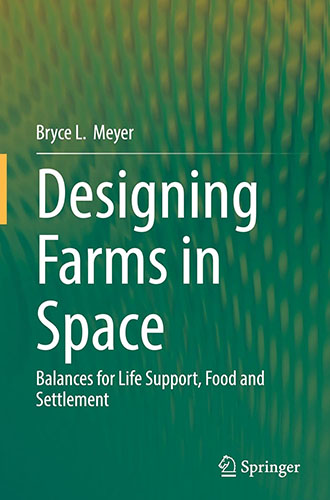
Meyer’s academic textbook is loaded with numerous photographs, diagrams, charts, and graphs. There are chapters on subjects such as farm machines, animal and fungi production, plant and algae production, and space menus. The farming techniques outlined in the book can be applied to lunar, Martian, or rotating space settlements.

Read More »
Archives


Hilton McLean Tysons Corner, McLean, Virginia
June 4 - 7, 2026

Recent Blog Posts

The National Space Society invites you to the next Space Forum Thursday, September 17, 2026, 8:00 pm to 9:15 pm EST Are We Alone? The...

In HOTOL & Skylon: The Story of Britain's Spaceplanes, Rob Coppinger covers the story of both in great detail, with the reminiscences of many who...

The National Space Society (NSS) welcomes the U.S. Administration’s proposal to establish a United States Space Academy, a NASA-led institution meant to prepare the next...

By Burt Dicht NSS Space Coast Correspondent Today’s successful launch of the Nancy Grace Roman Space Telescope will help answer two key questions: How does...

By Robin Scott National Space Society of North Texas (NSS-NT) President Ken Ruffin, shown above holding the 2026 NSS Chapter of the Year Award, acknowledged...

The National Space Society (NSS) welcomes the release of the National Space Transportation Policy, a comprehensive directive establishing the United States’ strategic framework for launch,...

In this NSS Space Forum, astronaut and former U.S. Navy test pilot Susan Kilrain joins us to discuss her new book, Slaying Snakes in the...
Anyone seeking a short but comprehensive introduction to human spaceflight would do well to start with this book. It reviews its history, highlights the accomplishments...
adastra magazine

Your Doorway to New Worlds