
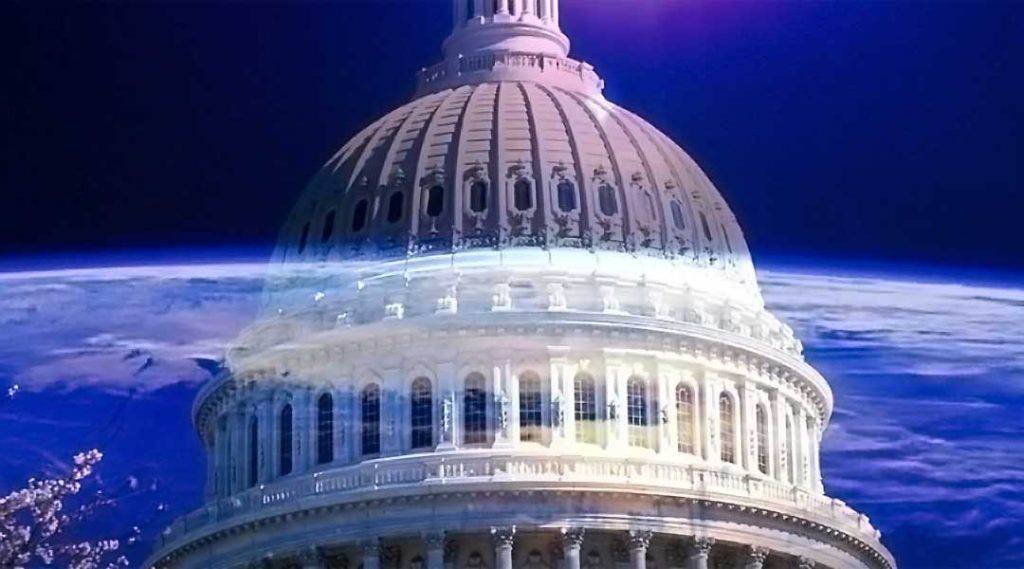
Join NSS and the Alliance for Space Development (ASD) in our 2020 March Storm congressional advocacy blitz, March 15th – 19th in Washington D.C.!
Are you passionate about the continuation and growth of human space activity? Do you want to see the continued progress of space programs and policies? Are you willing to travel to Washington D.C.? Check out our March Storm event!
March Storm is the premiere citizen-run space advocacy event of the year. From March 15th – 19th, join fellow space enthusiasts from around the country to advocate for the 2020 Citizens’ Space Agenda. Developed by the Alliance for Space Development, our policy points were developed by our member organizations including the National Space Society, Space Frontier Foundation, Students for the Exploration and Development of Space, and many others. This year, the Alliance will advocate for three policy points:
- Support planetary defense by funding NASA’s NEOSM mission.
- Start developing and demonstrating Space Solar Power (SSP)
- Support development of low-Earth-orbit (LEO) with full funding for the Commercial LEO Program.
The first of these points are a continuation of our previous efforts, which have made great strides in the past year. With NASA’s new focus on planetary defense from the public’s interest, the previously advocated NEOCAM mission has been moved to a new mission called NEOSM. This could likely be the year we see full funding of this mission and a success on our part. Similar to last year, we will also continue our campaign to make space development and settlement part of these agencies’ missions.
This year we are beginning a new campaign on Space Solar Power (SSP). SSP refers to the collection of the sun’s energy in the space environment, then beaming that energy for collection on the Earth’s surface. After a discussion with representatives from ASD member organizations, we believe our country’s capabilities with space access, solar power, and energy transfer have reached a level where we can begin looking at an SSP program. With increasingly cheaper access to orbit and a growing need for energy across the globe, this program could pave the way to U.S. dominance in LEO. Several agencies, companies, and international competitors have begun their own research into SSP programs.
Continuing our efforts from previous years, we are again turning attention towards the development of Low Earth Orbit (LEO). Humans have inhabited LEO for 20 years since the creation of the International Space Station. The station does not have an infinite lifetime, and will be decommissioned sometime in the coming years. An alternative needs to be developed to continue NASA research, provide a global testbed, and develop commercial products in LEO. With several US companies developing LEO stations, we are asking for full funding for Commercial LEO Development.
The March Storm event will begin with a mandatory training session on Sunday, March 15th. This training will make any citizen an expert on our policy points, how to advocate to congressional staffers, and lead to a strong showing by citizens from across the country. This will be followed by four days of congressional meetings in Senate and House of Representatives offices. Each signup is only required to attend one day of congressional meetings, which most opt to attend on Monday. Led by members with previous advocacy experience, we ensure that each of our meetings will have the highest success rate possible.
Interested? We encourage everyone to sign up on our Eventbrite page here:
https://www.eventbrite.com/e/march-storm-2020-tickets-80279950493
Please review a copy of the ASD 2020 Objectives, the same points we will be advocating for in March.
Questions or comments on the March Storm event? Please contact ASD Executive Coordinator Ian Burrell at [email protected].








3 thoughts on “March Storm 2020 Congressional Visits”
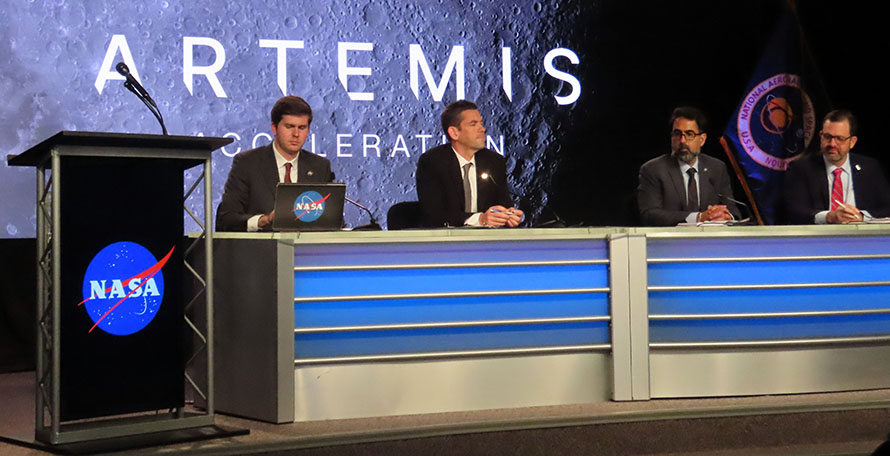
Another important policy should be the continued funding for the Artemis program. Going to the Moon and possibly Mars is an endeavor that should be a focus in the 21st century.
Completely agree!
Getting 2024 Moon landing part of the next NASA Authorization bill should be an objective. Also, ensuring that Commercial Lunar Payload Services (CLPS) is funded at the rate of 2 missions per year for the next 10 years (or better) and having commercial human rated lunar landers owned operated by a set of competing private providers. (We do not want a sole sourced, government owned, integrated Lunar lander). Also, we need to test out the exploration suits on the surface of the Moon (testing them on ISS is not enough before going on to Mars). And place Lunar ISRU as a priority objective to enable space settlement.
I see a connection between Lunar exploration and our first objective of planetary defense. While we need to do surveys of Near Earth Objects (NEOs) to know how big they are, what they are made of, their orbits, etc. It would be good to study more of these objects up close. Now sending missions to them would be a good idea, but we would be very limited in the number of asteroids we could observe. Looking at their impacts on earth would be good, but many of them burn up in the atmosphere. The ones that do land often end up in the ocean or their impacts have long since been weathered and grown over.
However, on the Moon, we have billions of years of impacts of the same types of rocks that have been hitting earth. We could literally study thousands of previous NEOs up close just by going to the Moon.