National Space Society

FINAL UARS Update – September 27 Edition

Share:

Facebook
X
Pinterest
LinkedIn
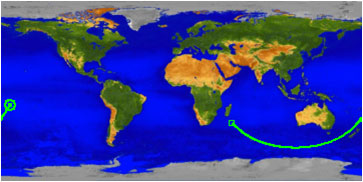
UARS map

NASA ground track shows UARS leaving Africa and reentering over the Pacific Ocean at approximately 12:01 a.m. EDT September 24. Map courtesy of NASA

Here’s the final word from NASA’s UARS reentry Web page

“NASA’s decommissioned Upper Atmosphere Research Satellite fell back to Earth at 12:01 a.m. EDT (0401 GMT) on Saturday, Sept. 24. The Joint Space Operations Center at Vandenberg Air Force Base in California has determined the satellite entered the atmosphere over the Pacific Ocean at 14.1 degrees south latitude and 189.8 degrees east longitude. This location is over a broad, remote ocean area in the Southern Hemisphere, far from any major land mass. The debris field is located between 300 miles and 800 miles downrange, or generally northeast of the re-entry point. NASA is not aware of any possible debris sightings from this geographic area.”

 By the way, if you live in Florida and you think you saw UARS reenter, you so totally didn’t. Stop playin’. 


Emily Carney is a writer, space enthusiast, and creator of the This Space Available space blog, published since 2010. In January 2019, Emily’s This Space Available blog was incorporated into the National Space Society’s blog. The content of Emily’s blog can be accessed via the This Space Available blog category.

Note: The views expressed in This Space Available are those of the author and should not be considered as representing the positions or views of the National Space Society.

Share:

Facebook
X
Pinterest
LinkedIn
Picture of By Emily Carney

By Emily Carney

Leave a Comment

Don't Miss a Beat!

Be the first to know when new articles are posted!

Search
Categories

Follow Us On Social Media

JOIN THE
GREATEST ADVENTURE

Give The Gift Of Space: Membership For Friends and Family

Book Review

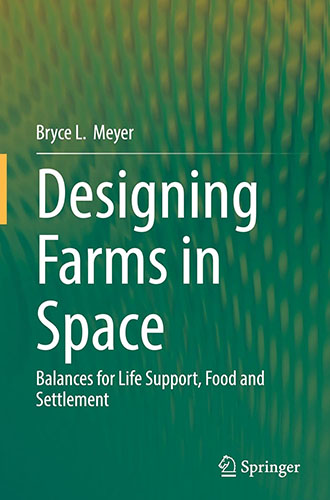
desigining farms in space

Book Review: Designing Farms in Space

Meyer’s academic textbook is loaded with numerous photographs, diagrams, charts, and graphs. There are chapters on subjects such as farm machines, animal and fungi production, plant and algae production, and space menus. The farming techniques outlined in the book can be applied to lunar, Martian, or rotating space settlements.

Read More »
Archives


Hilton McLean Tysons Corner, McLean, Virginia
June 4 - 7, 2026

Recent Blog Posts

On July 20, 2026, 151 people gathered for a special brunch at Space220 in EPCOT at Walt Disney World to celebrate National Space Exploration Day,...

Today, on the 57th anniversary of the Apollo Moon landing, this inspiring song commemorating the past and the future of our presence on the Moon...

The National Space Society (NSS) today announced that it is delivering a letter to Congress and the Administration addressing concerns and recommendations regarding NASA’s draft...

The National Space Society invites you to the next Space Forum Thursday, July 23, 2026, 8:00 pm to 9:15 pm EST Artemis II and Our...

The competition offers cash prizes totaling $32,000 USD for the best three business plans that will serve to advance, in some way, the movement of...
Meyer’s academic textbook is loaded with numerous photographs, diagrams, charts, and graphs. There are chapters on subjects such as farm machines, animal and fungi production,...
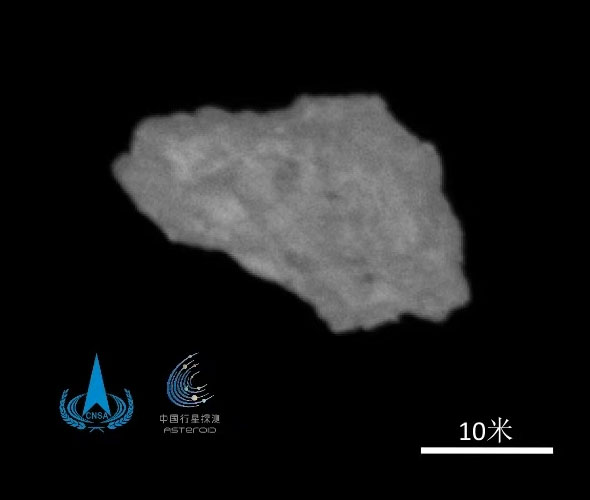
The Tianwen-2 spacecraft at asteroid 469219 Kamoʻoalewa is reportedly positioned to begin the most critical phase of its deep-space mission, preparing to sample the asteroid....
NSS continued its commitment to developing the next generation of space leaders through two programs created specifically for university students and early-career professionals: Speed Mentoring...
adastra magazine

Your Doorway to New Worlds