Category: Nonfiction
Reviewed by: Casey Suire
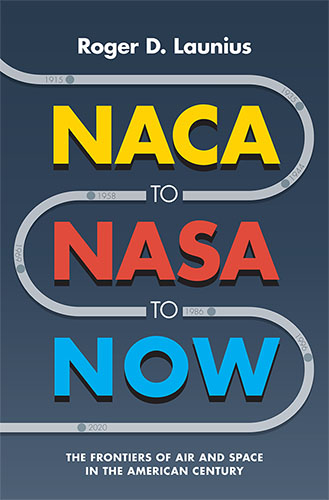
Title: NACA to NASA to Now: The Frontiers of Air and Space in the American Century
Author: Roger D. Launius
Format: Paperback / free PDF or EPUB
Pages: 292
Publisher: NASA History Division
Date: February 2023
Retail price: $27.75 / Free
ISBN: 979-8377123712
Find hardcopy of this book. Get free PDF. Get free EPUB.
The history of NASA is filled with many significant accomplishments. The Apollo Moon landings, the Hubble Space Telescope, rovers on Mars, space probes traveling to the outer edges of the solar system—the list goes on and on.
Noted space author Roger Launius, a former chief historian of NASA, gives his take on the space agency’s storied history in the book, NACA to NASA to Now: The Frontiers of Air and Space in the American Century. He details the transition from the National Advisory Committee for Aeronautics (NACA), 1915-1958, to the National Aeronautics and Space Administration (NASA), 1958-present.
Launius spends the first four chapters discussing groundbreaking aeronautical research conducted by the NACA. Unlike NASA, which is pronounced as one word, the earlier organization is pronounced as N-A-C-A. While the activities of the NACA are interesting, most NSS members will probably be more interested in the rest of the book, which is all about NASA. Although most people associate NASA just with space exploration, the agency, like the old NACA, still does aeronautical research. Launius devotes one chapter to NASA’s work in this field.
NACA to NASA to Now is a short read. The NASA portion of the book is only about 150 pages. Squeezing 65 years of space history into such a small page count makes for a book that is not very detailed. The book gives a brief overview of signature NACA/NASA accomplishments, but it doesn’t dive too deeply into any particular topic. If you want to learn everything about a specific NASA program, other books, such as those listed in this book’s bibliography or on the NSS book review webpage, would be a better fit.
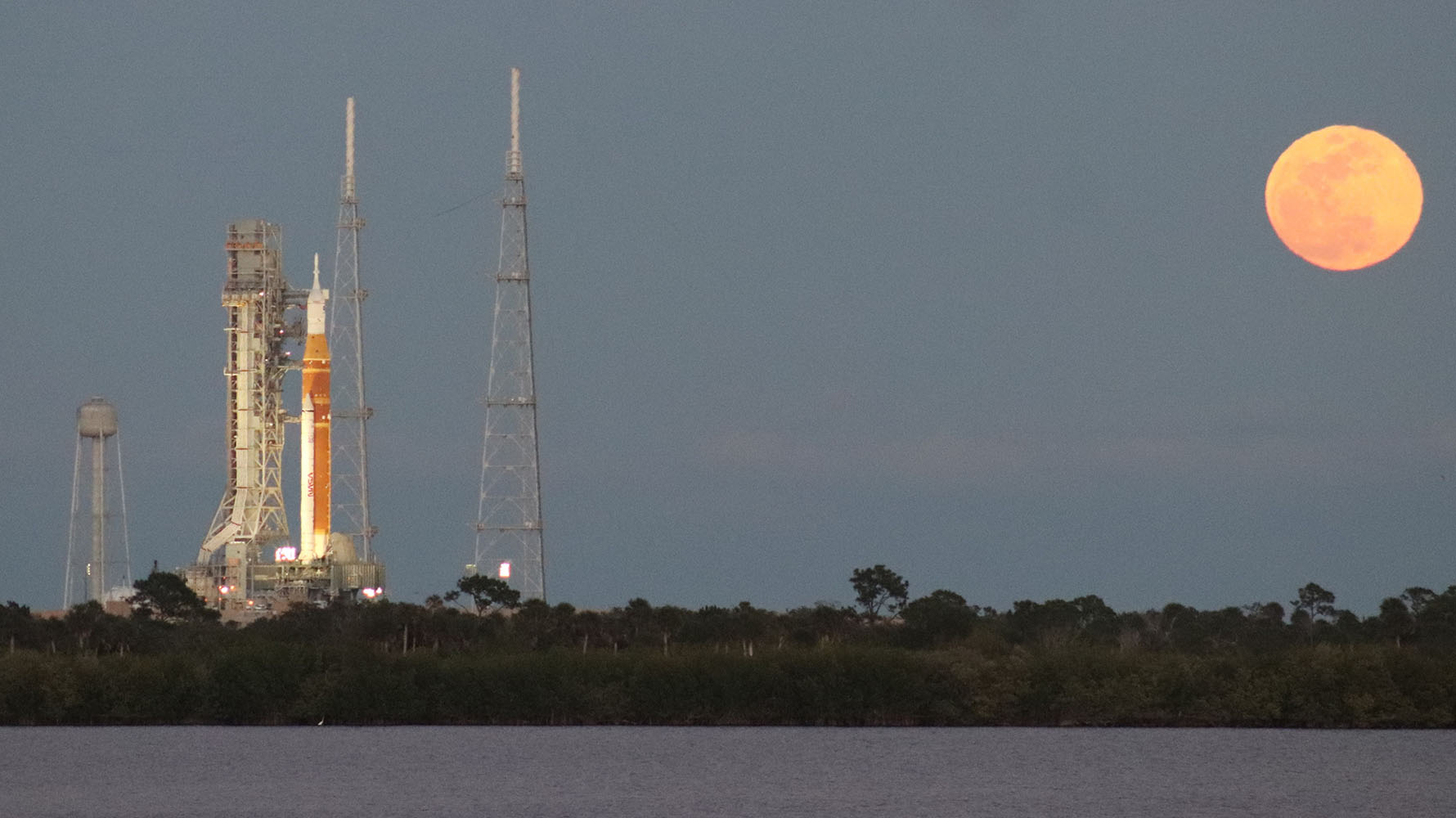
To be fair, any book written about NACA/NASA’s long history couldn’t possibly cover everything in great detail. Even if NACA to NASA to Now was several hundred pages longer, that would be an impossible task. At the same time, there are points where readers will probably want more information. One prominent example: there is no mention of NASA’s current Artemis program to return astronauts to the lunar surface. No SLS, Orion, Gateway, Human Landing System (HLS), Commercial Lunar Payload Services (CLPS), or Artemis Accords. Nothing. The lack of information on Artemis is even more interesting as Launius outlines, in the book’s epilogue, several reasons why he believes humanity should return to the Moon. If human exploration of the Moon is so important (which it certainly is), why is there no discussion of NASA’s plan to actually get there? Launius is skeptical that anyone will go to the Red Planet until the latter part of this century.
NACA to NASA to Now also makes a handful of errors regarding the dates of specific events. There is more to history than memorizing key dates. There is good storytelling, which Launius does well in the book. Regardless, several dates are still wrong. One passage claims that famed test pilot Chuck Yeager broke the sound barrier in October 1947. Another section claims this happened in November 1947. The correct answer is October 1947. Scott Carpenter’s Mercury flight, Aurora 7, was on May 24, 1962, not May 20, 1962. Surveyor 3 was launched from Earth on April 17, 1967; the book states this was the date it landed on the Moon. Apollo 12 was in November 1969, not December 1969. Mariner 4 did a flyby of Mars in 1965, not Mariner 5. The Challenger tragedy occurred on January 28, 1986, not January 27. STS-26 returned the shuttle fleet to service on September 29, 1988. The mission landed on October 3, 1988; the book confusingly claims that this was the launch date. The return to flight after the Columbia accident is also wrong: July 2005, not May 2006. President George W. Bush unveiled the Vision for Space Exploration (VSE) on January 14, 2004, not January 28, 2004.
Some other information presented in the book is incorrect. At one point, it is mentioned that a Saturn V booster launched an uncrewed test flight of the Apollo lunar module in January 1968. This mission, Apollo 5, actually used a Saturn IB booster. Gene Cernan is listed as being on Apollo 17, but there is no mention that he was also on Apollo 10. There was an X-15 test pilot named Joe Walker, not Joe Wheeler.
Even with current efforts to privatize spaceflight, the accomplishments of NACA/NASA deserve to be celebrated. One suggestion is that a second edition of NACA to NASA to Now be published that corrects all these errors and contains a lot more information about various NASA programs and spaceflight topics. If you’re a reader new to space exploration that wants a brief summary of NACA/NASA’s “greatest hits,” this book would be right for you.
© 2024 Casey Suire