Category: Nonfiction
Reviewed by: Casey Suire
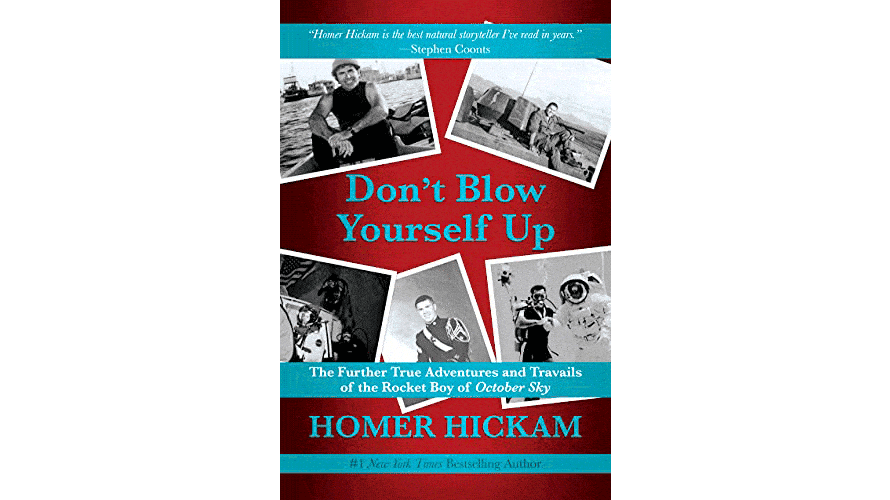
Title: Don’t Blow Yourself Up: The Further True Adventures and Travails of the Rocket Boy of October Sky
Author: Homer Hickam
NSS Amazon link for this book
Format: Hardcover/Kindle
Pages: 416
Publisher: Post Hill Press
Date: October 2021
Retail price: $27.00/$9.99
ISBN: 978-1642938241
At long last, the rocket boy from Coalwood tells the rest of his story! What did Homer “Sonny” Hickam do with his life following the events of his superb memoir Rocket Boys? In Don’t Blow Yourself Up, readers will finally know all the nitty-gritty details.
In case you’re unfamiliar with Rocket Boys, it tells the story of how Hickam, a retired NASA engineer, built amateur rockets with his high-school buddies in 1950’s Coalwood, West Virginia. The book spawned a film adaptation titled October Sky. If you haven’t read the book or watched the film, please do. Great story!
Hickam’s current book begins the afternoon the rocket boys fly their last rockets. While at home, Hickam realizes he still needs to apply for college. It wasn’t entirely his fault. Richard Nixon, then the vice president, declined to nominate Hickam for the Air Force Academy. Luckily, Hickam’s mother, who often told him to “don’t blow yourself up” while flying his rockets, had already applied for him to attend Virginia Polytechnic Institute (now Virginia Tech) months earlier. His mom saved the day, and Hickam started class that fall. This opening chapter sets the tone for the entire book, as Hickam will tell many other equally interesting stories.
Hickam spends a lot of time writing about his college days, Army career, and service in Vietnam. While all of this is really exciting, his role in building the Skipper, a large cannon fired during Virginia Tech football games, is probably the most interesting story from this period of his life.
Later chapters of Don’t Blow Yourself Up detail Hickam’s employment at the Marshall Space Flight Center and the publication of Rocket Boys. Here, Hickam talks a lot about his work with Marshall’s Neutral Buoyancy Simulator (NBS), a large pool astronauts use to train for spacewalks. He also trained the first Japanese astronauts as part of the Spacelab-J mission. At the time, Hickam had a cat named Paco. During the mission, Paco became the first cat to meow in space. While Spacelab-J was a success, there was a lot of drama and tension behind the scenes. Other notable aspects of Hickam’’s NASA career include working with some of the Challenger crew members and the Hubble repair team.
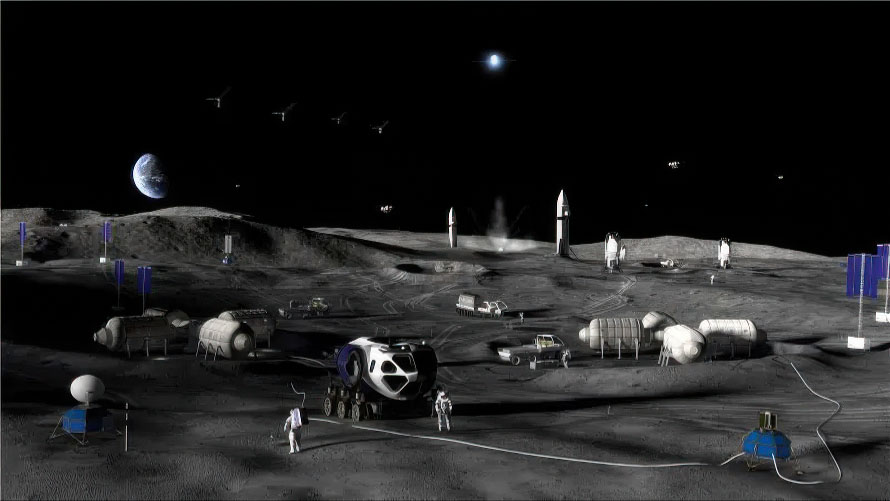
Concerning the future of human space settlement, Hickam is strongly in favor of a Moon base. After all, many of his past novels take place on the lunar surface. He briefly describes a NASA paper he wrote suggesting using the South Pole to practice for future Moon missions. Hickam’s idea was a response to a NASA that, at the time, cared only about the shuttle and space station and not the Moon.
Hickam admits he will always be defined by Rocket Boys and October Sky. Although this probably will be true of his legacy, Hickam’s latest book can hopefully help change that. By the time readers get to the last page of Don’t Blow Yourself Up, it will be very clear that Homer Hickam has led an above-average life even without his classic memoir. The sheer number of unbelievable adventures, both funny and sometimes tragic, will keep your attention from start to finish. Here is a man who explored sunken German U-boats, carried the Olympic torch, and met many famous celebrities before becoming famous himself. What a life!
Part of what makes Hickam compelling are his multiple interests and talents: space, scuba diving, and writing. While these three areas are totally different, they interestingly complement each other in the book. For example, his skills as a scuba diver became very useful at NASA due to his work with the Neutral Buoyancy Simulator. His scuba diving also led to the beginning of his literary career, as he started out writing articles for many scuba magazines. His first published book was actually not Rocket Boys. It was Torpedo Junction, a book about German U-boat attacks on the East Coast. Rocket Boys began as a magazine article and led Hickam on a path to writing many other wonderful books, including Don’t Blow Yourself Up. Perhaps there is a life lesson here about keeping an open mind and pursuing multiple passions.
Another possible lesson from Don’t Blow Yourself Up is that it is okay to make mistakes. Nobody is perfect. You can overcome adversity and have success. Hickam wasn’t a straight-A student in college. He actually struggled with chemistry and mathematics. Nevertheless, he graduated. He also faced other troubles during his career with both the Army and NASA. He made it through those experiences as well. Hickam’s recipe for a great life is a combination of staying true to your roots, a don’t quit attitude, a spirit for adventure, and doing what you love!
© 2022 Casey Suire
Please use the NSS Amazon Link for all your book and other purchases. It helps NSS and does not cost you a cent! Bookmark this link for ALL your Amazon shopping!