By Burt Dicht
NSS Managing Director of Membership
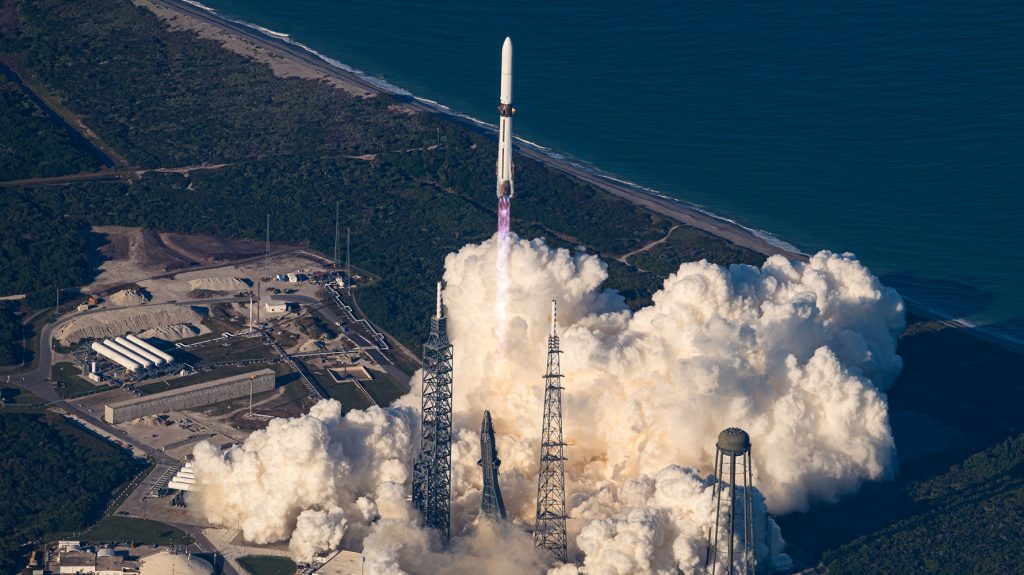
Image: New Glenn ascent during second launch (courtesy Blue Origin)
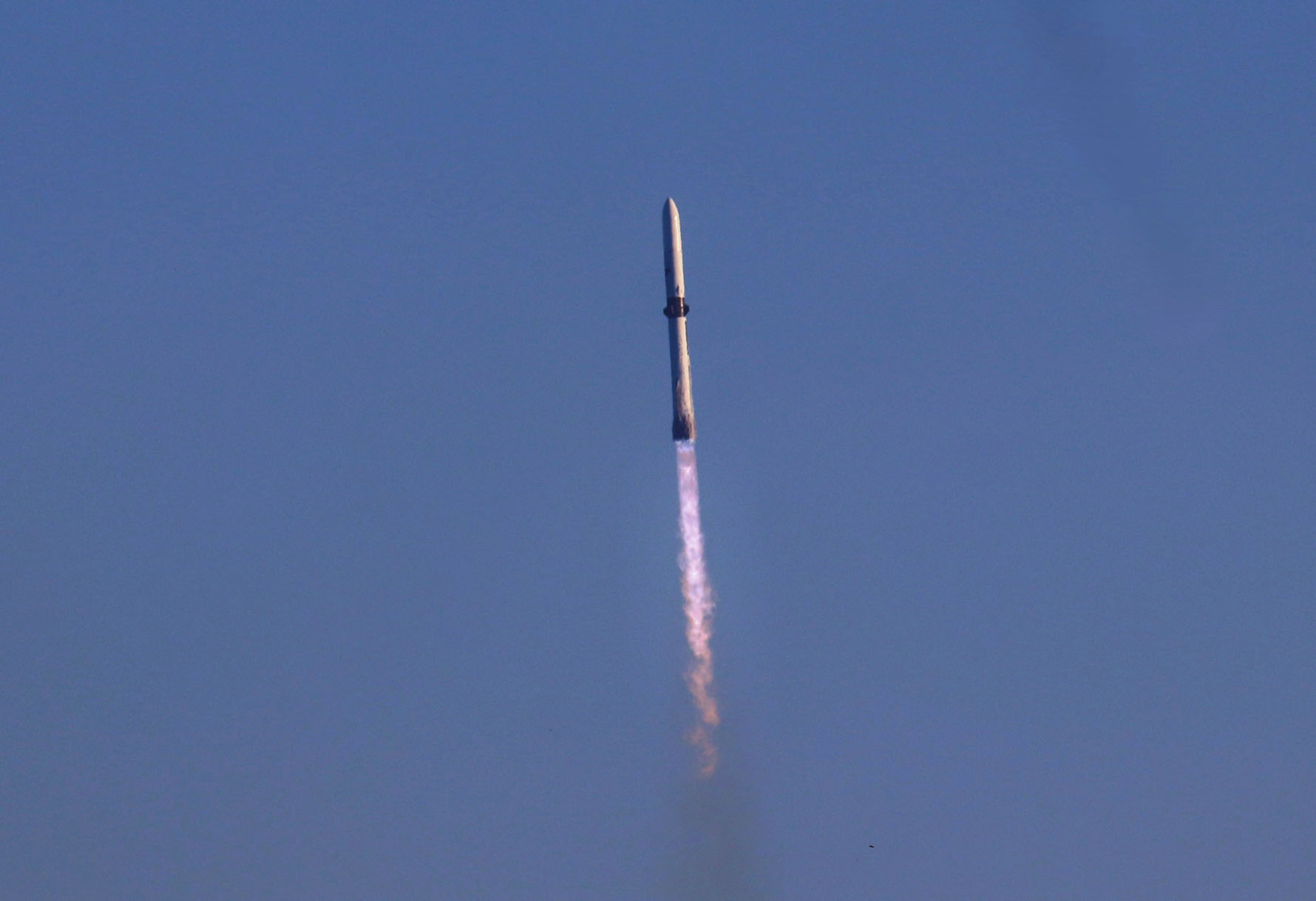
I had the privilege of watching Blue Origin’s New Glenn lift off on its second flight—this time carrying NASA’s ESCAPADE mission toward Mars. At exactly 3:55 p.m. EST on November 13, New Glenn thundered off Pad LC-36 under the power of its seven BE-4 engines. The launch was originally planned for November 9, but Florida’s weather had other ideas. A rescheduled attempt on November 12 was then delayed again when a solar storm created radiation concerns for the twin ESCAPADE spacecraft. The forecast on the 13th, however, was 99% favorable—and the mission took full advantage of it.
New Glenn 2’s primary payload, the ESCAPADE (Escape and Plasma Acceleration and Dynamics Explorers) twin spacecraft, will study how the solar wind interacts with Mars’ magnetic environment—a key to understanding how the planet lost most of its atmosphere over time. After separation, the two probes will spend roughly a year loitering near the Earth–Sun L2 Lagrange point, waiting for Earth and Mars to align for their transfer.
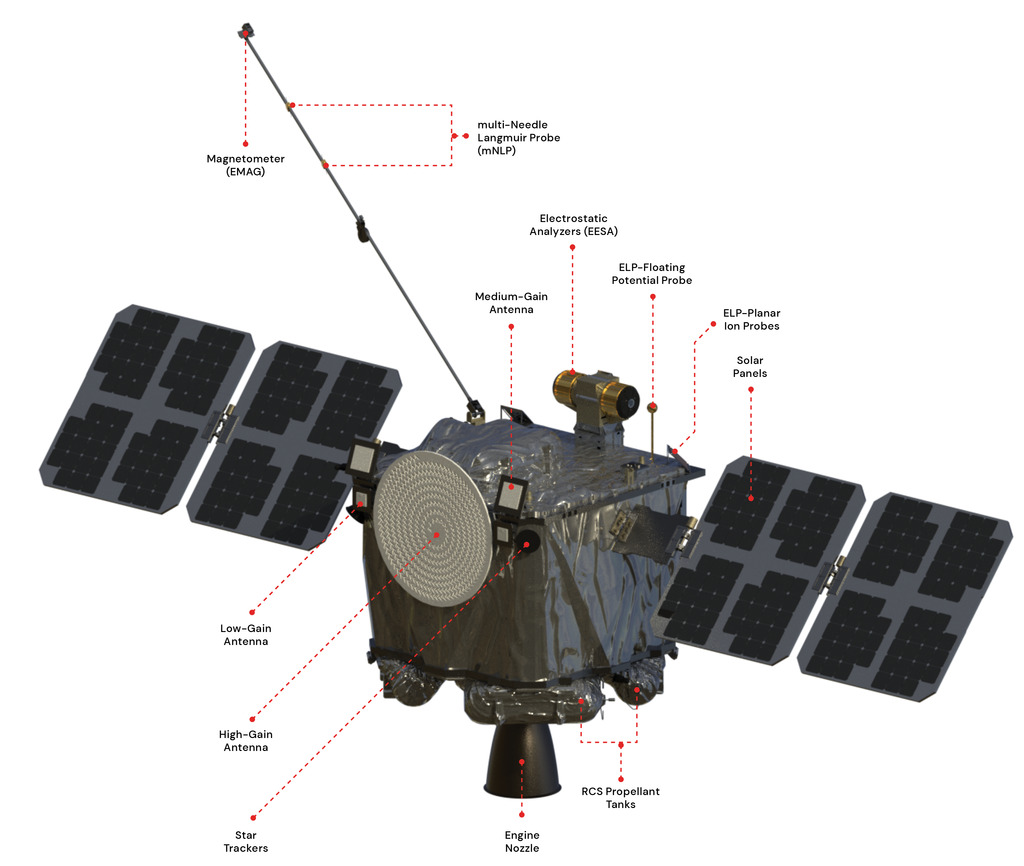
The two spacecraft were built by aerospace company Rocket Lab for NASA and the University of California, Berkeley’s Space Science Laboratory. Named Blue and Gold, after the Berkeley school colors, they are expected to reach Mars orbit in September 2027. ESCAPADE is part of NASA’s heliophysics portfolio, and today’s successful deployment marks a major milestone for a low-cost, high-value planetary science mission.
For context, New Glenn is a 321-foot-tall heavy-lift vehicle with a 23-foot-diameter composite fairing—the largest of its kind—and can deliver 45 metric tons to low Earth orbit. Built for missions exactly like this one, the rocket’s scale and capability were on full display this afternoon.
While the payload was the primary objective, Blue Origin also targeted a major secondary goal: landing the Glenn Stage 1 (GS1) booster—affectionately named Never Tell Me The Odds—on the drone ship Jacklyn, stationed 375 miles downrange in the Atlantic. And GS1 stuck the landing.
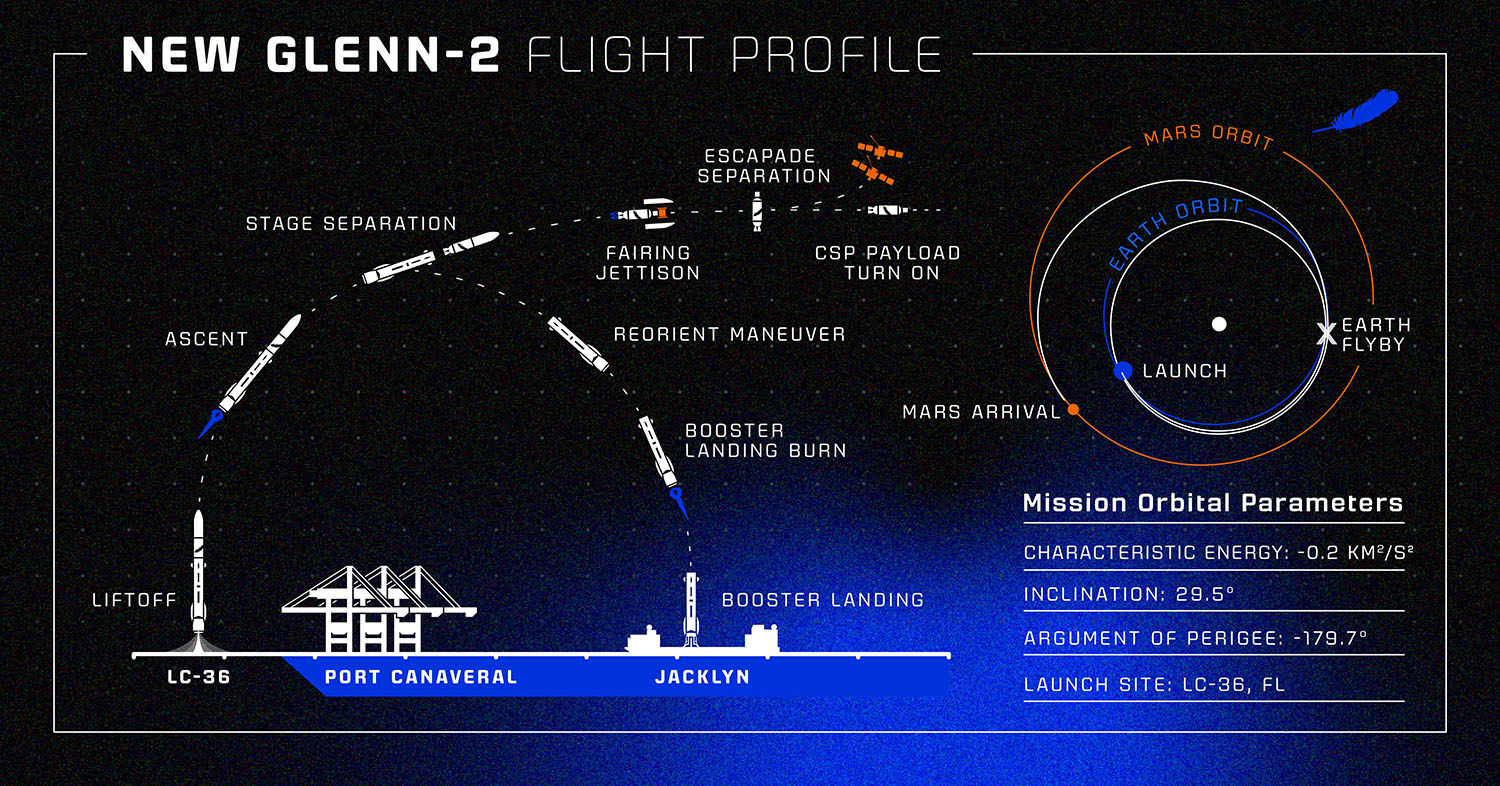
The precision of today’s flight was striking. New Glenn passed Max-Q at T+1:35, reached Main Engine Cutoff at T+3:05, and separated its stages just four seconds later. By T+9:09, GS1 had touched down on Jacklyn, and at T+33 minutes, the two spacecraft cleanly separated to begin their journey into deep space.
Landing such a large reusable booster on only its second attempt is a major achievement for Blue Origin and a critical step toward the company’s long-term plan to reuse the stage up to 25 times. Reusability is central to lowering launch costs and increasing flight cadence, and today’s success moves New Glenn firmly in that direction.
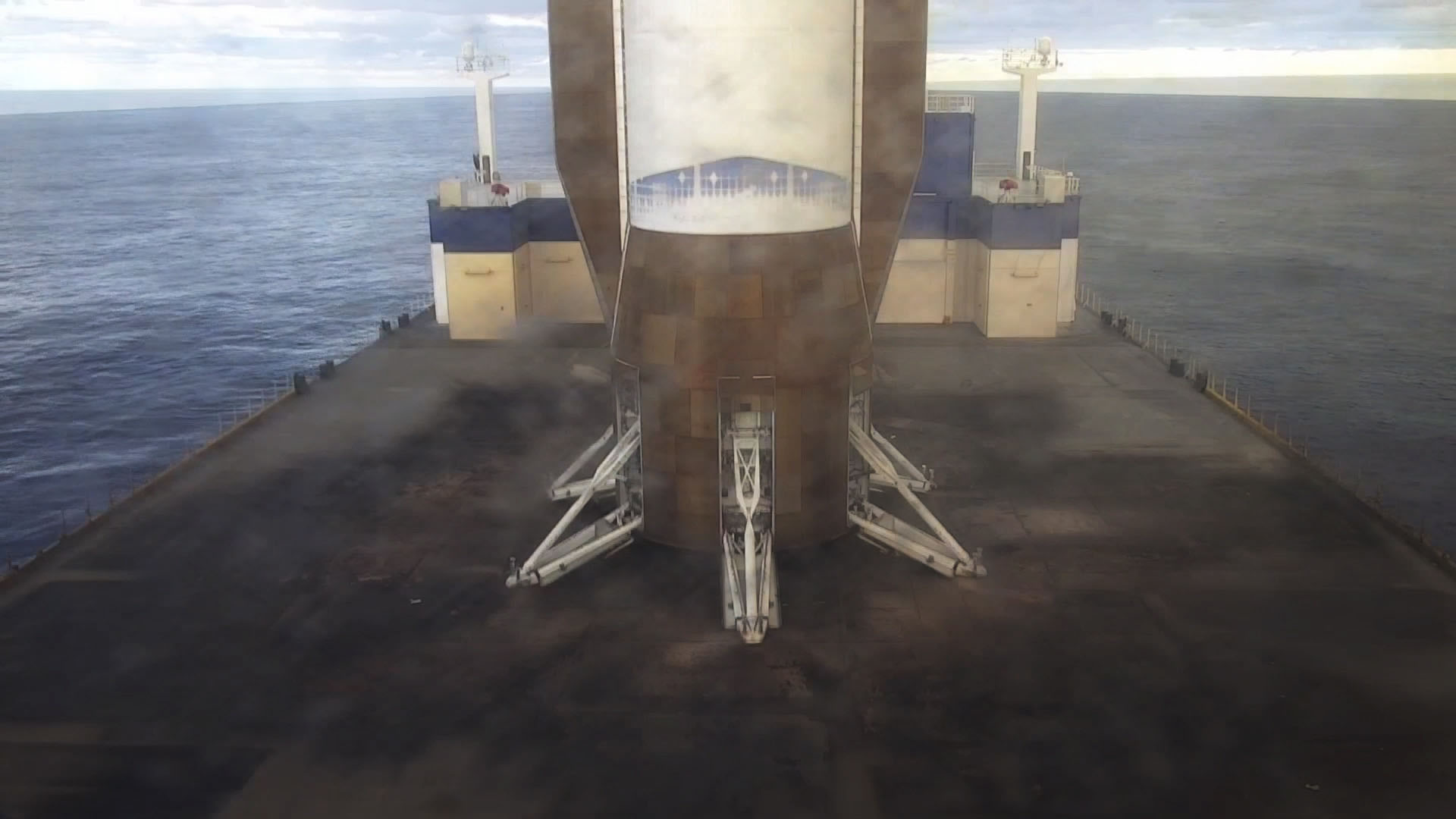
Blue Origin CEO Dave Limp summed it up well: “It turns out Never Tell Me The Odds had perfect odds—never before in history has a booster this large nailed the landing on the second try. This is just the beginning as we rapidly scale our flight cadence and continue delivering for our customers.”
In addition to ESCAPADE’s deployment, New Glenn’s second stage also carried Viasat’s HaloNet demonstration, which successfully completed a flight test for NASA’s Communications Services Project—another example of how each launch of New Glenn is becoming a platform for multiple technology pathfinders.
Blue Origin noted that several New Glenn vehicles are already in production, with customers ranging from NASA and Viasat to Amazon’s Project Kuiper, AST SpaceMobile, and international telecom operators. With yesterday’s flight, New Glenn also completed its second National Security Space Launch (NSSL) certification mission, moving closer to full certification with the U.S. Space Force.
From the first ignition to the booster landing, the New Glenn 2 mission felt like an inflection point—not just for Blue Origin, but for the broader commercial launch ecosystem. Two flights in, New Glenn is beginning to show the capabilities it was designed for: heavy lift, reusability, and support for a new generation of planetary science missions.
Watching from the NASA Media Center—and seeing the reaction from both Blue Origin and NASA teams—I couldn’t help but feel the energy and excitement of something genuinely historic. As Blue Origin’s leadership has put it, this is the start of a new era of “launch, land, repeat.”
Today, Never Tell Me The Odds lived up to its name—and then some.








4 thoughts on “New Glenn Sends ESCAPADE Toward Mars and Sticks Historic Landing”
I watched the replay of the launch of the New Glenn and it’s payload and was amazed at how perfectly the first stage landed on the drone ship. Being the second flight of the New Glenn, it is an impressive achievement for the company.
More grease to your launchers!!!
What an awesome launch pic!
I greatly appreciate that Mr. Bezos and the Blue Origin team shared their video footage both live and post-flight. This action is so meaningful for the space supporting community who do not actually work in the industry but would willingly sacrifice the left half of several unnamed body parts in order to participate in the space effort even if only vicariously.
And oh yes, the landing leg zappers are absolutely stunning! Such a great idea!