National Space Society

NSS Honors the Life and Legacy of Apollo Software Engineer Margaret Hamilton

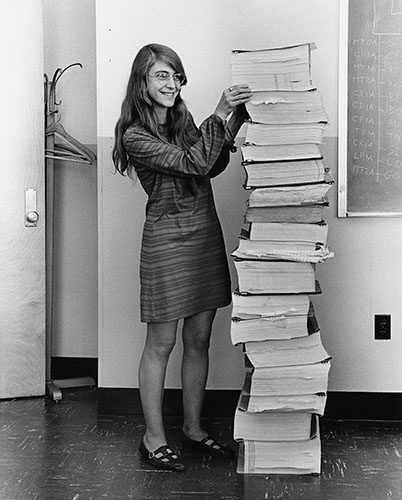
Margaret Hamilton with code printouts

Share:

Facebook
X
Pinterest
LinkedIn
The National Space Society honors pioneering software engineer Margaret Hamilton, who recently died at the age of 90. Hamilton is best known for leading the team that created the software for the Apollo Guidance Computer that delivered American astronauts to the Moon during the Apollo program. She was also one of the first people to use the term “software engineer” in her role.

Hamilton Wrote Software that Delivered Astronauts to the Moon

Image: Apollo software engineer Margaret Hamilton poses with printouts of the Apollo Guidance Computer program that delivered U.S. astronauts to the Moon.

The National Space Society honors pioneering software engineer Margaret Hamilton, who recently died at the age of 90. Hamilton is best known for leading the team that created the software for the Apollo Guidance Computer that delivered American astronauts to the Moon during the Apollo program. She was also one of the first people to use the term “software engineer” in her role.

Hamilton worked at MIT’s Instrumentation Laboratory, a leading designer of software in the 1960s. She was a working mother who often brought her daughter to the office as she wrote innumerable lines of code that would allow the Apollo spacecraft to reach the Moon and return home. Her work was fundamental to mission success, guiding both the Apollo Command Modules and Lunar Modules throughout the program.

Karlton Johnson, CEO of the NSS, said, “Margaret Hamilton’s pioneering work helped carry humanity to the Moon and laid the foundation for modern spaceflight. Her remarkable legacy will endure in the missions and generations she inspired.”

Hamilton was the first woman hired at the MIT lab and was assigned as the director of software engineering for Apollo in 1965. The code her team created was designed to work with NASA’s mainframes on Earth but had to be able to operate independently.

Perhaps the most dramatic example of her innovative software design was the landing of Apollo 11. As Neil Armstrong and Buzz Aldrin descended from lunar orbit, there were frequent callouts of “computer alarm,” meaning that the onboard computer was threatening to lock up. Had the guidance system stopped working, the astronauts would have had to consider aborting the landing.

Her clever design contained instructions that told the overloaded computer to quit less essential tasks and prioritize only what was needed for a successful touchdown—all this in a system that had only 72 kilobytes of storage memory and relied on mostly unchangeable wire-core memory.

At issue during that landing was the fact that two radar systems—one that provided data critical to the landing, and another that was designed to deliver them to orbit in the event of an abort—were feeding data at the same time, overloading the computer. Hamilton’s software then prioritized only the critical tasks, delivering the two astronauts safely to the lunar surface on July 20, 1969.

Hamilton worked on Apollo throughout the program, then contributed software design to the subsequent Skylab mission. She left MIT in 1976 to found a private software design company, the first of two she would run during her career. For her work during Apollo, she was awarded the Presidential Medal of Freedom in 2016 by President Barack Obama.

Share:

Facebook
X
Pinterest
LinkedIn
Picture of By National Space Society

By National Space Society

Leave a Comment

Don't Miss a Beat!

Be the first to know when new articles are posted!

Search
Categories

Follow Us On Social Media

JOIN THE
GREATEST ADVENTURE

Give The Gift Of Space: Membership For Friends and Family

Book Review

Lunacy

Lunacy: A Book Review Essay

This long essay defends the NSS Vision against those who, like the author of the book being reviewed, think “we shouldn’t colonize Mars or the Moon, or even vacation there.” Ben Bramble, an Australian philosopher who teaches at Australian National University, has penned a YAASS (Yet Another Anti-Space-Settlement) book. These books are multiplying like flies, so space settlement advocates must be gaining ground to generate such an abundant response.

Read More »
HOTOLSkylon

Book Review: HOTOL & Skylon: The Story of Britain’s Spaceplanes

In HOTOL & Skylon: The Story of Britain’s Spaceplanes, Rob Coppinger covers the story of both in great detail, with the reminiscences of many who played integral roles in these ambitious programs. The book shines when it captures the enthusiasm and excitement of those involved, and there are extensive quotes from many who devoted years of work on these projects.

Read More »
Archives


Hilton McLean Tysons Corner, McLean, Virginia
June 4 - 7, 2026

Recent Blog Posts

The National Space Society (NSS) applauds NASA’s latest Moon Base awards and mission announcements, which represent a significant step forward in building the infrastructure, transportation...

This Space Available By Emily Carney Astronaut Susan Still’s (now Kilrain) aerospace career is a catalog of incredible accomplishments: with an impeccable academic and military...

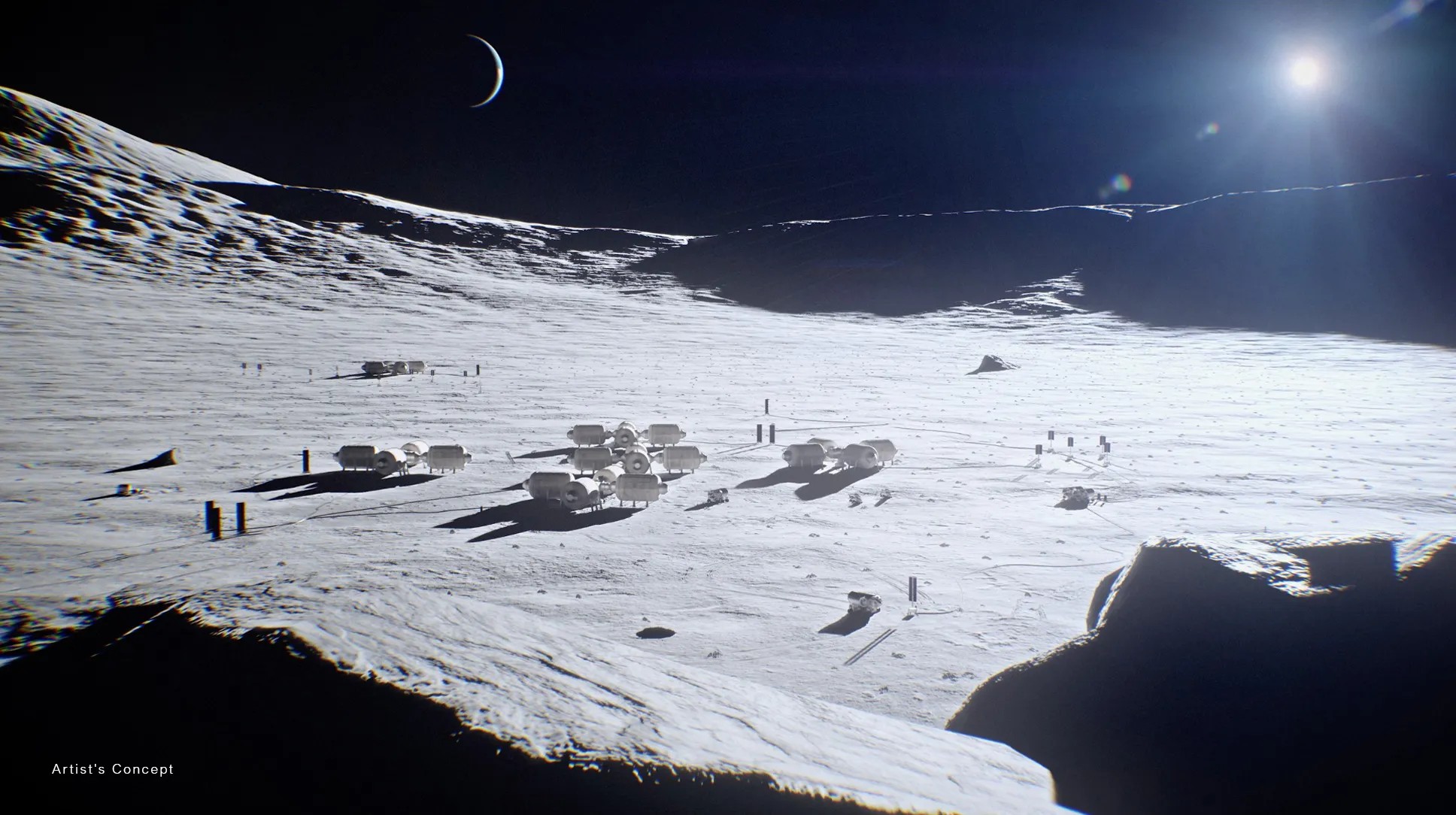
By Burt Dicht NSS Space Coast Correspondent Image: Artist’s concept of living and working at Moon Base, courtesy NASA “We are building the Moon Base...

NSS is pleased to share this inspiring story of how a 17-year-old from Venezuela discovers asteroids. By Miguel Rojas It was the kind of night...

Category: Nonfiction Reviewed by: Clifford R. McMurray Title: Eyes to the Stars: A Memoir for the Space Shuttle Generation Author: Steven A. Hawley, PhD Format:...

Isaacman and NASA Associate Administrator Amit Kshatriya outlined the changes NASA is making to accelerate the Artemis program. Artemis Program Manager Jeremy Parsons followed with...
While most meteorites come from asteroids, a small number originate from the Moon or Mars. Powerful impacts can eject surface rocks into space, where they...
The National Space Society is proud to host the annual Space Settlement Summit at the campus of the University of Central Florida on October 25...
adastra magazine

Your Doorway to New Worlds